THE KINDRED JOURNAL · PRACTICAL GUIDE
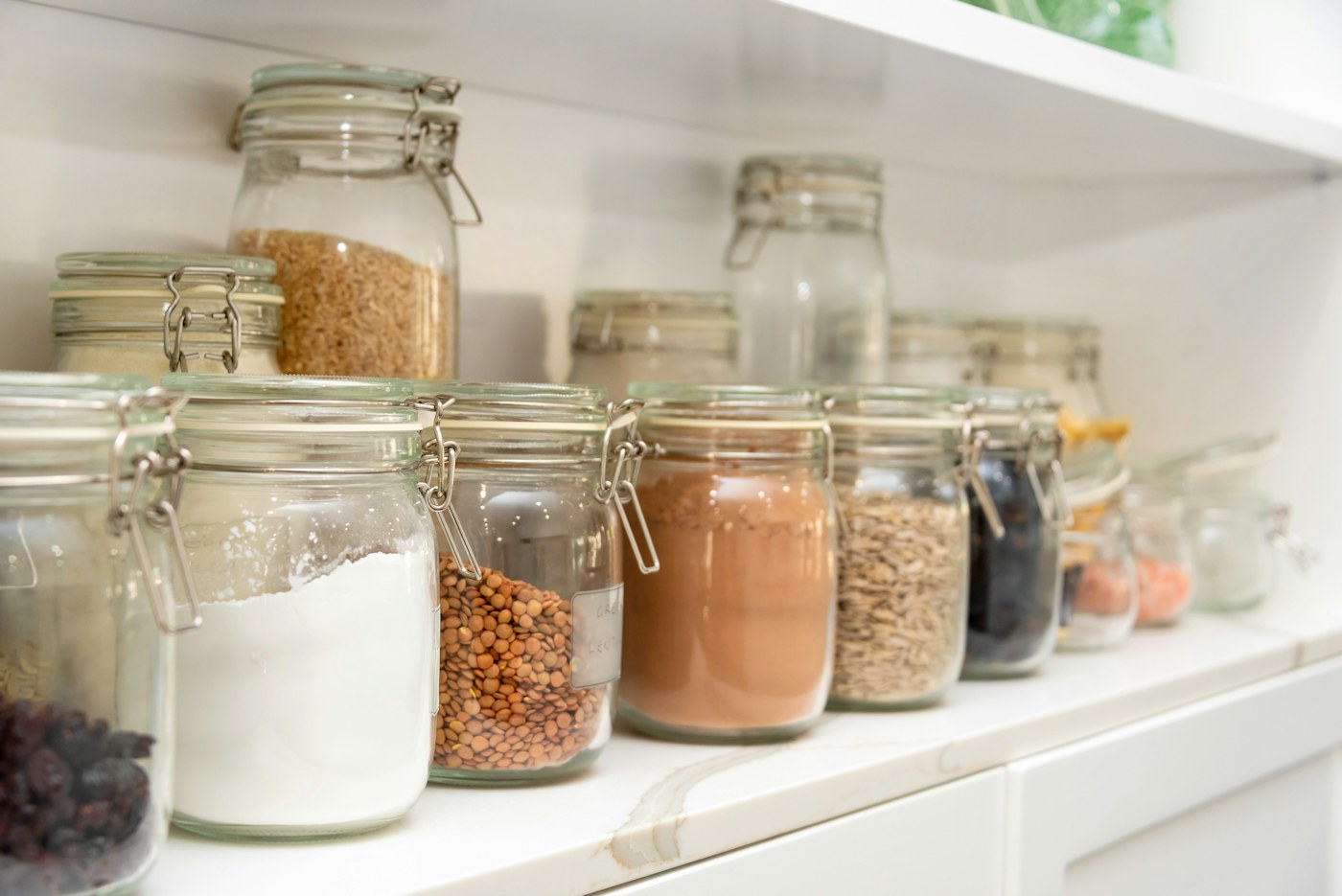
An organized pantry should make dinner easier, not give you another system to maintain. Start with the shelf that slows you down most, and make it work before buying a matching set of containers.
1. Take a useful set of measurements
Measure the clear width, depth, and height of each shelf. Check the narrowest point at the door opening, too: a bin can fit on the shelf and still be awkward to pull out. Write the measurements down rather than relying on a photograph.
Then measure the packages you actually buy. A cereal container that looks generous online may be too small for your usual box. If you decant food, keep the original instructions, ingredient information, and date with the container.
2. Group by the way you cook
Try four simple zones: everyday breakfast, weeknight cooking, baking, and unopened extras. Put frequently used items where you can see and reach them easily. Keep heavy items low and make sure children cannot reach anything unsuitable for them.
- Breakfast: cereal, oats, spreads, and other morning staples.
- Cooking: rice, pasta, canned goods, and sauces.
- Baking: flour, sugar, tools, and small packets together.
- Backstock: unopened duplicates in a clearly marked place.
3. Match storage to the problem
| Problem | Approach to consider | Check first |
|---|---|---|
| Small packets disappear | A shallow open bin | Can you see the contents without unloading it? |
| Cans hide behind each other | A low riser or shorter rows | Available height above the back row |
| Deep shelves are hard to reach | A handled pull-out bin | Loaded weight and door clearance |
| Open packages spill | A food-storage container | Food-contact suitability, usable capacity, and cleaning instructions |
4. Leave room for a normal grocery trip
A shelf packed perfectly on Sunday can become frustrating after the next shopping trip. Leave some empty space for changing stock. Use temporary paper labels for a week before committing to permanent ones.
A five-minute weekly reset
Before shopping, look through each zone, bring older suitable items forward, and note what needs using. Return misplaced items to their zones. If one category repeatedly overflows, adjust its space rather than adding another container automatically.
Before you buy a pantry organizer
Check exterior dimensions, internal usable space, handles, lid clearance, cleaning instructions, and whether the organizer can be comfortably lifted when full. Attractive photographs do not tell you how a product will fit your particular shelf.
Compare storage options
Affiliate disclosure: As an Amazon Associate I earn from qualifying purchases.
These links open Amazon search results for storage types discussed in this guide. They are a starting point for comparison, not recommendations for a specific model. Check dimensions, materials, installation requirements, and current retailer terms before buying.
By Kindred Space Finds · Organization guidance, not a hands-on product review.