THE KINDRED JOURNAL · PRACTICAL GUIDE
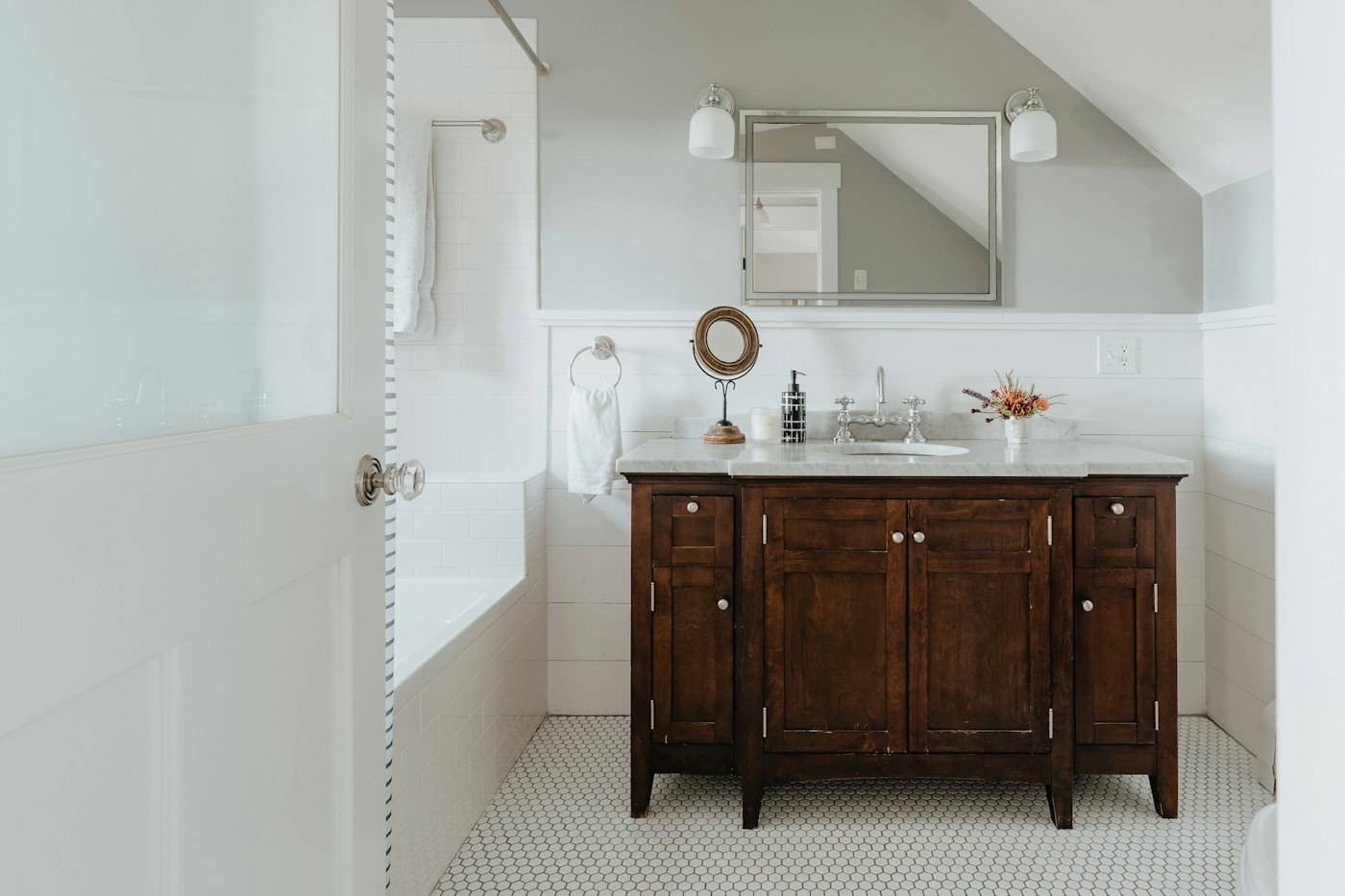
The space under a bathroom sink is rarely a simple rectangle. Pipes, valves, hinges, and the cabinet opening decide which storage will actually work.
Start with an empty cabinet
Take everything out and check for dampness or visible leaks. If you notice a plumbing problem, resolve it before putting storage back. Clean and dry the cabinet according to its surface-care instructions. Do not cover an unresolved leak with a liner.
Measure the usable space
Write down the interior width, depth, and height, then measure around the plumbing. Note how far door hinges project into the opening. Check the path a drawer would need when pulled all the way out. A two-tier organizer may fit in the cabinet but collide with the drainpipe on its upper shelf.
- Opening: the clear gap between the door and frame.
- Footprint: usable floor space beside and in front of the pipes.
- Height: clearance below the basin and supply lines.
- Access: room to reach shutoff valves and inspect the plumbing.
Choose a layout before a product
| Layout | Useful when | Possible limitation |
|---|---|---|
| Two small removable bins | Pipes divide the space | Less vertical storage |
| A single pull-out tray | The cabinet is deep | Needs a clear drawer path |
| An adjustable two-tier rack | There is usable height | Upper shelf may meet plumbing |
| A door-mounted holder | The door and hinges allow it | Can interfere with closing and add weight |
Keep daily items separate from extras
Use one easy-to-remove container for daily supplies and another for unopened duplicates. Store items in their original packaging when their labels include directions or safety information. Do not transfer cleaning chemicals into unmarked decorative bottles.
Keep cleaning products away from children and pets, following the label’s storage instructions. An organizer is not a substitute for appropriate child-resistant storage.
Try the layout without buying anything
Use a clean cardboard template to represent the organizer’s footprint. Open and close the doors and check access to the valves. For a pull-out design, extend the template outward to estimate the space it needs. This will not prove that a product fits, but it can rule out an obviously unsuitable size.
Make maintenance easy
A useful setup lets you empty the cabinet quickly for cleaning or plumbing access. Avoid building a tightly packed arrangement around pipes. Recheck the cabinet periodically, and simplify any zone that keeps becoming difficult to use.
Compare storage options
Affiliate disclosure: As an Amazon Associate I earn from qualifying purchases.
These links open Amazon search results for storage types discussed in this guide. They are a starting point for comparison, not recommendations for a specific model. Check dimensions, materials, installation requirements, and current retailer terms before buying.
By Kindred Space Finds · Organization guidance, not a hands-on product review.