Almost every plug-in space heater tops out at 1,500 watts, so a $40 heater and a $200 heater put out about the same amount of heat. What you’re really choosing is how that heat moves: a silent radiator that warms slowly, a fan that circulates the whole room, or infrared that warms whoever sits in front of it. Pick the wrong type and you’ll either lie awake listening to a fan or sit in a corner that never gets warm. Here are five real heaters, each matched to the room it suits best.
A bedroom you’ll sleep in: the De’Longhi ComforTemp oil-filled radiator, which has no fan. A small room you want warm all the way across: the Vornado AVH10. Lowest cost for a living room or office: the Lasko oscillating ceramic tower. A bigger or draftier room: the Dr. Infrared DR-968. A basement or cold room you only need to keep above freezing: the De’Longhi SlimStyle panel. Size the heater to the room before anything else.
Size it first: the 10-watts-per-square-foot rule
A common rule of thumb is about 10 watts of heater per square foot of room. That makes a 1,500-watt heater a fit for roughly 150 square feet, about a 10 × 15 ft bedroom. High ceilings, big windows, an outside corner or poor insulation all push the need up, so a drafty room of the same size will feel the shortfall.
- Measure the room and multiply length by width.
- Under about 150 sq ft: any 1,500-watt heater here will do. Choose by noise and how the heat moves.
- Bigger than that, or drafty: look at the infrared or the oscillating tower, close the door, and fix the obvious drafts first. Our guide to where your home loses heat covers the cheap fixes.
Affiliate disclosure: As an Amazon Associate I earn from qualifying purchases. Some links go to a specific Amazon listing; others are clearly labeled searches where we couldn’t confirm the exact listing. Match the model on the live listing before you order.
The five at a glance
| Heater | Type | Listed watts | Best for |
|---|---|---|---|
| De’Longhi ComforTemp EW7707CM | Oil-filled radiator | 1,500 max, 3 settings | Quiet bedroom heat |
| Vornado AVH10 | Fan-forced circulator | 1,500 / 750 | Warming a small room evenly |
| Lasko oscillating ceramic tower | Ceramic, oscillating | 1,500 | Budget pick for a living room or office |
| Dr. Infrared DR-968 | Infrared + fan | 1,500 | Bigger or draftier rooms |
| De’Longhi SlimStyle panel | Convection panel | 1,500 | Basements and cold rooms |
De’Longhi ComforTemp Full Room Radiant Heater (EW7707CM)
Listed: oil-filled radiator · 1,500 watts maximum with 3 heat settings · adjustable thermostat dial · ComforTemp setting that picks a comfortable temperature for you · 120 V · on wheels
An oil-filled radiator has no fan, so once it’s up to temperature it makes almost no noise. That’s the main reason to choose one for a bedroom. The trade-off is speed: the oil has to heat up before the room does, so turn it on half an hour before bed rather than when you’re already cold. The upside of that slow start is that it keeps giving off heat for a while after the thermostat clicks off, which makes the warmth feel steadier than a fan heater cycling on and off.
Silent operation, gentle radiant heat, and a thermostat that holds the room steady overnight.
Anyone who wants fast heat in a cold room, or who needs to carry the heater up and down stairs. The fins also get hot, so keep it away from bedding, curtains and small hands.
De’Longhi product page. We couldn’t confirm a single Amazon listing; match the model number EW7707CM on the live page.
Vornado AVH10 Whole Room Heater with Auto Climate Control
Listed: fan-forced · 1,500 W high / 750 W low, plus fan only · adjustable thermostat with Auto Climate Control · digital display · cool-touch case · tip-over protection and automatic shut-off if airflow is blocked · about 9.25 W × 12 H × 11.6 D in, roughly 5.4 lb · 5-year guarantee
Most small heaters blow a hot stream in one direction, so the spot in front of them gets warm and the far side of the room doesn’t. Vornado’s design pushes a current of air around the whole room instead, which suits a bedroom or home office where you move around. Auto Climate Control adjusts heat and fan speed to hold the temperature you set rather than blasting on and off. If you want a remote and a 12-hour timer, Vornado sells a TAVH10 version with both.
Even, whole-room warmth in a compact box, with a cool-touch case and a strong set of listed safety features.
Light sleepers who can’t stand fan noise. It’s quiet for a fan heater, but it isn’t silent like the radiator above.
Vornado product page · Retailer specifications. Vornado has sold several AVH10 versions; check the year and features on the live listing.
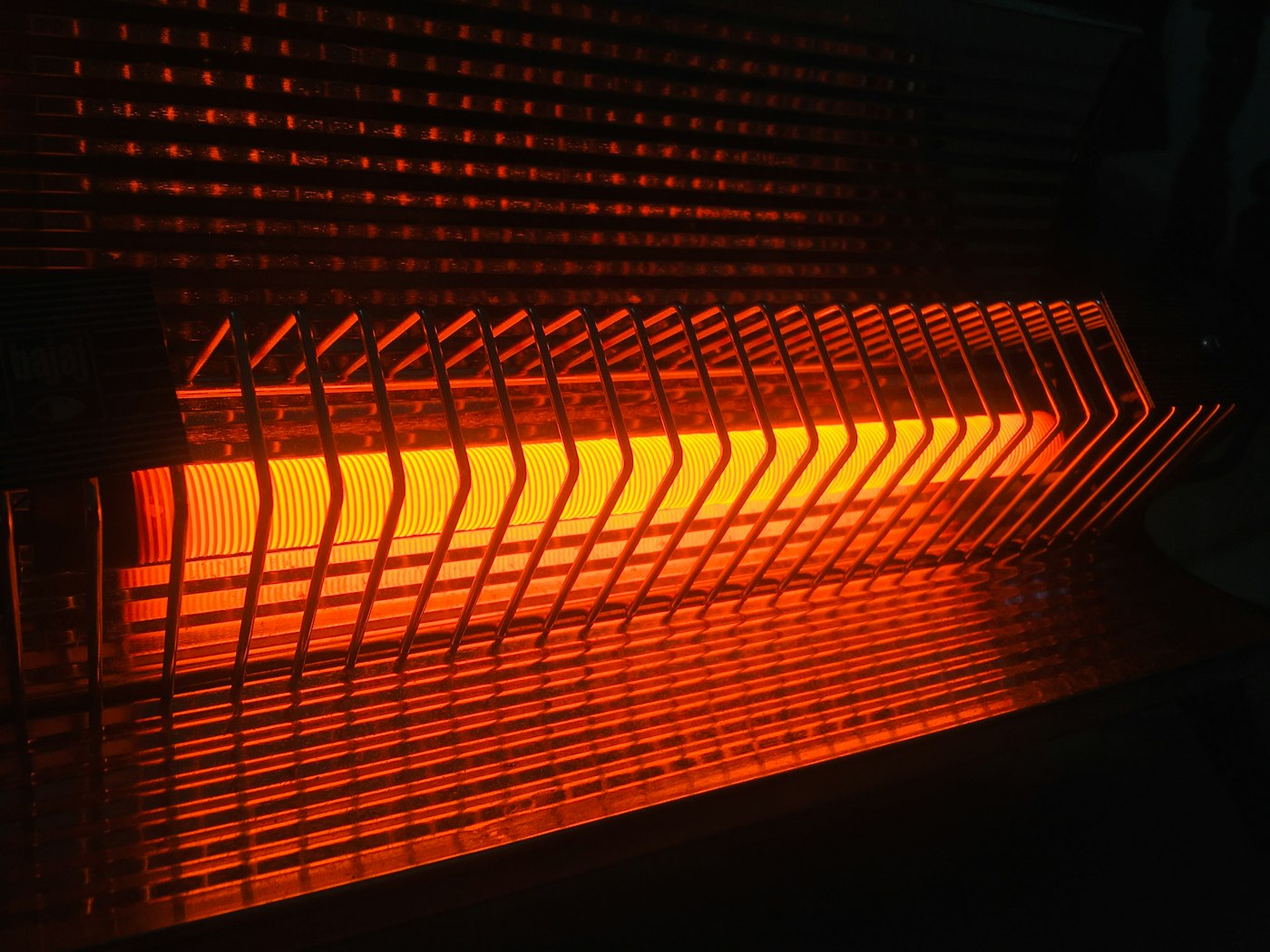
Lasko Electric Oscillating Ceramic Tower Space Heater
Listed: ceramic, oscillating tower · 1,500 watts · remote control · timer in 1-hour steps up to 8 hours · cool-to-the-touch exterior · tip-over protection
A ceramic tower is the classic low-cost choice, and oscillation helps spread the heat across a living room or office rather than aiming it at one chair. In BobVila.com’s testing, this Lasko brought a 156-square-foot room up to the set temperature in just over 20 minutes, and its testers noted the case stayed cool while running. The tall, narrow shape also takes up less floor space than a radiator.
Low price, oscillation, a remote and timer, and independent testing behind it.
Anyone heating a bedroom they sleep in who’s sensitive to fan noise, or anyone who needs heat in a much larger room.
Dr. Infrared Heater DR-968 Portable Space Heater
Listed: infrared with a fan · 1,500 watts · thermostat · low, high and eco modes · timer up to 12 hours · remote control · tip-over shut-off · wood cabinet on casters
Infrared heat warms people and objects in its path, so it feels warm faster than air-only heat in a room with drafts. In BobVila.com’s test, the DR-968 raised a 156-square-foot room by 10°F in 33 minutes, and it shut off immediately when tipped over. The testers singled out the thermostat: set a temperature and it cycles on and off to hold it. The wood cabinet looks more like furniture than most heaters, which matters in a living room.
Strong tested performance, a real thermostat, a 12-hour timer and a remote.
Anyone short on space or budget. It’s larger and costs more than the other picks, and it won’t heat more than any other 1,500-watt unit can.
De’Longhi SlimStyle Digital Convection Panel Heater
Listed: convection panel · 1,500 watts · digital controls with eco mode and timer · antifreeze mode · tip-over and overheat protection · floor or wall mounting hardware included · no remote
Most space heaters can’t be set below about 60°F, so leaving one on to protect a basement or a room over the garage wastes power. This panel has an antifreeze mode that sits idle until the room gets near freezing. In BobVila.com’s test it switched on at 45°F. It can stand on the floor or hang on the wall, which keeps it out of the way in a storage area or workshop.
A low-temperature mode most heaters lack, a slim shape, and the option to mount it on a wall.
Anyone who wants a remote. It also isn’t a substitute for proper pipe protection; see our frozen pipe checklist.
What it costs to run one
Running cost depends only on watts and your electric rate, not on the price of the heater. On high, a 1,500-watt heater uses 1.5 kWh per hour. At an example rate of 17 cents per kWh, that’s about 26 cents an hour, or a little over $2 for an 8-hour night if it runs constantly. A thermostat cuts that, because the heater shuts off once the room reaches the set temperature.
A space heater only saves money if you turn the whole-house thermostat down at the same time and heat just the room you’re in. Our space heater vs. central heat guide walks through the math.
Safety rules that matter most
- Plug it straight into a wall outlet. Don’t use an extension cord or power strip; a heater draws close to the limit of a standard circuit.
- Keep 3 feet clear of bedding, curtains, furniture and anything else that can burn.
- Look for a safety listing such as UL or ETL, plus tip-over and overheat protection.
- Read the manual on overnight use. Some manufacturers say not to leave a heater running unattended or while you sleep.
- Keep it on a hard, level floor, not on a rug or table, and out of reach of kids and pets.
- Bathrooms need a heater made for them, with a shock-protection plug. Most standard heaters aren’t rated for wet rooms.
How we chose
This is a research-based comparison from manufacturer and retailer specifications plus published independent testing, not our own hands-on test. We looked for established brands with clear safety features, then grouped them by the room they suit. Specs were checked on October 30, 2026, from the pages linked under each product. We didn’t include prices because they change often. See our editorial policy.
- Room size in square feet, and whether it’s drafty.
- Fan noise or no fan noise, for bedrooms.
- A thermostat, not just high and low.
- Tip-over and overheat protection, plus a UL or ETL listing.
- A wall outlet within reach of the cord, with nothing else heavy on that circuit.
Trying to cut the heating bill as a whole? Start with 13 cheap ways to keep your house warmer and the thermostat mistakes that cost money.
Related: Best heated throw blankets

Keep reading