A Christmas tree usually goes wherever there’s an empty corner, and in a lot of living rooms the empty corner is next to the fireplace, in front of a heat vent or beside the only outlet. That works for a week. Then the room’s heat dries the tree out, the lights stay on overnight, and a tree that looked fine on December 1 is brittle by the 20th. Fire departments see the results every year, mostly in the weeks around and after Christmas. These steps cover picking, placing, watering and lighting a tree, plus when to take it down and how to store an artificial one.
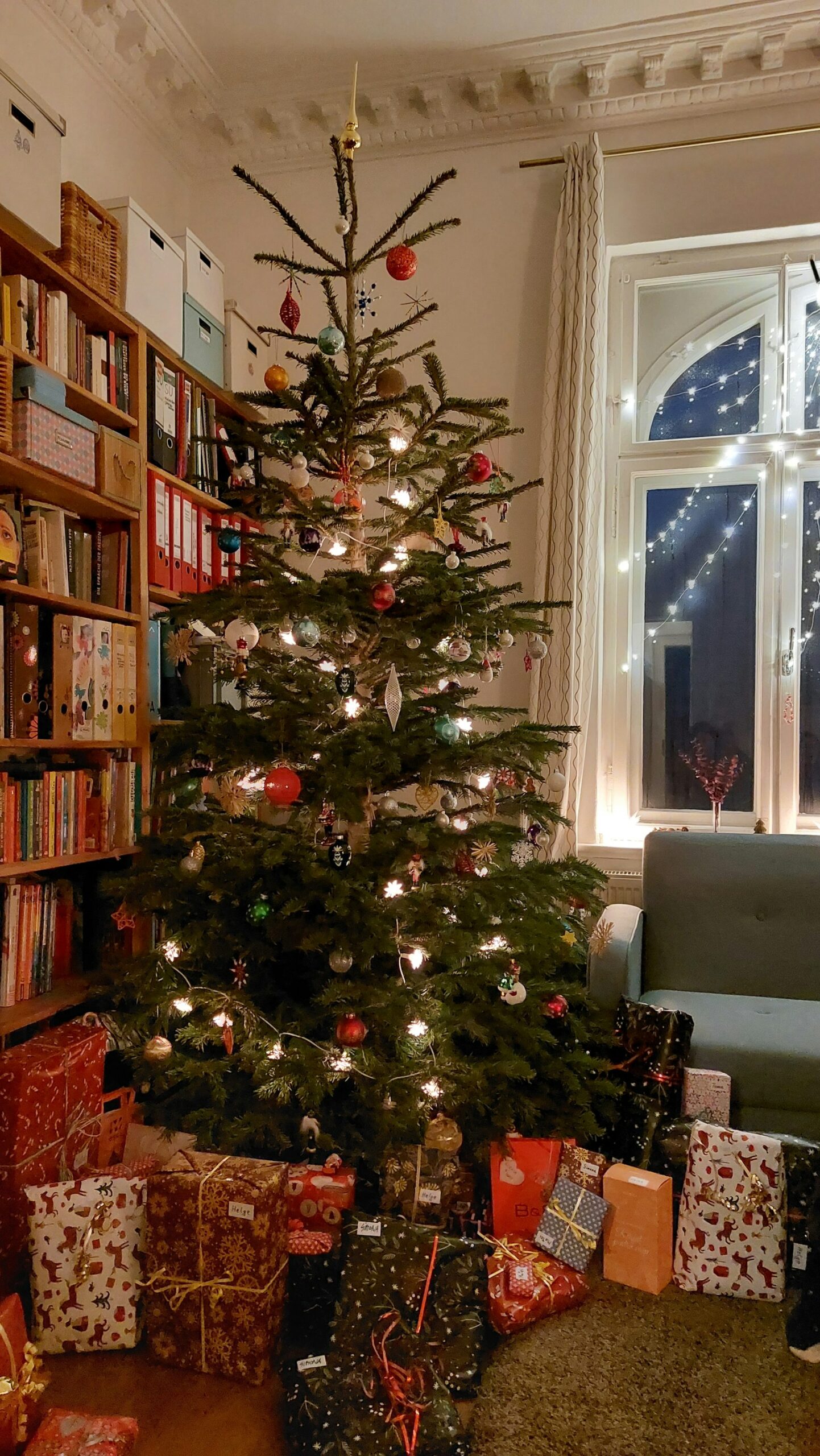
Choose a tree with green needles that don’t fall off when you run a hand along a branch, cut about 2 inches off the trunk before it goes in the stand, and add water every day. Keep it at least 3 feet from fireplaces, radiators, space heaters, heat vents, candles and lamps, and out of doorways and walkways. Use lights listed by a recognized testing lab, throw out sets with cracked sockets or frayed wires, and turn the lights off when you go to bed or leave. Take the tree down once it’s dry, and don’t keep it in the garage or lean it against the house.
Pick the tree
1. Test the needles before you buy
The National Fire Protection Association (NFPA) advises choosing a tree with fresh, green needles that don’t fall off when touched. Run your hand along a branch toward you, and give the trunk a light bounce on the ground. A shower of green needles means it’s already drying out; a few brown inner needles are normal.
2. Measure the room before the lot
Measure the ceiling height and the width of the spot you have in mind, and check the tree’s base width on the tag or with a tape at the lot. A tree that’s too wide for its corner ends up pushed toward the radiator or across a walkway. Leave room for the stand and for the tree topper.
Place it safely
3. Keep 3 feet from every heat source
NFPA says to place the tree at least 3 feet away from any heat source, including fireplaces, radiators, candles, heat vents and lights. NFPA’s tip sheet lists a heat source too close to the tree as one of the leading causes of Christmas tree fires. The Consumer Product Safety Commission (CPSC) adds that heated rooms dry live trees out quickly, which is one more reason to keep it away from the warmest corner. Walk the room and look for the less obvious ones: a floor vent under the sofa, a space heater that comes out in the evenings, a halogen floor lamp. Our guide to space heaters for small rooms covers safe clearances for heaters too.
4. Don’t block a door or the path to it
NFPA and CPSC both advise keeping the tree out of exits and walkways. If the only free space narrows the path to the front door or a hallway, choose a smaller tree or a tabletop one instead.
5. Put the stand on a level, stable spot
A stand that rocks on a rug edge or an uneven floor makes the tree easy to tip, especially with pets or small children around. Use a stand rated for your tree’s height and trunk diameter, and set it on a waterproof mat or tray so spilled water doesn’t damage the floor.

Keep it watered
6. Cut the trunk before it goes in
NFPA recommends cutting 2 inches from the base of the trunk before you put the tree in the stand. The fresh cut lets the tree draw water; a trunk that sat on the lot for days seals over. If you can’t get it into water right away, stand it in a bucket of water in a cool, shaded spot until you’re ready.
7. Add water every day
NFPA’s advice is simple: add water to the stand and do it daily. Never let the water level drop below the bottom of the trunk. A watered tree makes a real difference: the National Institute of Standards and Technology filmed a burn test in which a tree kept in a filled stand didn’t ignite from the same source that set a dry tree ablaze. Set a phone reminder, or tie the check to something you already do every morning.
Try it if the stand is hard to reach: a long-spout watering can or a funnel with a tube makes daily top-ups easy without crawling under the branches.
Light it safely
8. Use listed lights, and check every strand
CPSC advises using only lights that have been tested by a recognized testing laboratory, such as UL or ETL, and checking every set, new or old, for broken or cracked sockets, frayed or bare wires and loose connections. Throw out damaged sets rather than taping them. Some lights are rated only for indoor or outdoor use; check the label. Our Christmas light storage guide has a test-and-wrap routine that catches problems before the lights go up.
9. Follow the strand limit, and don’t stack cords
NFPA advises following the manufacturer’s instructions for how many light strands can be connected end to end. If you use an extension cord, CPSC says to make sure it’s rated for the intended use. Plug the tree into a wall outlet or a single listed power strip, keep cords out of walkways and never run them under a rug. Never put electric lights on a metal tree; CPSC warns that faulty lights can charge it with electricity.
10. Lights off at bedtime and when you leave
NFPA and CPSC both say to turn off tree lights when you go to bed or leave home. A plug-in timer or a smart plug makes it automatic; our smart plug picks include a few that can run a schedule.
11. No candles on or near the tree
Never use lit candles to decorate a tree, and keep candles elsewhere in the room well away from branches, garland and gift wrap. Battery candles give the same look without the risk.
When it’s time to go
12. Take it down once it’s dry
NFPA advises getting rid of the tree after Christmas or as soon as it’s dry. A useful test: if needles drop when you brush a branch, or the branches snap instead of bending, it’s time. Many communities run tree recycling pickups or drop-off sites in early January; check your city’s website.
13. Don’t store it in the garage or against the house
NFPA says dried-out trees shouldn’t be left in the home or garage, or placed outside against the house. Drag it to the curb or the drop-off site instead. Bring outdoor light strands inside after the season, too, so they last longer.
14. Artificial tree: store it upright and dry
An artificial tree avoids the drying problem but still needs listed lights and the same 3-foot clearance from heat. When it comes down, a tree bag that holds it upright, or the original box stored flat on a shelf rather than the garage floor, keeps branches from crushing. Our ornament and decoration storage picks include an upright tree bag.
Worked example: finding the spot in a small living room
Say your living room is 12 by 14 feet, with a fireplace centered on one 12-foot wall, a floor heat vent under the front window and the front door in a corner. You want a 7-foot tree whose tag lists a base about 50 inches wide.
| Spot | Check | Result |
|---|---|---|
| Beside the fireplace | Edge of branches about 18 in from the firebox | No: needs 36 in or more |
| In front of the window | Floor vent directly under the branches | No: move it or pick another spot |
| Corner by the door | Leaves 26 in of walkway to the door | No: narrows the exit |
| Opposite corner, by the bookcase | 9 ft from the fireplace, 6 ft from the vent, outlet 4 ft away | Yes |
The bookcase corner is the only one that clears every heat source by 3 feet and keeps the path to the door open. The outlet is 4 feet away, so one cord rated for the light load, run along the wall rather than across the floor, finishes it. If no spot clears all three checks, a narrower “slim” tree or a tabletop tree usually does. Your room will differ, so measure yours.
Affiliate disclosure: As an Amazon Associate I earn from qualifying purchases. The links below are Amazon searches, not specific products we’ve tested or recommend over others.
- Tree stand with a large water reservoir (Amazon search) ↗
- Tree watering funnel (Amazon search) ↗
- UL-listed LED tree lights (Amazon search) ↗
- Plug-in outlet timer (Amazon search) ↗
- Upright artificial tree storage bag (Amazon search) ↗
Check that lights carry a UL, ETL or CSA mark and are rated for indoor use.
- Needles green and staying put when you brush a branch.
- Room and corner measured before you buy.
- 2 inches cut off the trunk before it goes in the stand.
- Water added every day; level never below the trunk.
- At least 3 feet from fireplaces, radiators, heaters, vents, candles and lamps.
- Not blocking a door, hallway or walkway.
- Lights listed by a testing lab and checked for damage; strand limit followed.
- Extension cord rated for the load, run along the wall.
- Lights off at bedtime and when you leave (or on a timer).
- Tree out of the house once it’s dry, not stored in the garage.
Common questions
Are LED lights safer than incandescent ones?
LED lights run much cooler and use far less power, which helps, but the same rules apply: use listed lights, check them for damage and turn them off when you go to bed. A cracked socket or frayed wire is a problem on any type.
Does adding sugar, aspirin or anything else to the water help?
The safety guidance from NFPA and CPSC focuses on plain water, added daily. Keep the stand full; that’s what matters.
How long can a real tree stay up?
There’s no fixed number of days. Take it down after the holidays or as soon as it shows signs of drying, whichever comes first.
Sources: NFPA, Christmas Tree Safety tip sheet · CPSC, Ten Tips to Keep Your Holiday Home Fire and Injury Free · NIST, Holiday Fire Safety. General guidance; follow your local fire department and product makers’ instructions.
Keep reading