The guests aren’t the hard part. It’s the suitcase with nowhere to go, the coats piling up on a chair, and the moment someone asks where the towels are and you realize you don’t have a clean answer. You don’t need a guest room or new furniture to fix that. You need a few cleared spots and a plan, set up a week before the doorbell rings.

Give guests three things of their own: a place to sleep, a place to unpack, and a place in the bathroom. Then decide where coats, shoes and extra food will go. Nine of the twelve ideas below cost nothing.
Where they’ll sleep and unpack
1. Empty one drawer and one stretch of rod
Nothing makes a guest feel more welcome than a drawer that’s actually empty and six or eight free hangers on the rod. It takes ten minutes: move your own things into a labeled box and slide it under the bed until they leave.
2. Give the suitcase a home
An open suitcase on the floor takes up more room than the guest. Clear a spot against a wall, or set up a folding luggage rack or a sturdy bench, so the case stays off the floor and out of the walkway.
3. Measure before you inflate
If guests will sleep on an air mattress or sofa bed, measure the open size against the room before the day. Leave a clear path to the door and the bathroom, so no one climbs over anything at night.
Skip it if the only floor space blocks a door or a radiator. Look for another room, even the living room.
4. Put out a welcome basket
One basket on the bed answers the questions guests feel awkward asking: a bath towel and washcloth each, a spare toothbrush, a phone charger, and a card with the Wi-Fi name and password. Add a small water bottle and you’ve covered the first night.

5. Light the way to the bathroom
A guest doesn’t know your hallway in the dark. A plug-in night light along the route to the bathroom is a cheap way to prevent a stubbed toe or a fall, especially for older visitors.
Bathroom
6. Clear one shelf or one caddy
In a shared bathroom, guests end up balancing toiletries on the sink edge. Clear one shelf, or set out an empty caddy just for them. Our shared bathroom ideas have more ways to give everyone a spot, and our guest bathroom checklist covers the spare roll, plunger and towels guests won’t ask for.
7. Move medicines up and out of reach
If visitors bring young children, take a minute to move medicines, vitamins and cleaning products to a high or locked spot, and give guests a high shelf for their own medicines too. Small kids explore fast in a new house.
Coats, shoes and the front door
8. Decide where coats go, before anyone arrives
A coat closet stuffed with your own jackets helps nobody. Move your off-season coats out for the week, or set up an over-the-door hook rack. Our coat closet guide shows how much rod space each coat really takes.
9. Put a tray by the door for shoes
A boot tray or a cleared stretch of floor next to the door keeps wet shoes off the rugs and gives guests an obvious answer to “shoes on or off?”. More ideas in our small entryway guide.

Kitchen and living room
10. Make fridge space early
Extra people means extra food, and the fridge fills up first. Clear and reorganize it a week before, and plan a shelf for leftovers. If you’re cooking a turkey, our Thanksgiving fridge countdown has thawing days by weight.
11. Stash the daily clutter, temporarily
Mail, chargers, kids’ homework: give it all one labeled “back after the holidays” bin and put it in a closet. It’s faster than organizing everything, and you’ll know exactly where it went.
12. Borrow seats instead of buying them
Folding chairs or stackable stools borrowed from a friend, or a storage ottoman doubling as a seat, cover a crowded dinner. Store them under a bed or behind a door between meals so the room still works.
- A week before: clear a drawer and rod space, move off-season coats, clean out the fridge.
- Three days before: measure and test the air mattress or sofa bed, set up the luggage spot.
- The day before: welcome basket, night light, clear bathroom shelf, shoe tray, the “back after” bin.
- After they leave: return the bin’s contents, wash and store bedding together in one set.
If you need a few pieces
Affiliate disclosure: As an Amazon Associate I earn from qualifying purchases. These links open Amazon search results for the item types above, not recommendations for a specific model.
General hosting and organization guidance, not a hands-on product test. See our editorial policy.

Keep reading
More guides for your space
THE KINDRED JOURNAL
Latest from the journal
- Toy Storage Ideas: 13 Ways to Make Room Before the Holiday Toy Wave
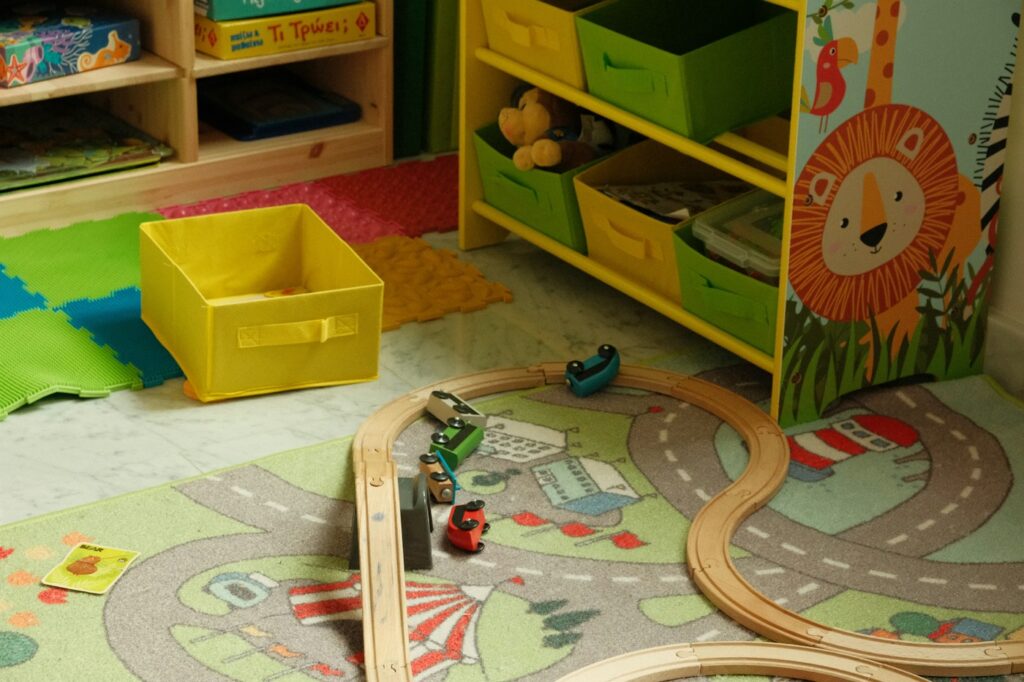 Edit the toys before the gifts arrive, give each kind of play one open bin on an anchored low shelf, keep small parts and spare batteries out of a toddler’s reach, skip latching lids and rotate the extras: thirteen toy storage ideas for the weeks before and after the holidays.
- Best Gift Wrap Organizers: 5 Picks for a Closet Corner, Under the Bed or the Back of a Door
 An upright box that holds up to 32 long rolls, a 41.5-inch under-bed bag for big collections, a water-resistant zip bag, an over-the-door organizer and a slim canvas case for eight rolls: five gift wrap organizers matched to the space you can give them.
- Cord and Cable Storage: 13 Ideas for the Spare Chargers, Cables and Adapters Nobody Can Find
 Match every cable to a device you still own, keep a sensible number of spares by connector type, coil them loosely, label the mystery bricks, hang the extension cords and send old batteries and dead cables to a proper drop-off: thirteen ways to store spare cords so the right one turns up in seconds.
- Window Condensation in Winter: Find Which Side the Water Is On, Then Match Humidity to the Forecast
 Do the wipe test to tell room-side fog from a failed seal, check a hygrometer against the outdoor low, keep humidity at or under 40% above 20°F and 30% below 10°F, run the fans, open the curtains by day and dry wet sills the same morning: a window condensation guide with a worked cold-week example.
- How to Clean a Range Hood Filter Before Holiday Cooking: Know Your Filter Type, Then Put It on the Calendar
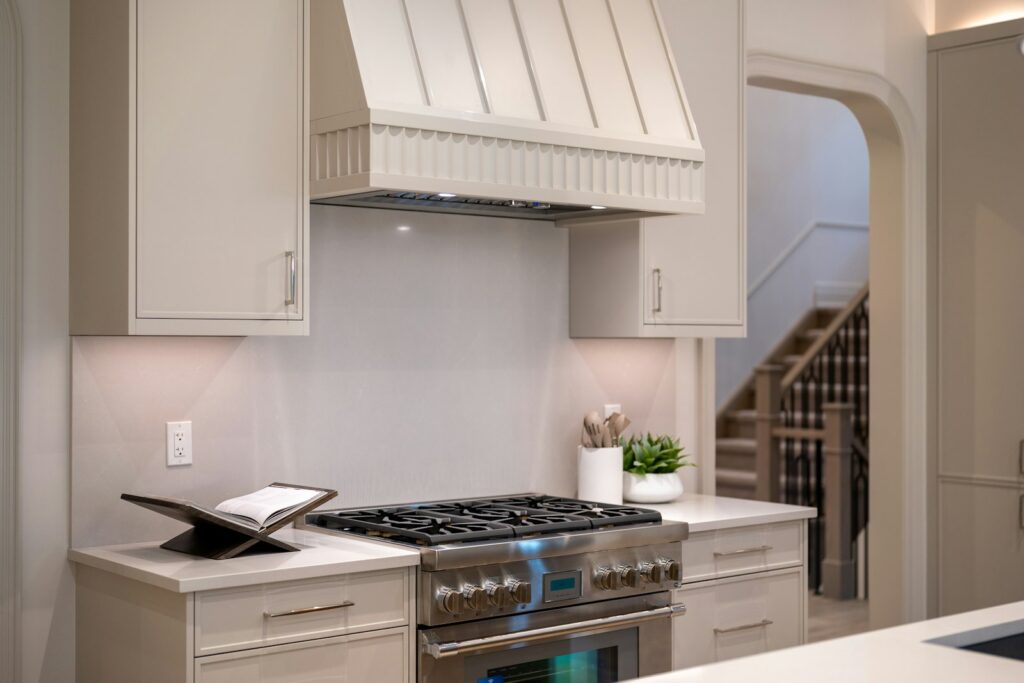 Wash metal mesh and baffle filters in hot soapy water or the dishwasher, replace charcoal filters instead of rinsing them, never run the hood with the filter out, and clean the weekend before Thanksgiving and again before Christmas: a range hood filter guide with a worked holiday cleaning calendar.
- Drying Clothes Indoors in Winter: Where the Rack Goes, How Much Rail You Need and What It Saves
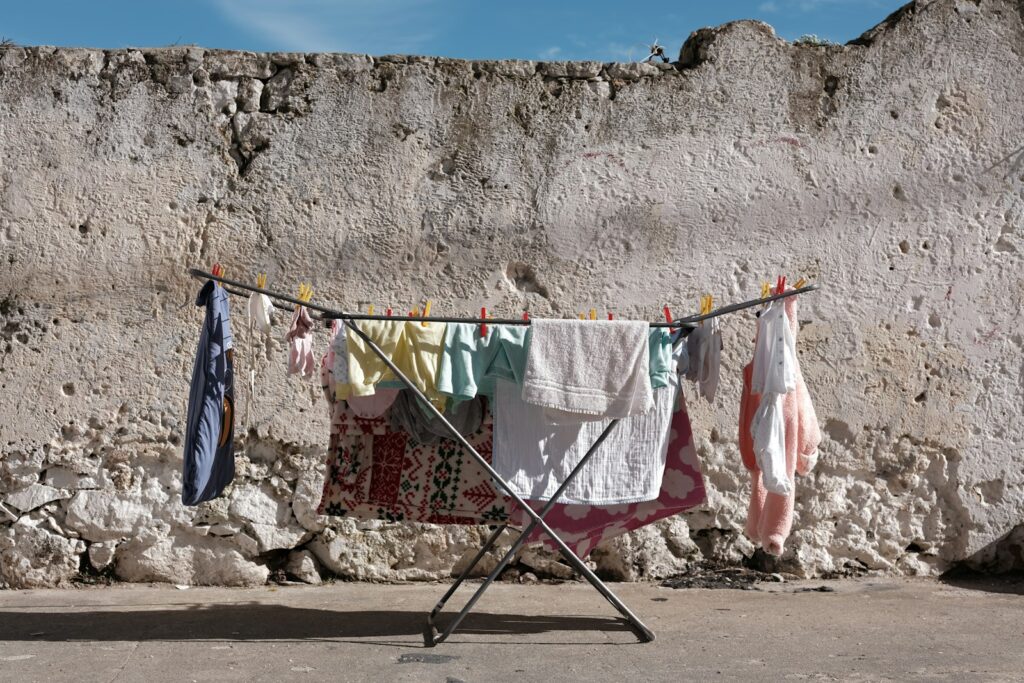 One load gives off about 2 liters of water as it air-dries, so put the rack where that moisture can leave, keep it 3 feet from the space heater, count inches of rail before you buy, space and turn the heavy things, watch humidity and window condensation, and know what the dryer you’re skipping really costs: indoor drying with the math.
- Hat, Glove and Scarf Storage by the Door: One Bin Per Person, Sized to What They Actually Wear
 Keep a daily set plus one dry spare per person, size an open bin for each from a quick measurement, dry wet mittens before they go in, clip pairs together, hang woven scarves and fold knits, skip long scarves on the playground and wash wool before it’s sealed away: a hat and glove station with a worked bin-size example.
- Guest Room That Doubles as Storage: Pick the Bed by Floor Space, Keep the Window Clear
 Count the nights the room really hosts, compare bed footprints before comfort, put storage on one wall behind a curtain, keep the window and door clear, leave guests half the closet and one drawer, and pack a single guest bin: a storage room that turns into a guest room in fifteen minutes, with a worked 10 by 11 foot example.
- Dining Room Storage for Holiday Hosting: Measure the Walkway First, Then Fit the Sideboard
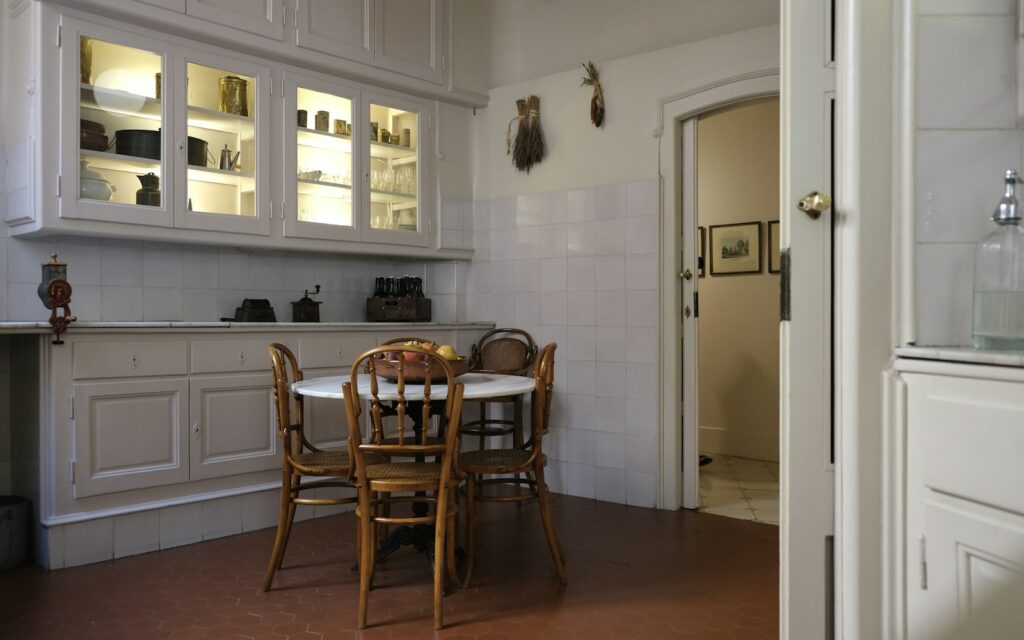 Measure the table with the leaf in, leave 44 inches where people walk and 32 where nobody passes, subtract the sideboard’s depth before you buy, anchor the hutch and give the leaf, extra chairs and holiday linens a home: dining room storage planned for the biggest night of the year, with a worked placement example.