Folded sweaters and jeans look neat on a closet shelf for about a day. Then one stack leans into the next and the whole shelf slides. Shelf dividers fix that cheaply, but only if they fit your shelf’s thickness and leave the right spacing for what you fold.
Measure the shelf’s thickness and the clear height above it. Clip-on dividers suit wood or laminate shelves of the right thickness, freestanding dividers suit wire shelves or renters, and open bins suit small or soft items. Space dividers to fit one folded stack, plus a finger’s width.
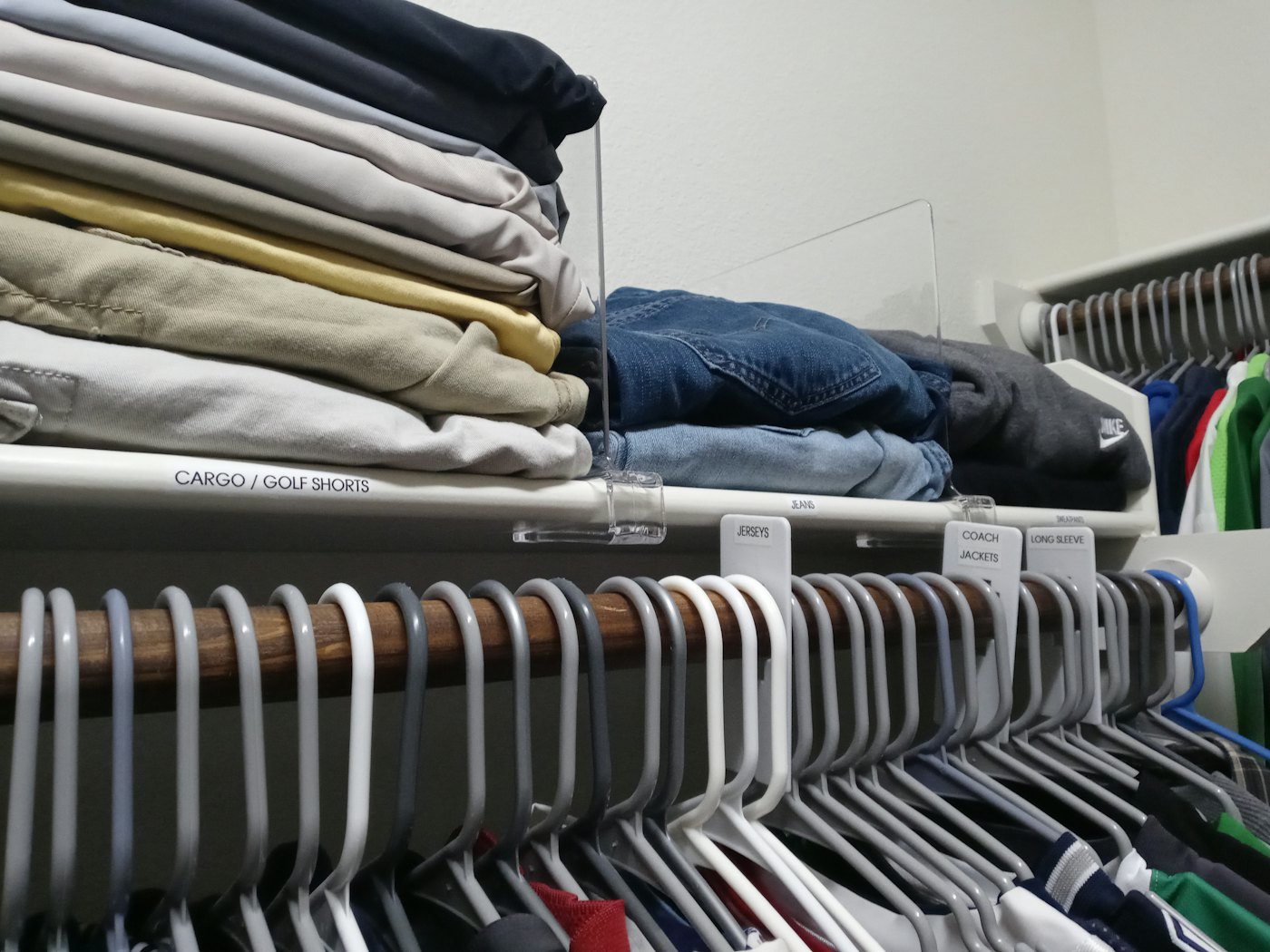
1. Measure three things
- Shelf thickness: clip-on dividers list a range of thicknesses they grip. Measure at the front edge.
- Shelf material: solid wood, laminate, or wire. Clip-on dividers usually need a solid shelf.
- Clear height and depth: from the shelf to the shelf above or the ceiling, and from the front edge to the wall.
Then fold one typical item, such as a sweater, the way you normally do and measure the width and height of a stack of three or four.
2. Three types of divider
| Type | Works best on | Check first |
|---|---|---|
| Clip-on dividers | Solid wood or laminate shelves | Listed thickness range matches your shelf; divider height vs. clear height |
| Freestanding dividers | Wire shelves, deep shelves, rentals | Base footprint; stability when the stack beside it is removed |
| Open bins or baskets | Soft or small items, high shelves | Bin depth vs. shelf depth; a handle or label at the front |
Clip-on dividers grip the shelf and need no tools, which also makes them renter-friendly. If your shelf is too thick, too thin, or wire, a freestanding divider or a bin is the better choice.
3. Plan the spacing before you place them
Lay your folded stacks on the shelf first, then put a divider between each stack. Leave about a finger’s width so you can slide a sweater out without lifting the stack. Wider stacks such as jeans need wider bays; narrow items such as T-shirts can be folded smaller to fit more bays.
Keep stacks low enough that you can see the top item and lift it without toppling the rest. If you need a step stool for a high shelf, use bins there rather than stacks.
Worked example: a 36-inch shelf
Imagine a 36-inch shelf with 12 inches of clear height. Your folded sweaters are about 11 inches wide. Three stacks take 33 inches; with two dividers between them and a small gap at each end, the shelf is full. If the divider uprights are each about half an inch thick, the plan still fits.
Need four bays? Fold sweaters narrower, to about 8 inches, or put the fourth group in a bin on the shelf above. Don’t squeeze stacks so tightly that removing one sweater drags the others.
4. What to buy
- Clip-on dividers if your shelf is solid and within the listed thickness range.
- Freestanding dividers or bins if it’s wire, very thick, or very deep.
- Labels for bins on high shelves.
Compare shelf dividers
Affiliate disclosure: As an Amazon Associate I earn from qualifying purchases. These links open Amazon search results for the item types in this guide, not recommendations for a specific model. Check the listed shelf thickness range before buying.
Questions
Do clip-on dividers damage shelves?
They can mark soft finishes if forced on. Check the thickness range, slide them on rather than prying, and look for padded clips if your shelf is painted.
Will dividers work on wire shelving?
Most clip-on dividers are designed for solid shelves. On wire, use freestanding dividers or bins, or lay a shelf liner first so stacks don’t sink between the wires.
How high should stacks go?
Low enough that you can see the top item and remove it without the stack falling, usually three to five folded sweaters.
Keep reading
More guides for your space


THE KINDRED JOURNAL
Latest from the journal
- Small Entryway Storage: A Landing Spot for Shoes, Bags, and Keys
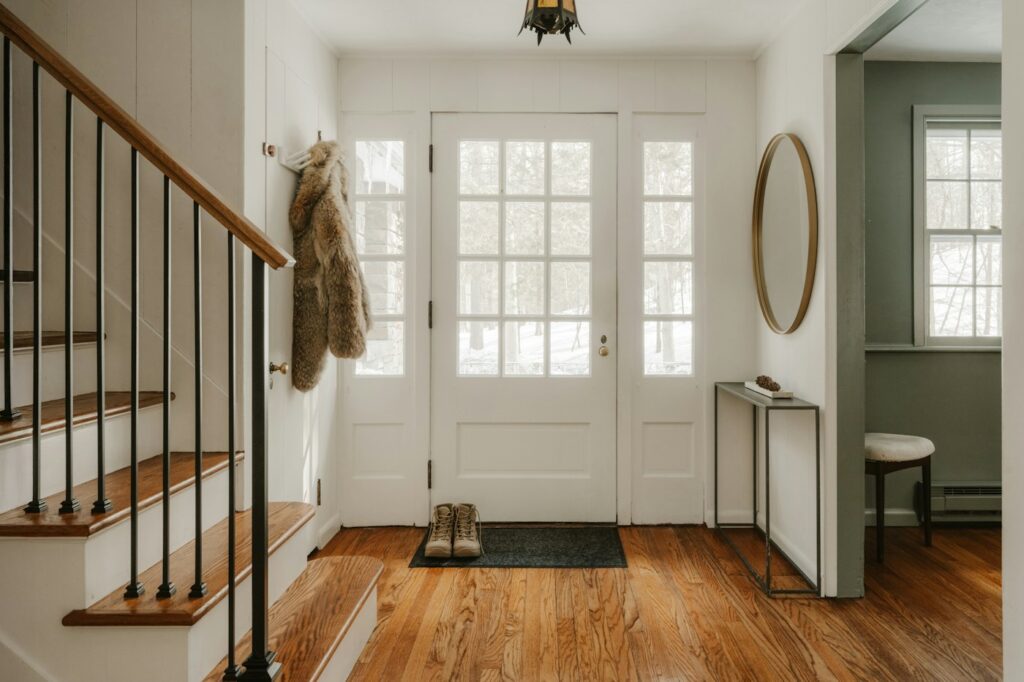 Give shoes, bags, coats, and keys one home each by the door. A small entryway plan with measurements, walkway clearance, and a short buying order.
- Kitchen Sink Cabinet Organization: Work Around the Pipes and Disposal
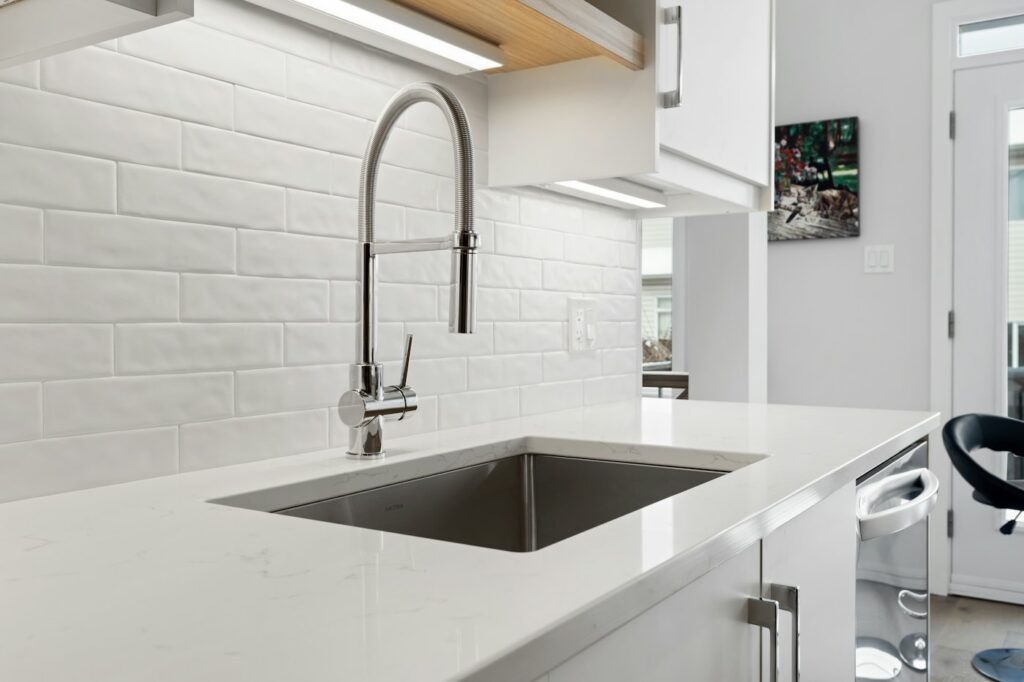 Plan the cabinet under a kitchen sink around the drain, disposal, and shutoff valves. Zones, measurements, leak checks, and storage that keeps access clear.
- Over-the-Door Pantry Racks: Will One Fit Your Door?
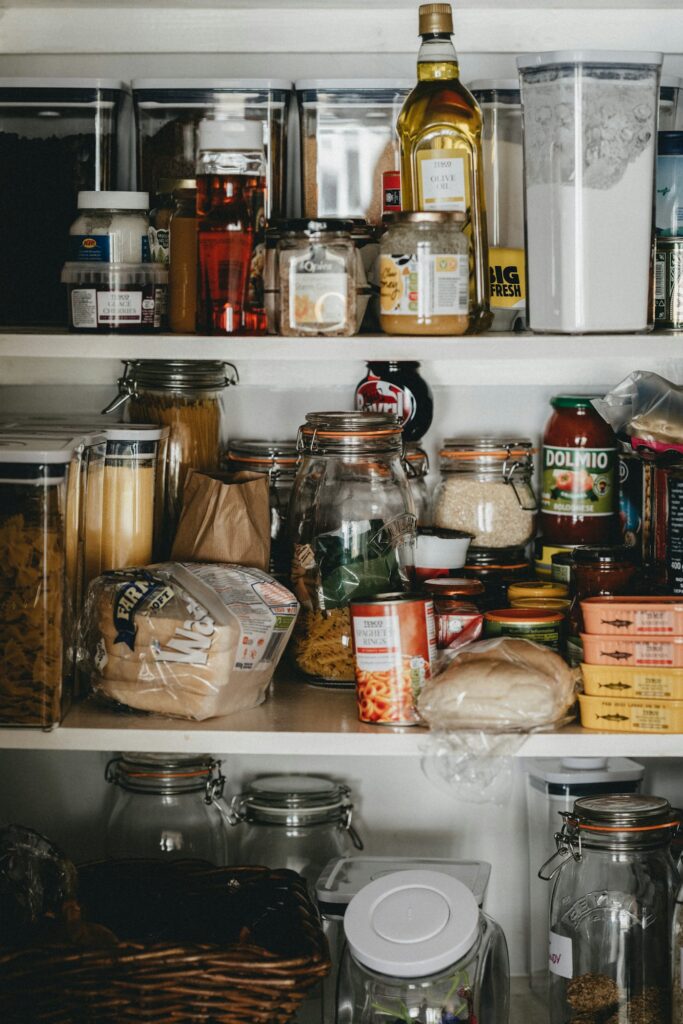 Check door thickness, the gap above the door, shelf clearance, and swing before buying an over-the-door pantry rack. A fit checklist with a worked example.
- Under-Bed Storage: Bins, Drawers, or Bed Risers?
 Measure the clearance under your bed, then choose low bins, rolling drawers, or bed risers. A practical guide with a fit calculation and stability checks.
- Closet Shelf Dividers: How to Measure, Choose, and Fit Them
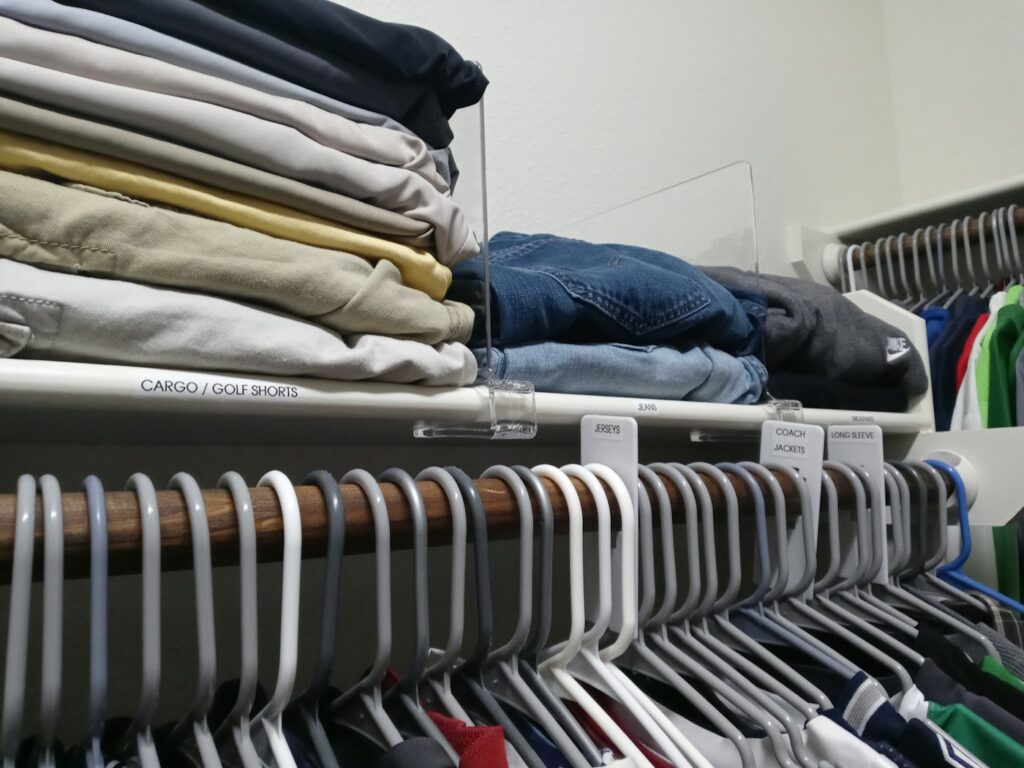 Stop folded stacks from toppling with shelf dividers. Measure shelf thickness and height, pick clip-on, freestanding, or bin-style dividers, and plan the spacing.
- How to Organize Deep Kitchen Cabinets So Nothing Gets Lost at the Back
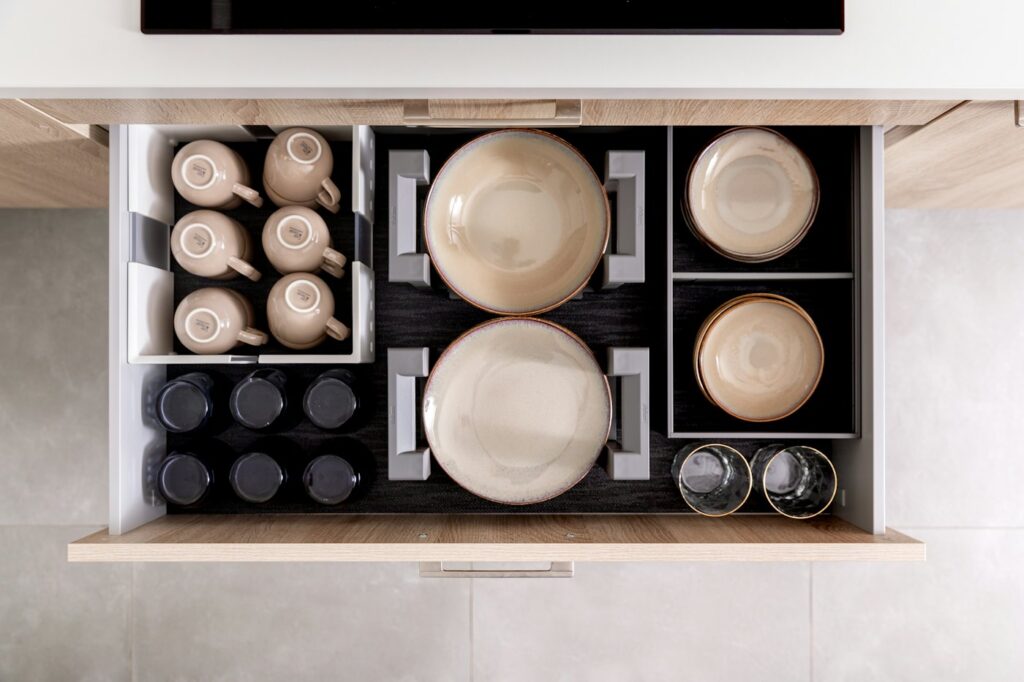 Bring the back of a deep cabinet forward with zones, handled bins, risers, or a pull-out. A practical plan with a fit calculation and a short buying order.
- Small Bathroom Storage Without Drilling: A Renter-Friendly Plan
 Use the space over the toilet, inside the vanity, behind the door, and on the counter without drilling into walls. A renter-friendly plan with fit and safety checks.
- How to Organize a Spice Drawer So You Can Read Every Label
 Measure the drawer and your jars, choose an order you’ll actually keep, then pick a tiered insert, a liner, or uniform jars. A practical spice drawer plan with a fit calculation.
- Garage Wall Storage: Plan the Wall Before You Buy the System
 Clear the floor, map the wall into three height bands, find the studs, then choose pegboard, rails, or shelving. A practical garage wall plan with load and safety checks.