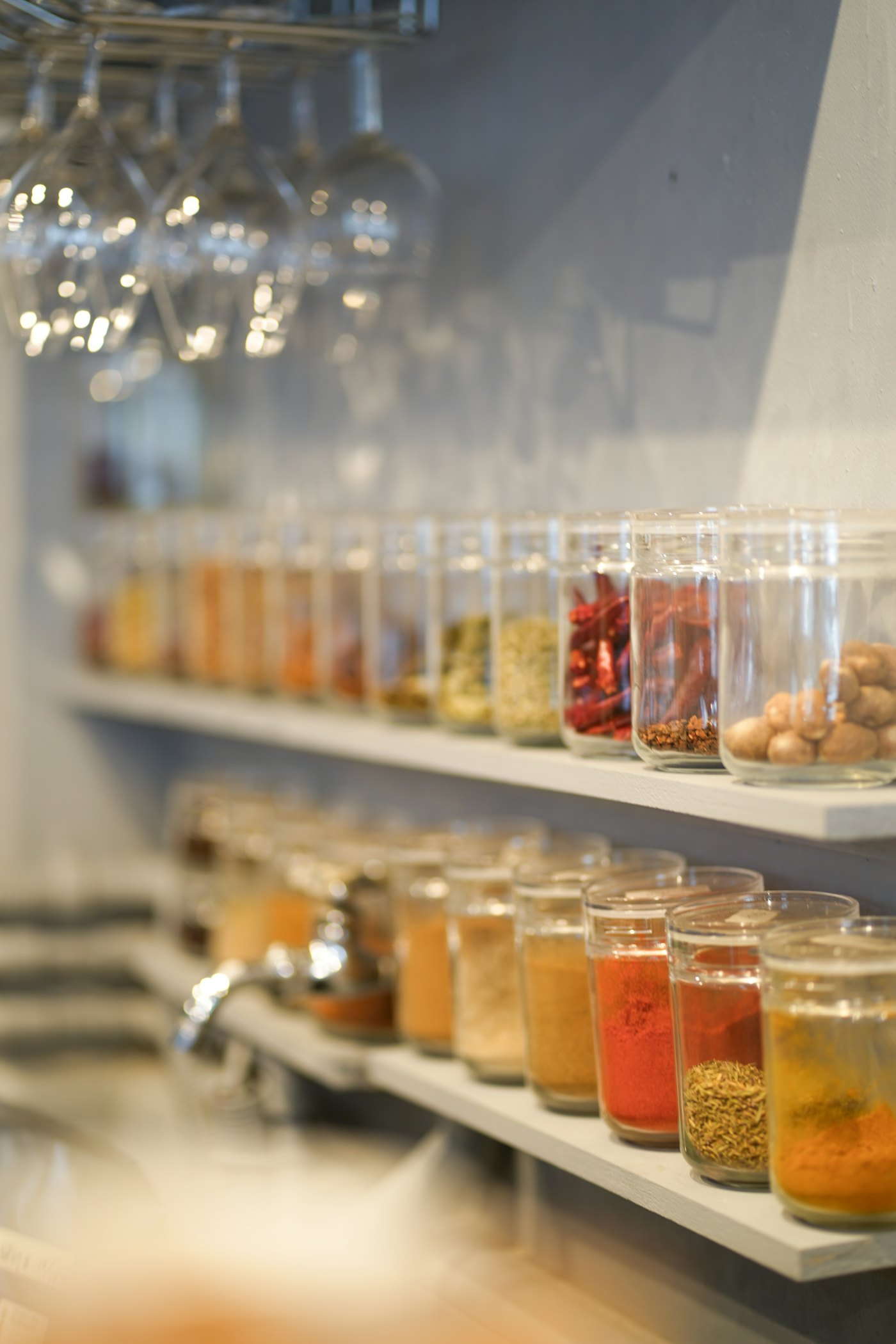
A spice cabinet hides labels behind each other; a spice drawer lets you see every jar from above. That only works if the jars lie or stand so the labels face up, and the drawer is deep enough to close. A little measuring decides whether you need an insert at all.
Measure the drawer’s inside width, depth, and height, and your most common jar. Store jars lying down on a tiered insert or a non-slip liner if the drawer is shallow, or upright with lid labels if it is deep. Arrange by how often you cook with each spice, not only alphabetically.
1. Measure the drawer and your jars
- Inside width of the drawer, wall to wall.
- Inside depth, front to back.
- Clear height: from the drawer floor to the underside of the countertop or the drawer above, with the drawer closed. This is often less than the drawer’s side height.
- Your most common jar: height and diameter, lid included.
Count your jars too. Most kitchens have a mix of sizes, so note how many are tall, short, or bags and packets.
2. Lying down or upright?
| Layout | Works when | Watch out for |
|---|---|---|
| Lying down on a tiered insert | The drawer is shallow and jars are similar in size | Insert width vs. drawer width; jar length vs. tier depth |
| Lying down on a non-slip liner | You want a cheap, flexible layout | Jars can still roll if the drawer slams |
| Upright with lid labels | The drawer is deep enough for the tallest jar to clear | Labels must go on lids to be readable from above |
| Packets in a small bin | You buy spices in bags | Clip bags shut and label the top edge |
Lying jars down saves height and shows the side label. Standing them up fits more jars into a deep drawer but needs labels on the lids.
3. Choose an order you’ll keep
Alphabetical order is easy to find but slow to cook from. Try this instead:
- Front row: the six to ten spices you use most weeks.
- Middle: grouped by cuisine or use, such as baking spices together.
- Back: rarely used spices and refills.
If you share the kitchen, alphabetical within each group is a good compromise.
Worked example: a 15-inch drawer
Imagine a drawer 15 inches wide inside, 20 inches deep, and 3 inches of clear height. Your common jar is about 4.5 inches tall with a 1.75-inch diameter. Standing upright, it won’t clear 3 inches, so the jars must lie down.
Lying down, each jar takes about 1.75 inches across. A 15-inch row fits about eight jars side by side with a little room to grip them. A tiered insert with three or four rows front to back would hold roughly 24 to 32 jars, depending on the insert’s tier depth. Before buying, check that the insert’s width fits inside 15 inches and its tiers are long enough for a 4.5-inch jar.
4. Keep it fresh and easy to reset
- Write the purchase or opening date on the lid when you start a new jar.
- Store spices away from the stove’s direct heat and steam where you can.
- When you refill, put the new jar at the back of its group and use the older one first.
- Do a two-minute check before a big grocery trip so you don’t buy duplicates.
5. What to buy, and in what order
- A non-slip drawer liner. It may be all you need.
- A tiered spice drawer insert, sized to your inside width.
- Uniform jars and labels, only if mismatched jars don’t fit the insert well.
Compare spice drawer storage
Affiliate disclosure: As an Amazon Associate I earn from qualifying purchases. These links open Amazon search results for the item types in this guide, not recommendations for a specific model. Match the insert width and tier depth to your measurements.
Questions
Is it worth moving everything into matching jars?
Only if your current jars don’t fit the drawer or the insert. Matching jars look neat but take time to fill and label. Keep the original label information if you decant.
Which drawer should hold spices?
One close to where you cook, but not directly above the stove or beside the oven where heat builds up.
What about a very wide drawer?
Use two inserts side by side, or one insert plus a small bin for packets. Measure the combined width first.
Keep reading
More guides for your space
THE KINDRED JOURNAL
Latest from the journal
- Small Entryway Storage: A Landing Spot for Shoes, Bags, and Keys
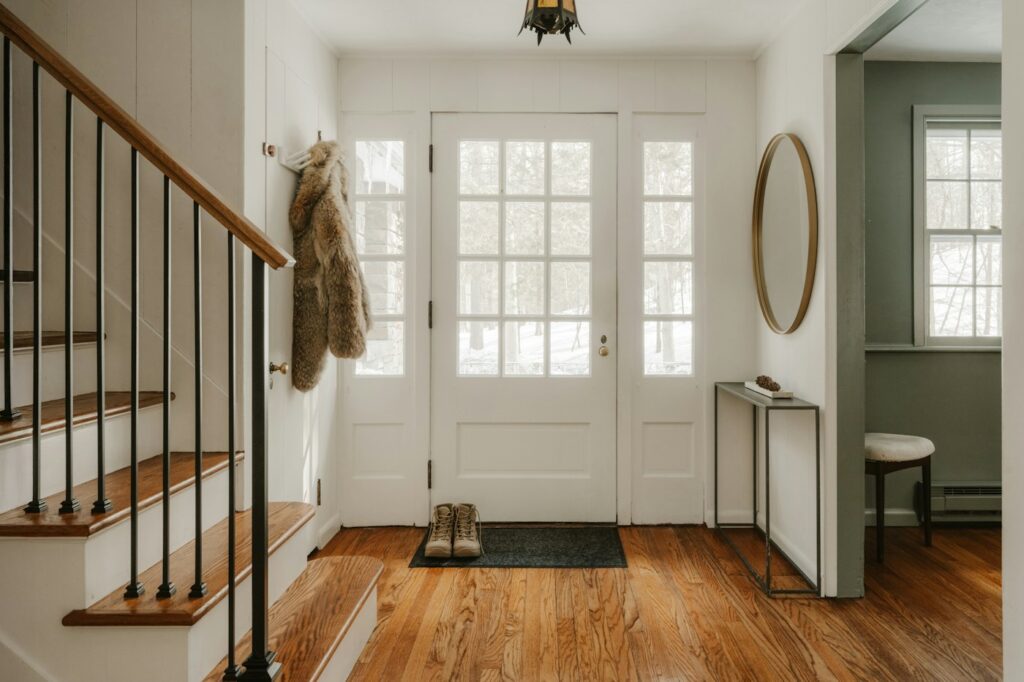 Give shoes, bags, coats, and keys one home each by the door. A small entryway plan with measurements, walkway clearance, and a short buying order.
- Kitchen Sink Cabinet Organization: Work Around the Pipes and Disposal
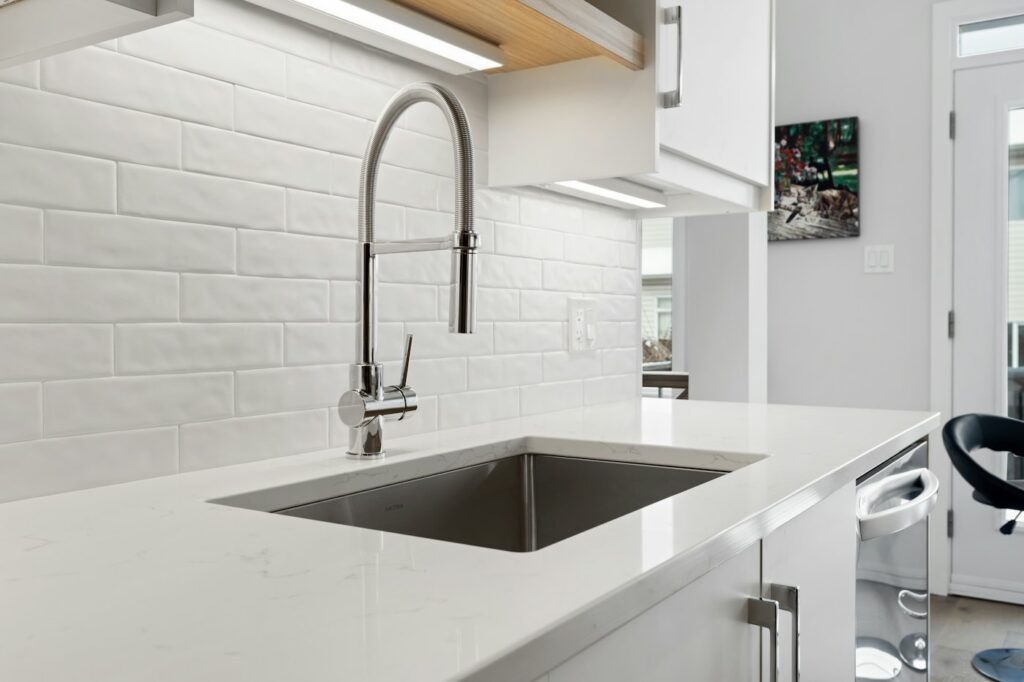 Plan the cabinet under a kitchen sink around the drain, disposal, and shutoff valves. Zones, measurements, leak checks, and storage that keeps access clear.
- Over-the-Door Pantry Racks: Will One Fit Your Door?
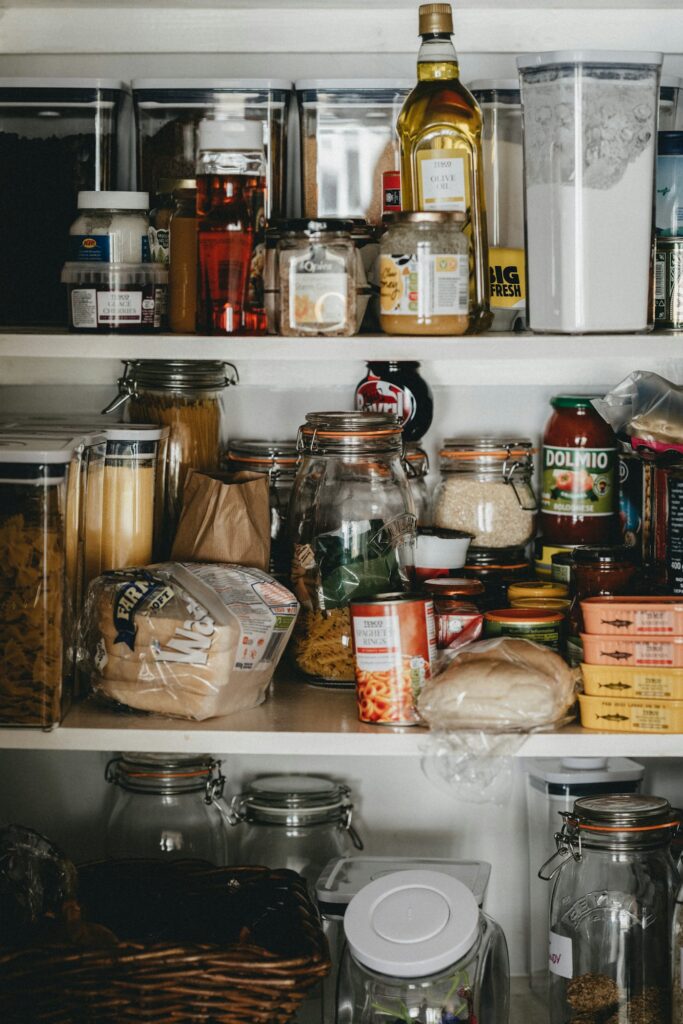 Check door thickness, the gap above the door, shelf clearance, and swing before buying an over-the-door pantry rack. A fit checklist with a worked example.
- Under-Bed Storage: Bins, Drawers, or Bed Risers?
 Measure the clearance under your bed, then choose low bins, rolling drawers, or bed risers. A practical guide with a fit calculation and stability checks.
- Closet Shelf Dividers: How to Measure, Choose, and Fit Them
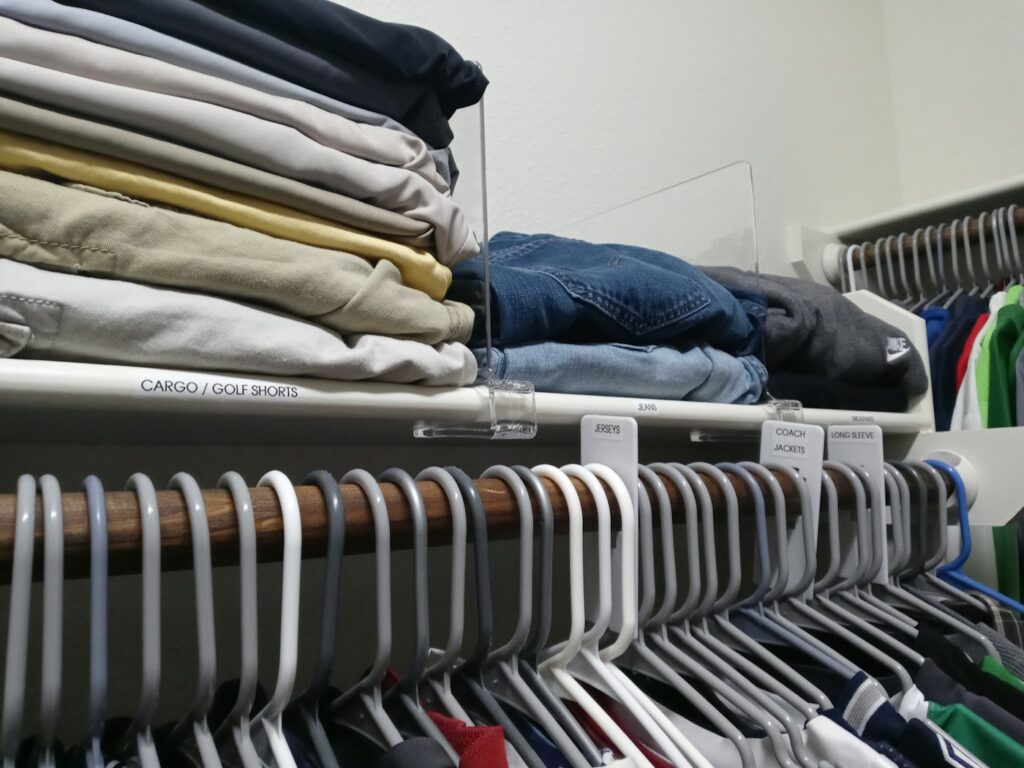 Stop folded stacks from toppling with shelf dividers. Measure shelf thickness and height, pick clip-on, freestanding, or bin-style dividers, and plan the spacing.
- How to Organize Deep Kitchen Cabinets So Nothing Gets Lost at the Back
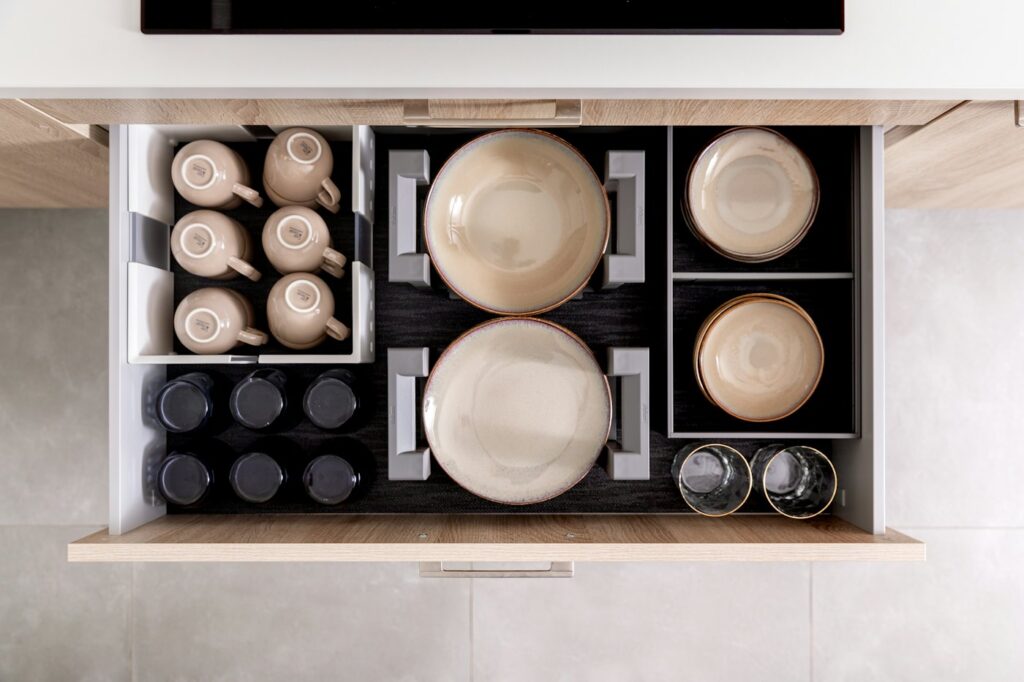 Bring the back of a deep cabinet forward with zones, handled bins, risers, or a pull-out. A practical plan with a fit calculation and a short buying order.
- Small Bathroom Storage Without Drilling: A Renter-Friendly Plan
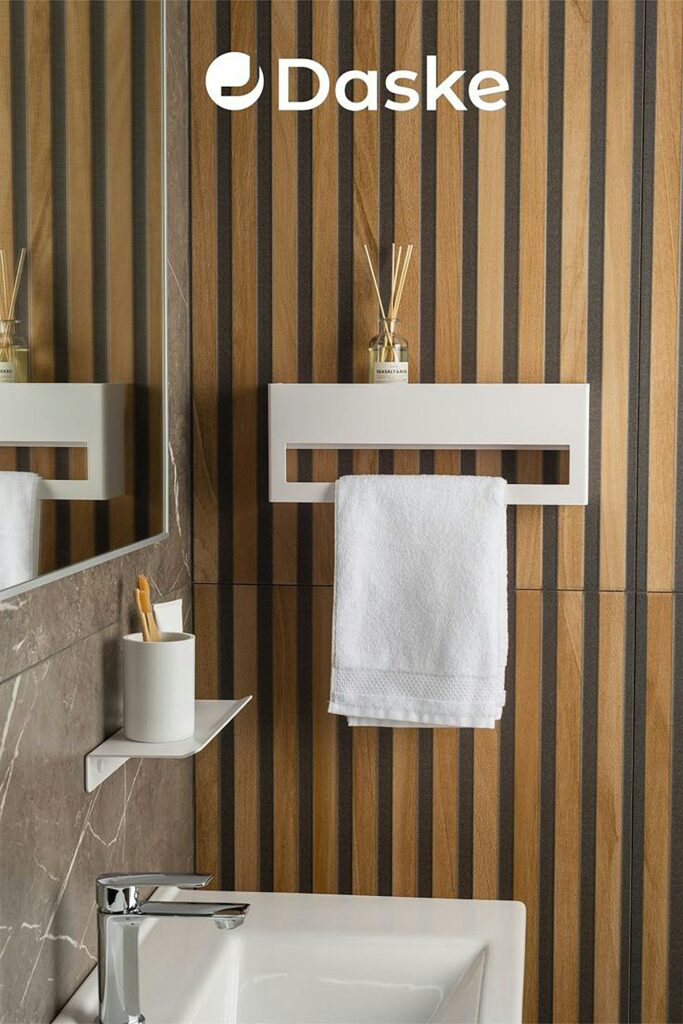 Use the space over the toilet, inside the vanity, behind the door, and on the counter without drilling into walls. A renter-friendly plan with fit and safety checks.
- How to Organize a Spice Drawer So You Can Read Every Label
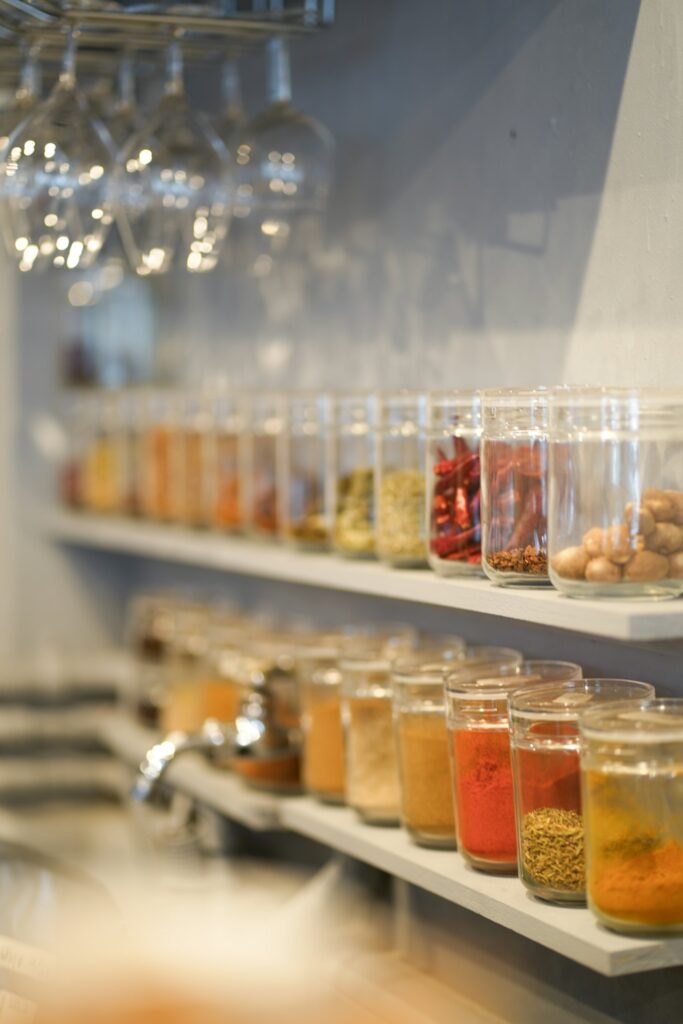 Measure the drawer and your jars, choose an order you’ll actually keep, then pick a tiered insert, a liner, or uniform jars. A practical spice drawer plan with a fit calculation.
- Garage Wall Storage: Plan the Wall Before You Buy the System
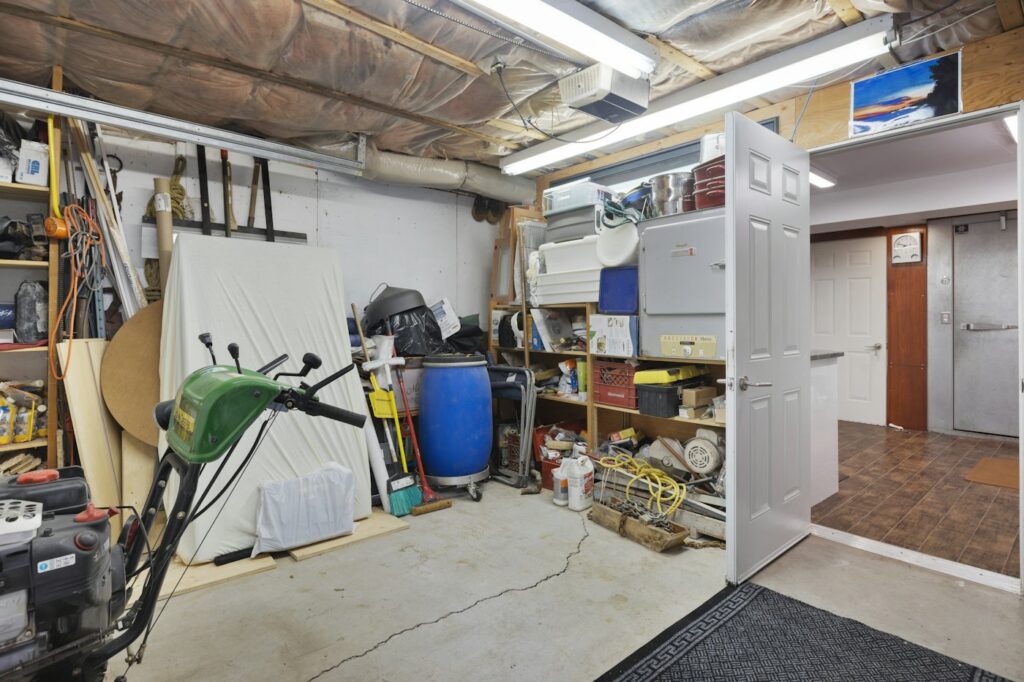 Clear the floor, map the wall into three height bands, find the studs, then choose pegboard, rails, or shelving. A practical garage wall plan with load and safety checks.