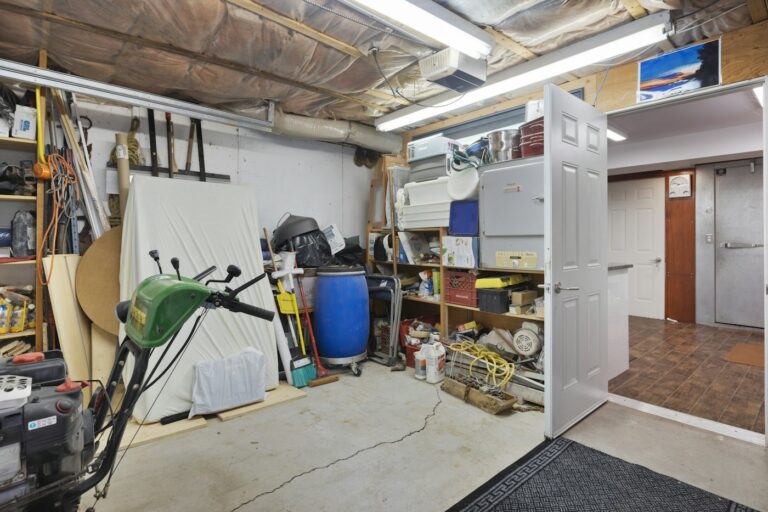
A standard base cabinet is close to two feet deep, and most of us only use the front half. The fix isn’t more storage; it’s making the back reachable. Every method below does one thing: brings the back of the cabinet to the front.
Put daily items in the front third, group the rest into handled bins you can slide out like drawers, and add a pull-out only where you open the cabinet every day. Measure the opening, not the box, before buying anything.
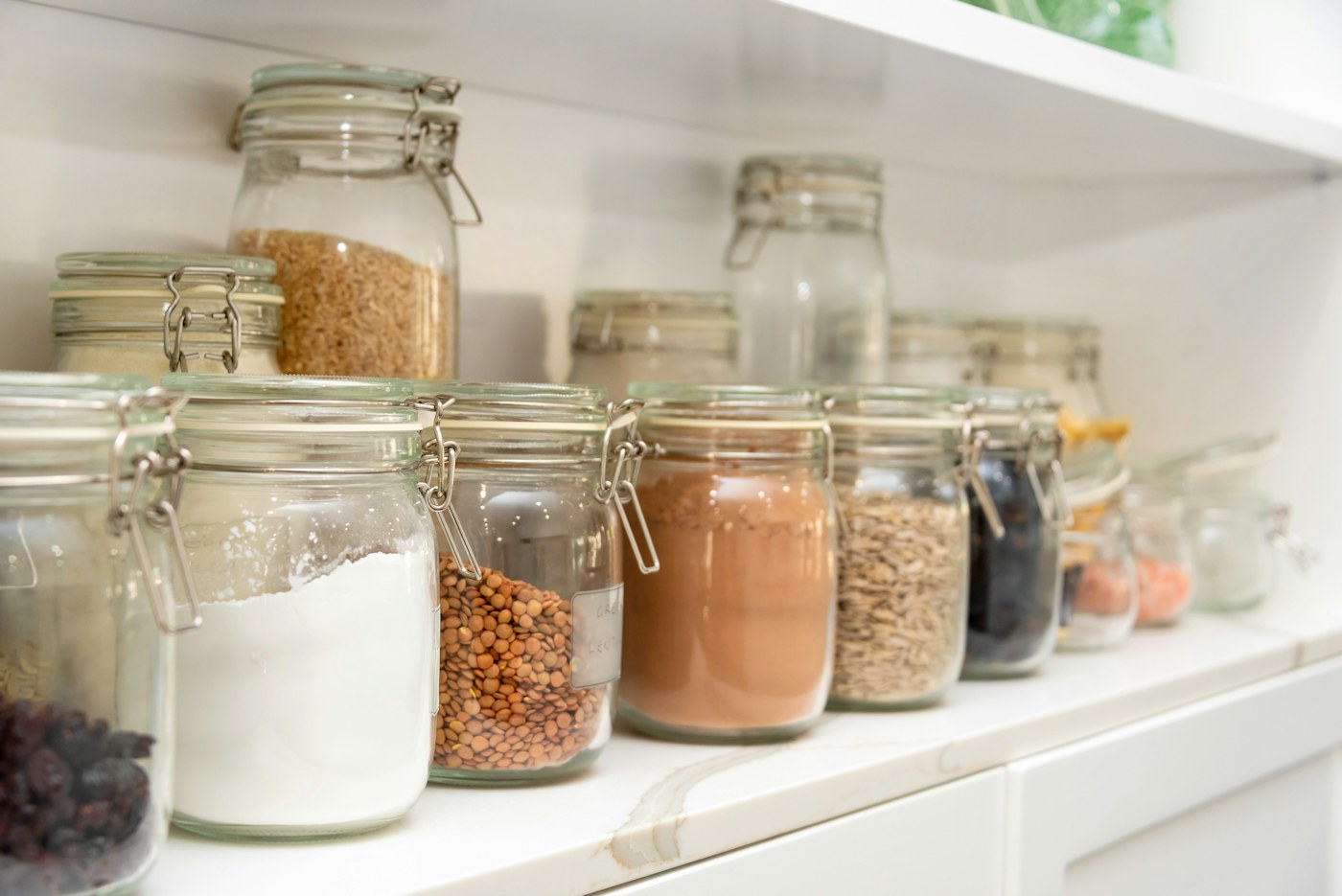
1. Think in front, middle, and back
Daily
Weekly
Occasional, in a bin
Empty the cabinet and sort what was in it by how often you use it. Daily items belong in the front third. Anything occasional goes to the back, but always inside something with a handle, so you pull the bin rather than reaching in.
2. Four ways to reach the back
| Method | Best for | Check first |
|---|---|---|
| Handled bins | Food storage containers, baking supplies, cleaning products | Bin length close to cabinet depth; handle at the front |
| Shelf risers | Plates, bowls, short cans | Height above the riser; riser depth vs. shelf depth |
| Vertical dividers | Baking sheets, cutting boards, trays | Height of the tallest item; mounting method |
| Pull-out organizer | Pots, pans, heavy items you use daily | Minimum opening, depth, and mounting; see our pull-out comparison |
Handled bins: the cheapest pull-out
A long bin with a handle behaves like a drawer without hardware. Choose a bin that runs most of the cabinet’s depth, so nothing hides behind it. Keep loaded bins light enough to lift with one hand.
Risers for stacked dishes
A riser doubles one shelf into two levels. It helps most with plates and bowls, where you would otherwise lift a stack to reach the one underneath.
Dividers for flat items
Baking sheets and boards stored on edge are easier to slide out than a stack. Dividers that tension or stand freely suit renters; screw-in dividers need the cabinet floor and a clear mounting surface.
Pull-outs where you open the door daily
A pull-out is the most convenient option and the most work to install. Put one in the cabinet you open most, usually the one holding pots or everyday food containers.
3. Measure the opening, not the box
- Clear width at the narrowest point with the door open, including hinges and the face frame.
- Usable depth from the face frame to the back wall or nearest pipe.
- Clear height to any shelf above, and whether that shelf is adjustable.
- The center stile, if a double-door cabinet has one: it splits the opening.
Worked example: a 24-inch-deep corner of pots
Imagine a single-door base cabinet with a 13-inch clear opening, 22 inches of usable depth, and a fixed shelf 14 inches above the floor. Pots are stacked on the floor and lids are everywhere.
Option one: two handled bins, each about 6 inches wide and 20 inches long, on the floor, one for lids and one for small pans, with the large pot standing at the front. Option two: a single low pull-out that fits under the 14-inch shelf. Option one costs less and needs no tools; option two is smoother if you cook daily. Start with option one and upgrade only if it frustrates you.
4. What to buy, and in what order
- Handled bins sized to your cabinet depth.
- Shelf risers for dish cabinets.
- Vertical dividers for baking sheets and boards.
- A pull-out for the one cabinet you open most.
Compare deep cabinet storage
Affiliate disclosure: As an Amazon Associate I earn from qualifying purchases. These links open Amazon search results for the item types in this guide, not recommendations for a specific model. Match dimensions to your measurements.
Questions
Should I remove the shelf in a base cabinet?
If you mainly store tall pots or want a full-height pull-out, removing an adjustable shelf can help. If the shelf is fixed, plan around it instead.
Where should pot lids go?
On edge in a bin or a divider beside the pots, not stacked on top of them. Lids stacked separately are what make a pot cabinet feel full.
Are lazy Susans good for deep cabinets?
They work best in corner cabinets and for small items. In a standard rectangular cabinet, a round turntable leaves the corners unused.
Keep reading
More guides for your space
THE KINDRED JOURNAL
Latest from the journal
- Small Entryway Storage: A Landing Spot for Shoes, Bags, and Keys
- Kitchen Sink Cabinet Organization: Work Around the Pipes and Disposal
- Over-the-Door Pantry Racks: Will One Fit Your Door?
- Under-Bed Storage: Bins, Drawers, or Bed Risers?
- Closet Shelf Dividers: How to Measure, Choose, and Fit Them
- How to Organize Deep Kitchen Cabinets So Nothing Gets Lost at the Back
- Small Bathroom Storage Without Drilling: A Renter-Friendly Plan
- How to Organize a Spice Drawer So You Can Read Every Label
- Garage Wall Storage: Plan the Wall Before You Buy the System