A small home office, whether it’s a spare room, a bedroom corner, or a closet with a desk in it, usually runs out of surface before it runs out of space. Papers, chargers, a printer, and supplies spread across the desk because they have nowhere else to go. Plan storage around how far each thing is from your chair, and you can often fit it all without adding a big piece of furniture.
Keep what you use hourly within arm’s reach of your chair, what you use weekly within a step, and archives out of the room or up high. Use under-desk space and the wall above the desk before buying more furniture, choose a rolling cart or slim file cabinet that fits under or beside the desk, and anchor any tall shelving to the wall.
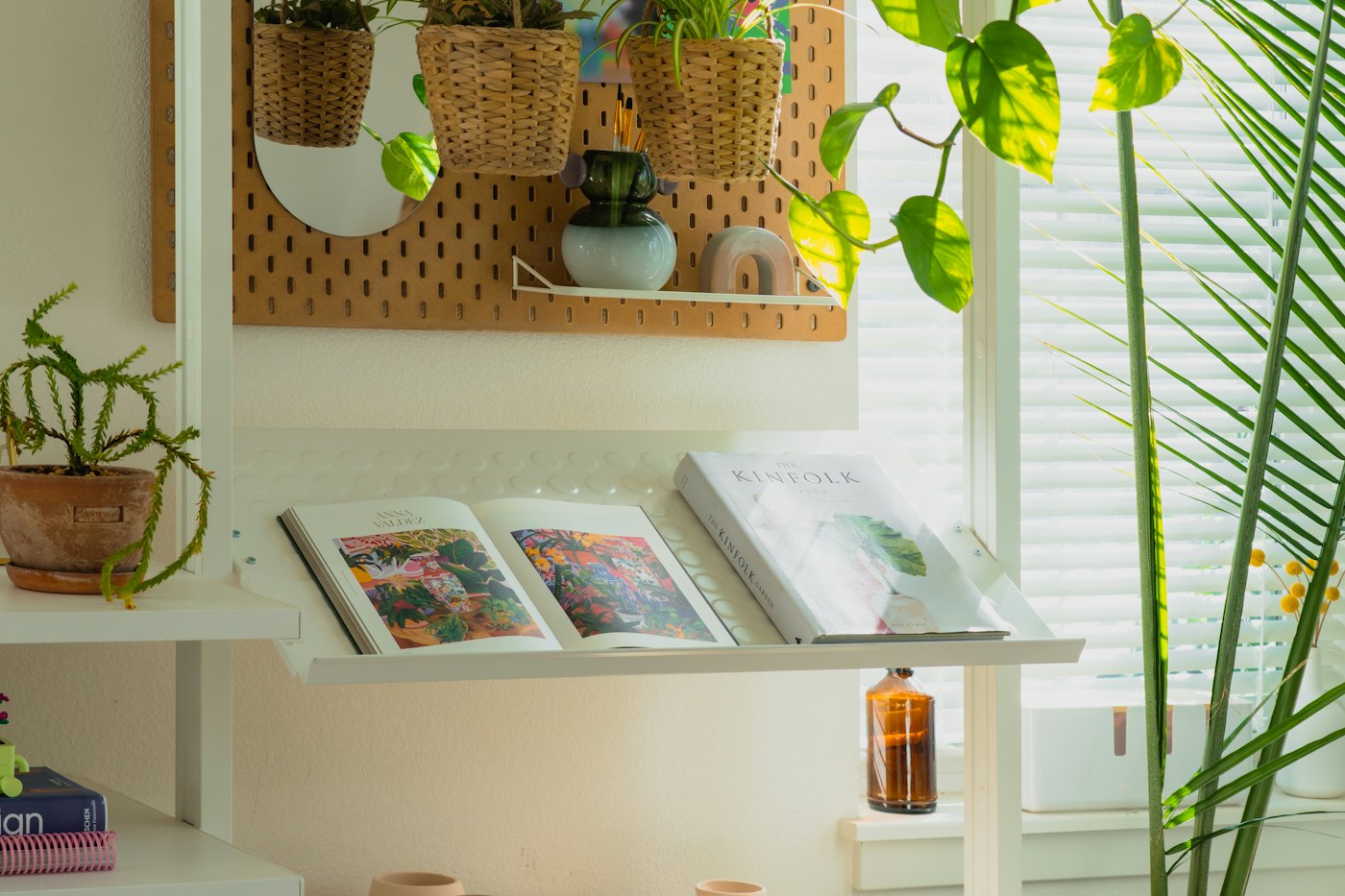
1. Sort what the office actually holds
Clear the desk and the floor around it into a box, then sort into groups:
- Daily tools: notebook, pens, headphones, the charger you use every day.
- Weekly supplies: printer paper, envelopes, sticky notes, spare cables.
- Active papers: bills to pay, forms to file, current projects.
- Reference and archive: tax records, manuals, finished projects.
- Equipment: printer, shredder, external drives, a second monitor.
- Not office items: anything that drifted in from the rest of the house.
Most small offices hold more archive and backstock than they need to. Paper you must keep but rarely open can usually live in a labeled box in a closet rather than at the desk.
2. Store everything by reach distance
Daily tools, active papers
Supplies, printer, files
Archives, backstock
Sit in your chair and sweep your arms. Everything you touch daily should land in that arc: a desk drawer, a small tray, or a wall shelf just above the monitor. Things you need weekly can sit a step away, such as on a cart or a low shelf. Archives go up high, into a closet, or into another room.
3. Choose storage formats that fit the space
| Format | Best for | Check first |
|---|---|---|
| Desk drawer organizer | Pens, cables, small daily tools | Inside drawer height and depth |
| Rolling cart or under-desk drawer unit | Supplies and active files you want nearby but off the desk | Height under the desk, leg room, and clearance for your chair |
| Wall shelf or rail above the desk | Books, bins, a lamp, small supplies | Stud location, bracket rating, head clearance when you stand |
| Slim filing cabinet | Active and reference files | Letter or legal size, drawer depth, anti-tip features |
| Bookcase or cube shelf with bins | Printer, paper, labeled bins | Footprint, shelf height for the printer, anchoring |
| Monitor stand with storage | Raising a screen and gaining a shelf underneath | Height for comfortable viewing, weight rating, desk depth |
Under-desk space and the wall above the desk are often the most underused areas in a small office. Use them before adding a new piece of furniture.
4. Give paper a simple flow
Paper piles up when there’s no decision point. A three-step flow works in most homes:
- Inbox: one tray or folder for everything new. Empty it on a set day each week.
- Action: a few labeled folders for bills, forms, and current projects, kept upright in a file holder or cart drawer.
- Reference: a file drawer or box for records you must keep, labeled by category and year.
- Shred: a small bin or bag for papers with personal information, shredded when it fills.
- Scan: go paperless only for documents you’re confident you don’t need as originals. Check record-keeping guidance for taxes and legal papers before discarding them.
5. Tech, chargers, and cables
Small electronics take up more room than they seem to, mostly because of the cables and power bricks that come with them.
- Pick one charging spot. A small tray or shelf near an outlet where the phone, earbuds, and keyboard charge. Everything else stays unplugged.
- Keep only the cables you use. Test the spares, label them by type, and store them loosely coiled in small bags or a divided box. Tight wraps can strain cables over time.
- Give drives and small devices a lidded box so they don’t collect dust or get knocked off the desk.
- Handle spare batteries with care. Keep them in their packaging or a case, not loose with coins or paper clips. Take used lithium batteries to a recycling drop-off rather than the trash, taping the terminals first if the program asks.
- Let chargers breathe. Don’t bury a charging laptop brick or power bank in a closed drawer.
6. If the office is a closet, a corner, or the dining table
Many small offices share space with something else. The storage that works depends on what the room has to be when you’re not working.
| Setup | Main challenge | Storage that helps |
|---|---|---|
| Closet office | Shallow depth, poor light, heat from electronics | Use the existing closet shelves above the desk, add a lamp, and leave the doors open while working so equipment can vent |
| Bedroom corner | Work stays in view at night | A cabinet with doors, or a cart that rolls into a closet at the end of the day |
| Living room nook | Needs to look like part of the room | Closed bins on an open shelf; cables routed behind furniture |
| Dining or kitchen table | Everything must clear off for meals | One portable caddy or tote with laptop, charger, notebook, and pens, with a fixed home on a nearby shelf |
In shared spaces, aim for a pack-up you can finish in about five minutes. If putting work away takes much longer than that, it tends to stay out.
Worked example: a cart under a 24-inch desk
Imagine a desk 48 inches wide and 24 inches deep, with 28 inches from floor to the underside of the desktop. Your chair needs the center 24 inches for your knees, which leaves about 12 inches on each side under the desk.
A three-drawer rolling cart about 12 inches wide and 15 inches deep would fit on one side, as long as its height, including casters, is under 28 inches with a little margin. Say you look for one no taller than about 26 inches. Its drawers hold printer paper, envelopes, and spare cables.
On the other side, a 12-inch-wide upright file holder sits on the floor for action folders. Above the desk, one shelf fastened into studs holds reference binders, set high enough that your head clears it when you stand up. Measure your own desk; heights and depths vary.
7. Fit and safety
- Anchor bookcases, cube shelves, and tall cabinets to the wall with the anti-tip hardware provided. Tip-overs are a real hazard, especially with children in the home.
- Open only one file drawer at a time unless the cabinet’s instructions say otherwise, and load heavy files in the bottom drawers first.
- Fasten wall shelves into studs with the specified hardware, and keep heavy items off high shelves.
- Don’t overload power strips or daisy-chain them. Our cable management guide covers safe routing.
- Leave space around a printer, computer, or other equipment for ventilation, as the manufacturer recommends.
8. Shopping list for a small office
- A desk drawer organizer sized to your drawer.
- A rolling cart or under-desk drawer unit that fits beside your knee space.
- An upright file holder or a slim file cabinet for active papers.
- A wall shelf above the desk, fastened into studs.
- A shredder, if you handle much personal paperwork.
Compare small home office storage
Affiliate disclosure: As an Amazon Associate I earn from qualifying purchases. These links open Amazon search results for the formats in this guide, not recommendations for a specific model. Check dimensions against your desk and floor space before buying.
Questions
How do I add storage to an office with no closet?
Use the wall above the desk, the space under it, and one bookcase anchored to the wall. A cart can roll into another room when you need the floor back.
Where should the printer go in a small office?
Within a step of the desk rather than on it, on a low shelf or cart. If you print rarely, it can live in a closet and come out when needed, as long as it has ventilation when in use.
Is a filing cabinet worth it for a home office?
If you keep more than a few folders of paper, a slim cabinet often beats boxes because files stay upright and easy to scan. If you keep very little paper, a file box or cart drawer is enough.
Related: Craft supply storage ideas
Keep reading
More guides for your space

THE KINDRED JOURNAL
Latest from the journal
- What Holiday Lights Really Cost to Run: LED vs. Incandescent, With the Math for Your Own Display
 Read the watts off each tag, multiply by your hours and your own rate, and the answer is clear: eight incandescent strings cost about $25.70 a season in our worked example and their LED versions about $2.18, big C9 bulbs pay back an LED swap in about three seasons, and working mini lights can wait.
- Ideal Indoor Humidity in Winter: Find Your Number, Check Your Meter, Then Add Only What the Room Needs
 Aim for 30 to 50% and never humidify past 50%, let the windows set the limit on the coldest nights, salt-test your hygrometer before you trust it, seal drafts first because a whole bedroom needs only about 4½ ounces of water, and clean the tank on a schedule: a winter humidity guide with the math worked out.
- Toy Storage Ideas: 13 Ways to Make Room Before the Holiday Toy Wave
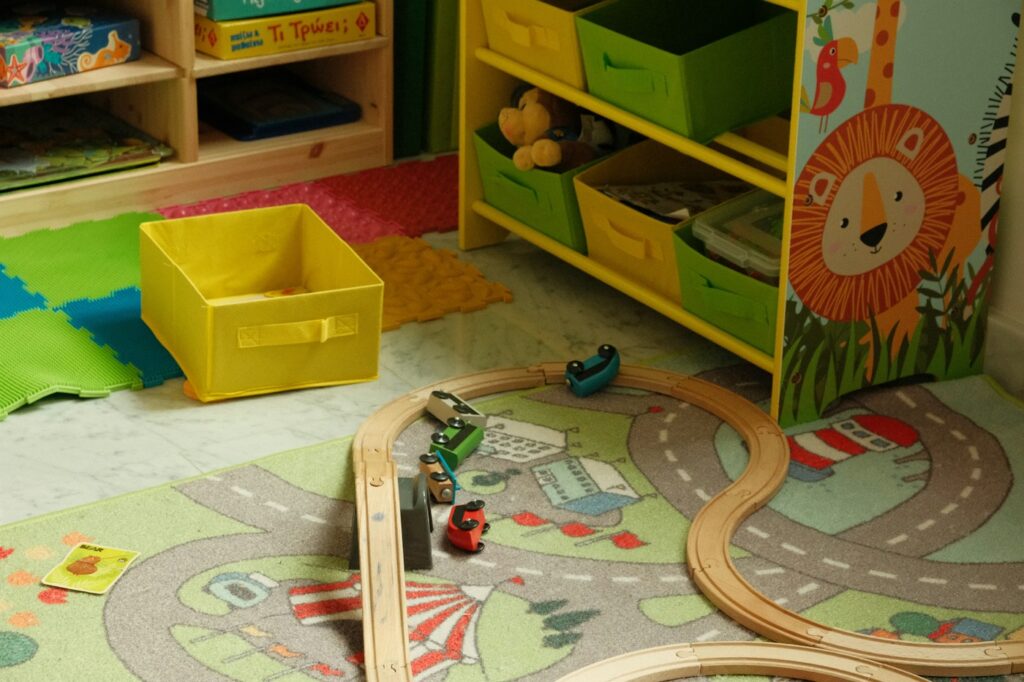 Edit the toys before the gifts arrive, give each kind of play one open bin on an anchored low shelf, keep small parts and spare batteries out of a toddler’s reach, skip latching lids and rotate the extras: thirteen toy storage ideas for the weeks before and after the holidays.
- Best Gift Wrap Organizers: 5 Picks for a Closet Corner, Under the Bed or the Back of a Door
 An upright box that holds up to 32 long rolls, a 41.5-inch under-bed bag for big collections, a water-resistant zip bag, an over-the-door organizer and a slim canvas case for eight rolls: five gift wrap organizers matched to the space you can give them.
- Cord and Cable Storage: 13 Ideas for the Spare Chargers, Cables and Adapters Nobody Can Find
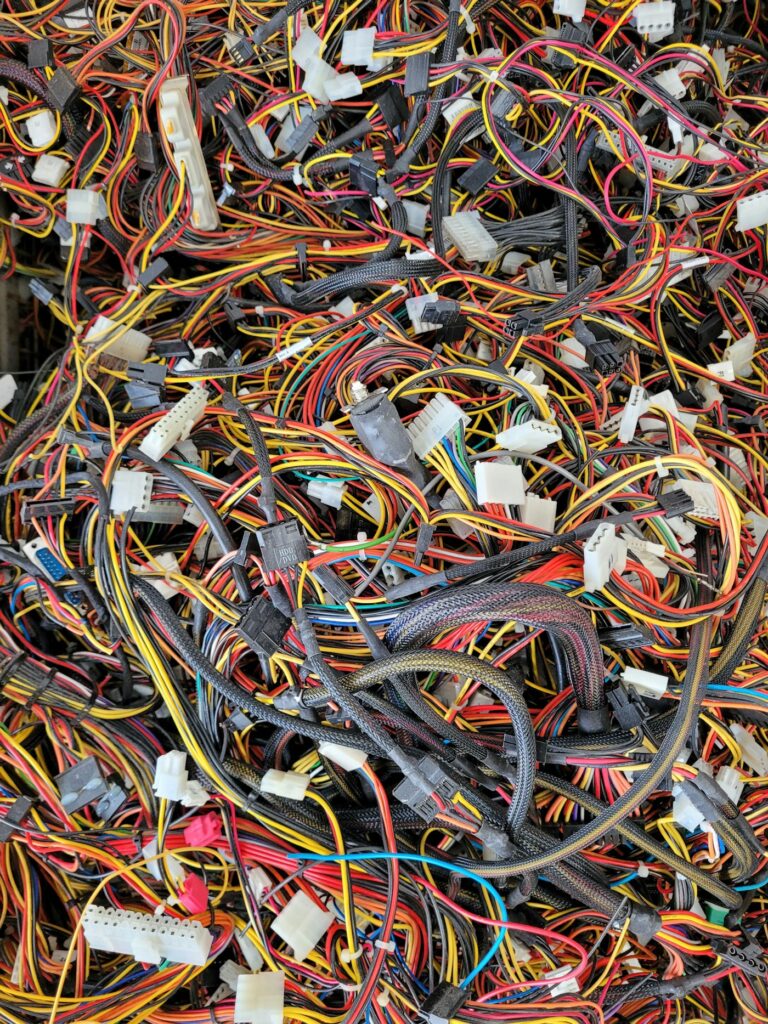 Match every cable to a device you still own, keep a sensible number of spares by connector type, coil them loosely, label the mystery bricks, hang the extension cords and send old batteries and dead cables to a proper drop-off: thirteen ways to store spare cords so the right one turns up in seconds.
- Window Condensation in Winter: Find Which Side the Water Is On, Then Match Humidity to the Forecast
 Do the wipe test to tell room-side fog from a failed seal, check a hygrometer against the outdoor low, keep humidity at or under 40% above 20°F and 30% below 10°F, run the fans, open the curtains by day and dry wet sills the same morning: a window condensation guide with a worked cold-week example.
- How to Clean a Range Hood Filter Before Holiday Cooking: Know Your Filter Type, Then Put It on the Calendar
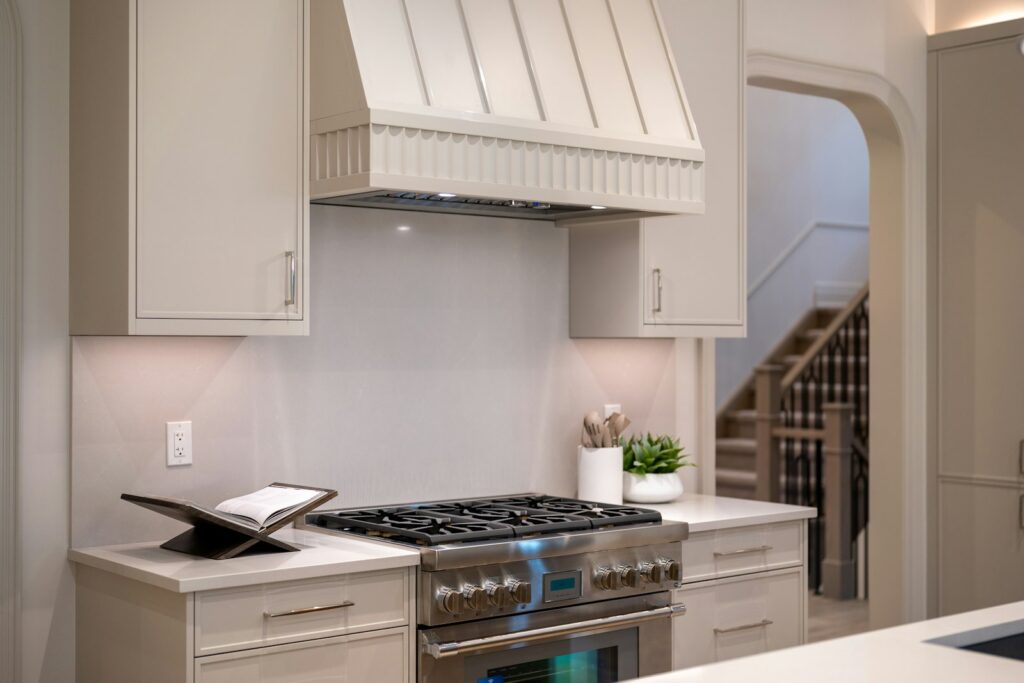 Wash metal mesh and baffle filters in hot soapy water or the dishwasher, replace charcoal filters instead of rinsing them, never run the hood with the filter out, and clean the weekend before Thanksgiving and again before Christmas: a range hood filter guide with a worked holiday cleaning calendar.
- Drying Clothes Indoors in Winter: Where the Rack Goes, How Much Rail You Need and What It Saves
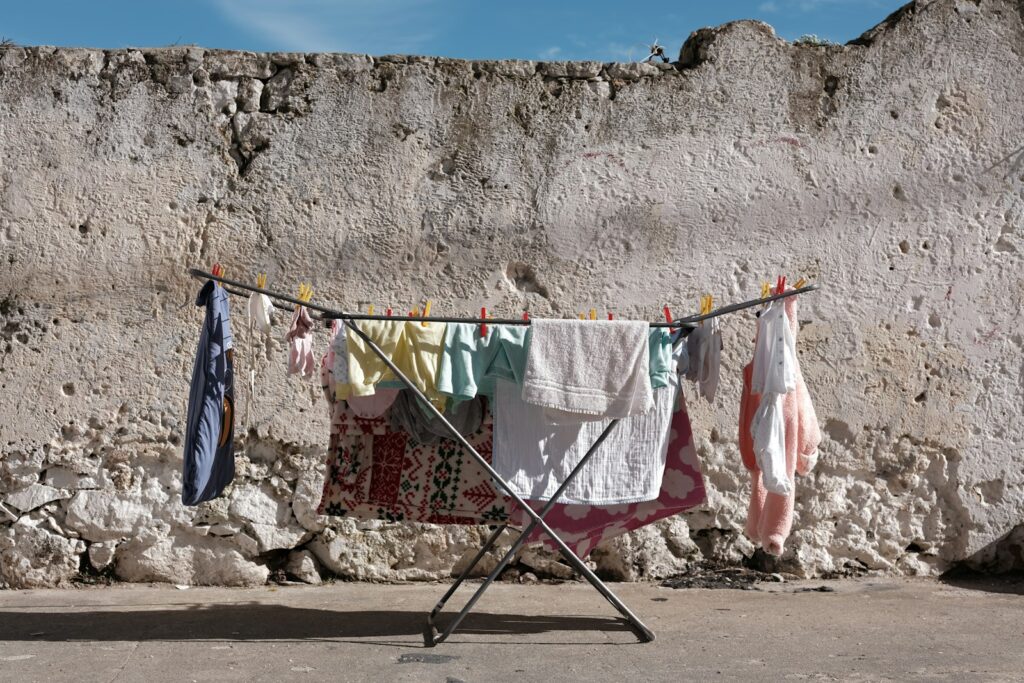 One load gives off about 2 liters of water as it air-dries, so put the rack where that moisture can leave, keep it 3 feet from the space heater, count inches of rail before you buy, space and turn the heavy things, watch humidity and window condensation, and know what the dryer you’re skipping really costs: indoor drying with the math.
- Hat, Glove and Scarf Storage by the Door: One Bin Per Person, Sized to What They Actually Wear
 Keep a daily set plus one dry spare per person, size an open bin for each from a quick measurement, dry wet mittens before they go in, clip pairs together, hang woven scarves and fold knits, skip long scarves on the playground and wash wool before it’s sealed away: a hat and glove station with a worked bin-size example.