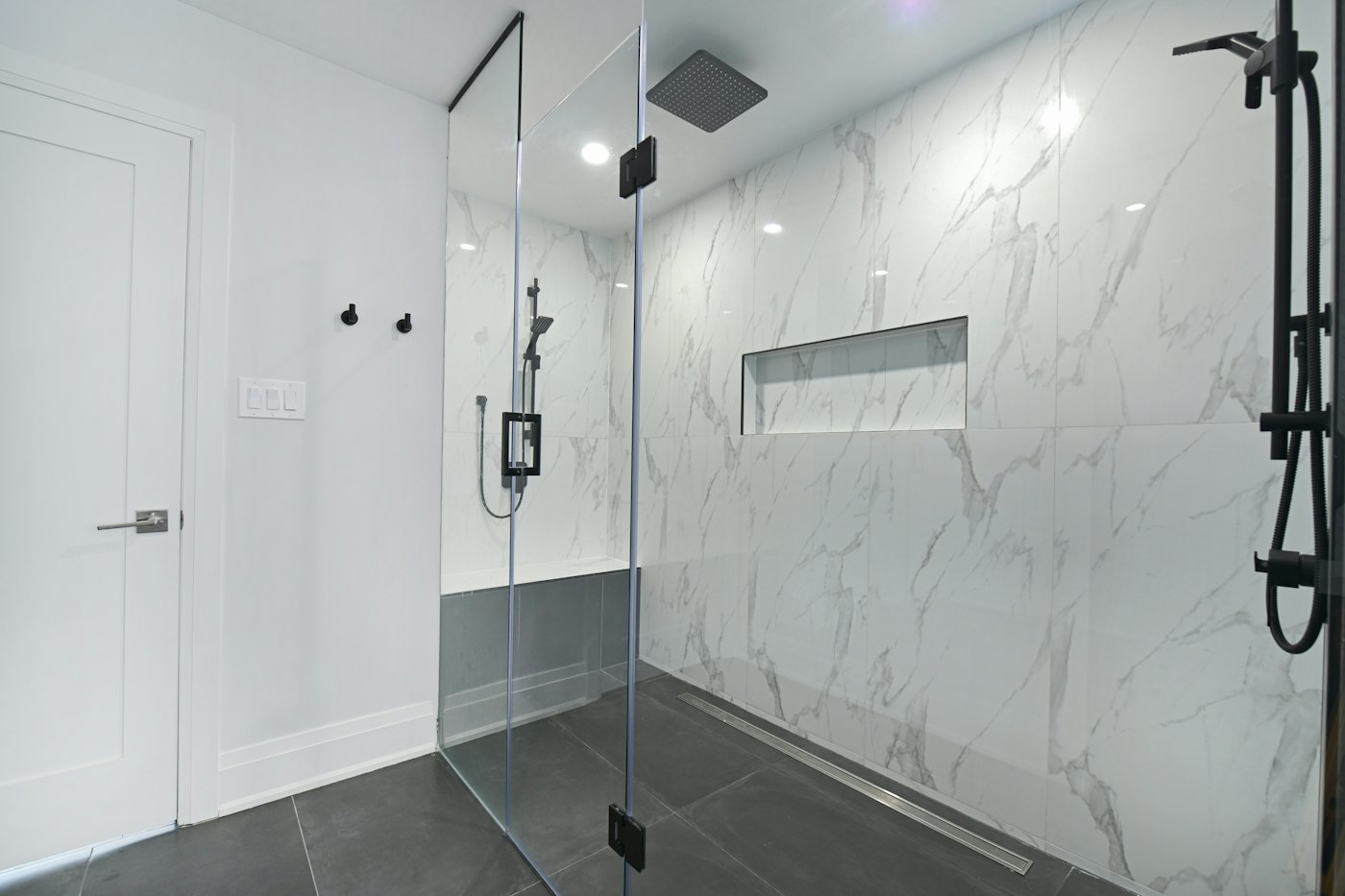
Shower storage usually fails in one of three ways: bottles crowd the tub ledge and grow slimy rings, a caddy slides down the shower arm, or an adhesive shelf lets go in the middle of the night. Most of that comes from buying before counting what the household uses and before checking what the shower walls can actually hold. This guide works through both, then matches the storage type to your shower.
Keep only the bottles in daily use inside the shower and move backups to a cabinet. Then pick storage by wall: a hanging caddy or tension pole if you can’t or don’t want to drill, a screw-mounted corner shelf if you own the home and can drill into the right spot, and adhesive racks only on smooth, sealed tile within the listed weight. Choose open, draining shelves over solid trays, and keep everything out of the path of your feet.
1. Count what actually lives in the shower
Pull every bottle, bar, razor, and loofah out of the shower and line them up on a towel. Then sort:
- Daily use: what each person reaches for most days, such as shampoo, conditioner, body wash, and a razor.
- Weekly use: a mask, scrub, or clarifying shampoo.
- Backups and near-empties: second bottles, travel sizes, and the bottle with a centimeter left in it.
- Not shower items: cleaning sprays, kids’ toys that stay wet, and anything rusting.
Only the daily group needs a spot inside the shower. Weekly items can sit just outside on a towel shelf or in the vanity, and backups belong in a cabinet or over-the-toilet storage. In shared bathrooms, combining duplicate products often frees more room than any caddy.
2. Set three zones by height
Adult-only items, razors
Daily bottles, soap
Kids’ items or clear floor
Daily bottles belong between waist and shoulder height, so nobody bends or reaches while wet. Razors and products you don’t want children handling go higher. The lowest zone, including the tub ledge, works for kids’ bath items in a draining basket, but keep the floor of a walk-in shower clear so there’s nothing to step on.
3. Shower storage types compared
| Type | Best for | Watch for |
|---|---|---|
| Over-the-showerhead caddy | Renters, small showers, a few bottles per person | Sliding or tilting; check the arm’s shape and that it doesn’t block the spray. Usually holds less than it looks. |
| Tension pole caddy | Tub corners and larger households needing several shelves | Needs a solid ceiling and floor or tub surface; can loosen over time and should be re-tightened. Measure ceiling height against the pole’s listed range. |
| Adhesive wall rack | Smooth, sealed tile or glass where drilling isn’t an option | Weight limits, cure time before loading, and surfaces the adhesive isn’t rated for, such as textured tile, grout lines, or some fiberglass |
| Suction caddy | Light items on smooth glass or tile | Often releases with temperature changes; keep only light, non-glass items on it |
| Screw-mounted corner shelf | Owners who want permanent, sturdy shelves | Drilling tile risks cracking and breaching the waterproofing; seal every hole as the manufacturer directs |
| Recessed niche | Remodels and new builds | A construction job that must tie into the waterproofing; not a quick fix |
| Freestanding corner shelf | Walk-in showers with spare floor space | Must be stable when wet and placed out of the walking path |
4. Check what your walls can hold
The wall decides more than the caddy does. Before buying, check:
- Surface: glazed ceramic or porcelain tile, natural stone, glass, or a fiberglass or acrylic surround. Adhesive and suction products list which surfaces they suit.
- Texture: adhesives generally need a smooth, flat spot that doesn’t cross a grout line. Check the product instructions.
- Showerhead arm: note its angle and whether it has a ball joint that a caddy could push out of position.
- Ceiling height and surface where a tension pole would sit. Measure yours; ceilings vary.
- Rental terms: drilling or adhesives may not be allowed, and some adhesives can mark finishes on removal.
- What’s behind the wall: pipes typically run behind the valve and up to the showerhead. Avoid drilling near that line.
Worked example: two adults and one child in a tub-shower
Say the daily count comes to eight bottles: shampoo, conditioner, and body wash for each adult (six), plus one kids’ two-in-one and one face wash. Typical full-size bottles are around 2.5 to 3.5 inches across. At about 3 inches each with a little gap, eight bottles need roughly 26 to 28 inches of shelf length in total.
A two-shelf over-the-showerhead caddy with shelves around 10 inches wide gives about 20 inches, which isn’t quite enough. A three- or four-shelf tension pole caddy in the tub corner, with shelves roughly 9 to 11 inches each, would cover it with room left over. Put the adults’ bottles on the middle shelves, the kids’ bottle and bath toys in a draining basket near the tub ledge, and the razors on the top shelf. Measure your bottles and shelves; sizes vary by brand.
5. Keep it dry and easy to clean
- Choose open bottoms. Wire, slotted, or perforated shelves let water drain. Solid trays collect water and soap residue.
- Look for rust-resistant finishes. Check the listing for stainless steel, aluminum, or coated metal, and expect any coating to wear eventually.
- Lift bar soap off the shelf with a draining soap dish so it doesn’t turn to paste.
- Hang loofahs and washcloths on a hook to dry between uses.
- Wipe shelves and bottle bottoms weekly during your usual bathroom clean so mildew doesn’t take hold.
6. Fit and safety
- Storage is not a grab bar. Never use a caddy, shelf, or towel bar to steady yourself. If anyone in the home needs support getting in or out, install a properly rated grab bar anchored as its instructions require.
- Keep glass bottles and jars out of the shower. Decant into plastic if you want a uniform look.
- Respect the listed weight limit and the adhesive’s cure time before loading anything.
- Check tension poles every few weeks and re-tighten if they shift. A falling pole can hit someone.
- Store razors high, with covers on, if young children use the shower.
- If you drill into tile, use bits made for it and seal each hole as the hardware’s instructions direct. When unsure, hire a pro; water behind tile can cause costly damage.
7. What to buy
Want specific models? Our shower caddy comparison matches five caddies, from a four-basket tension pole to an adhesive shelf, to the shower they suit.
- A draining shelf, caddy, or pole sized to your daily bottle count.
- A draining soap dish.
- One or two hooks for loofahs and washcloths, matched to your wall type.
- A draining bath-toy basket, if kids use the tub.
- Pump bottles for decanting, if you want to replace glass or bulky containers.
Compare shower storage
Affiliate disclosure: As an Amazon Associate I earn from qualifying purchases. These links open Amazon search results for the storage types in this guide, not recommendations for a specific model. Check surface compatibility, weight limits, and dimensions against your shower before buying.
Questions
How do I stop a shower caddy from sliding down the showerhead?
Some caddies include a grip or clamp for the arm, and many have suction cups at the bottom that steady them against the wall. Lighten the load first; an overloaded caddy slides more. If the arm’s angle makes it tilt, a tension pole or wall rack may suit your shower better.
Do adhesive shower shelves really hold?
They can on the surfaces they’re rated for, when applied to clean, dry, smooth tile and left to cure for the time the instructions state. They’re less reliable on textured tile, across grout, or past their weight limit. Keep heavy bottles on the lowest-risk shelf and check the bond now and then.
What’s the best shower storage for renters?
A tension pole or an over-the-showerhead caddy, since neither needs drilling. Check your lease before using adhesive products, and test removal instructions on a hidden spot if the surface might mark.
Related: Best shower caddies matched to your shower
Keep reading
More guides for your space
THE KINDRED JOURNAL
Latest from the journal
- What Holiday Lights Really Cost to Run: LED vs. Incandescent, With the Math for Your Own Display
 Read the watts off each tag, multiply by your hours and your own rate, and the answer is clear: eight incandescent strings cost about $25.70 a season in our worked example and their LED versions about $2.18, big C9 bulbs pay back an LED swap in about three seasons, and working mini lights can wait.
- Ideal Indoor Humidity in Winter: Find Your Number, Check Your Meter, Then Add Only What the Room Needs
 Aim for 30 to 50% and never humidify past 50%, let the windows set the limit on the coldest nights, salt-test your hygrometer before you trust it, seal drafts first because a whole bedroom needs only about 4½ ounces of water, and clean the tank on a schedule: a winter humidity guide with the math worked out.
- Toy Storage Ideas: 13 Ways to Make Room Before the Holiday Toy Wave
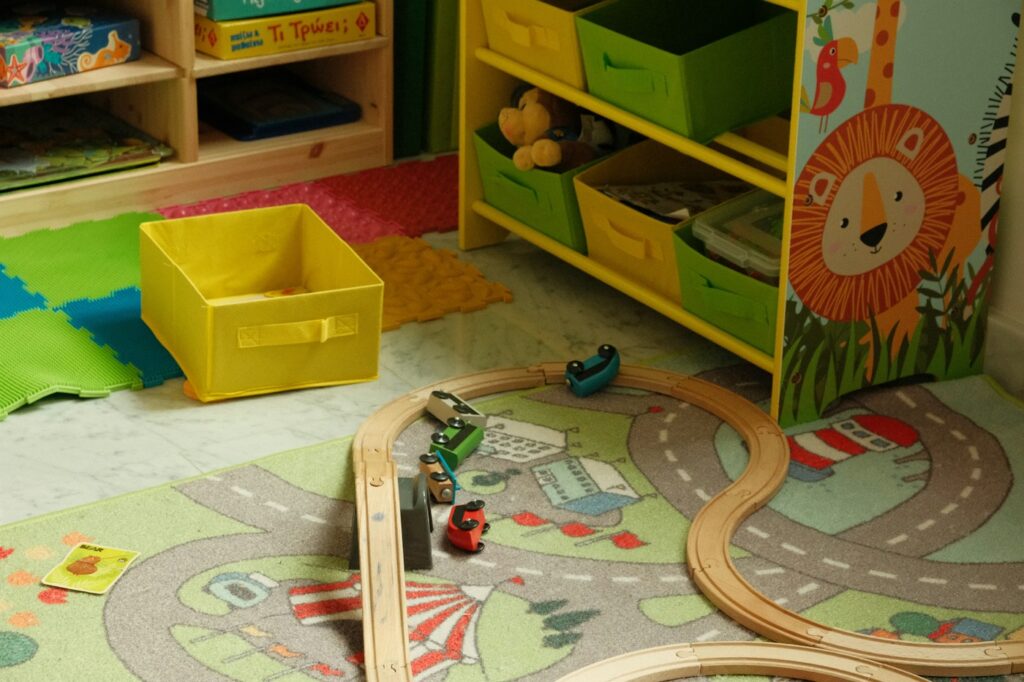 Edit the toys before the gifts arrive, give each kind of play one open bin on an anchored low shelf, keep small parts and spare batteries out of a toddler’s reach, skip latching lids and rotate the extras: thirteen toy storage ideas for the weeks before and after the holidays.
- Best Gift Wrap Organizers: 5 Picks for a Closet Corner, Under the Bed or the Back of a Door
 An upright box that holds up to 32 long rolls, a 41.5-inch under-bed bag for big collections, a water-resistant zip bag, an over-the-door organizer and a slim canvas case for eight rolls: five gift wrap organizers matched to the space you can give them.
- Cord and Cable Storage: 13 Ideas for the Spare Chargers, Cables and Adapters Nobody Can Find
 Match every cable to a device you still own, keep a sensible number of spares by connector type, coil them loosely, label the mystery bricks, hang the extension cords and send old batteries and dead cables to a proper drop-off: thirteen ways to store spare cords so the right one turns up in seconds.
- Window Condensation in Winter: Find Which Side the Water Is On, Then Match Humidity to the Forecast
 Do the wipe test to tell room-side fog from a failed seal, check a hygrometer against the outdoor low, keep humidity at or under 40% above 20°F and 30% below 10°F, run the fans, open the curtains by day and dry wet sills the same morning: a window condensation guide with a worked cold-week example.
- How to Clean a Range Hood Filter Before Holiday Cooking: Know Your Filter Type, Then Put It on the Calendar
 Wash metal mesh and baffle filters in hot soapy water or the dishwasher, replace charcoal filters instead of rinsing them, never run the hood with the filter out, and clean the weekend before Thanksgiving and again before Christmas: a range hood filter guide with a worked holiday cleaning calendar.
- Drying Clothes Indoors in Winter: Where the Rack Goes, How Much Rail You Need and What It Saves
 One load gives off about 2 liters of water as it air-dries, so put the rack where that moisture can leave, keep it 3 feet from the space heater, count inches of rail before you buy, space and turn the heavy things, watch humidity and window condensation, and know what the dryer you’re skipping really costs: indoor drying with the math.
- Hat, Glove and Scarf Storage by the Door: One Bin Per Person, Sized to What They Actually Wear
 Keep a daily set plus one dry spare per person, size an open bin for each from a quick measurement, dry wet mittens before they go in, clip pairs together, hang woven scarves and fold knits, skip long scarves on the playground and wash wool before it’s sealed away: a hat and glove station with a worked bin-size example.