Quick answer: if your garage has ordinary wood ceiling joists and a clear 4-by-8-foot patch beyond the end of the door tracks, a 4×8 overhead rack holds more bins per hole drilled than anything else. If the door track, opener or a low ceiling eats that space, a narrower 3×8, a pulley lift or high wall shelves will fit where a big rack won’t. Racks like these often show up in Black Friday sales, so measure this week and buy the right size when the price drops.
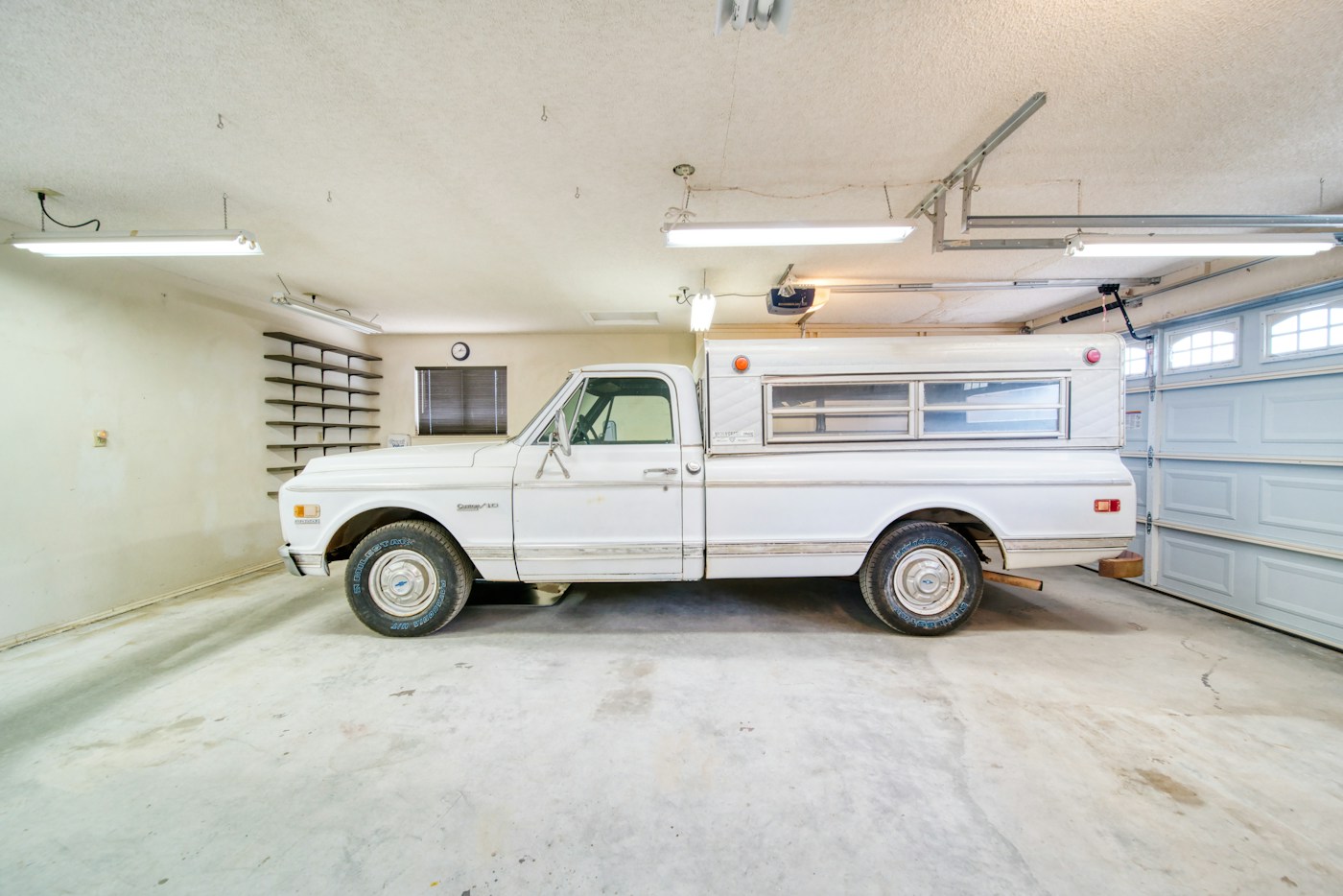
1) The clear ceiling area with the garage door fully open. 2) The height of your tallest vehicle with its hatch or doors open, which sets how far a rack can hang. 3) What the ceiling is made of: most racks here are for wood joists only. Our garage ceiling storage guide walks through all three with a worked example.
Affiliate disclosure: As an Amazon Associate I earn from qualifying purchases. The links below are clearly labeled Amazon searches for each brand and model; we could not confirm exact listing IDs. Match the size, drop length and pack count on the live listing before you order.
The five at a glance
| Pick | Listed size | Listed capacity | Ceiling drop | Mounts to |
|---|---|---|---|---|
| FLEXIMOUNTS GR48B | 4 × 8 ft | Up to 600 lb | 22–40 in, adjustable | Wood joists or concrete |
| SafeRacks 4×8 | 4 × 8 ft | 600 lb | 12–21, 18–33 or 24–45 in kits | Wood joists only |
| MonsterRax 3×8 | 3 × 8 ft | 450 lb | 24–45 in | Wood joists only |
| Racor PHL-1R lift | 4 × 4 ft platform | 250 lb | Lowers about 8 ft (per an installer’s write-up) | Ceiling joists |
| FLEXIMOUNTS WR26B wall shelves | 2 × 6 ft, 2-pack | 800 lb listed limit | None (wall-mounted) | Wall studs or solid concrete |
FLEXIMOUNTS 4×8 Overhead Garage Storage Rack (GR48B)
Listed: 4 × 8 ft · height adjustable from 22 to 40 in below the ceiling · up to 600 lb · 14-gauge cold-rolled steel, wire grid welded to the frame as one unit · mounts to wood joists or concrete ceilings · hardware and installation template included · manufacturer # GR48B
A full-size platform with a wide drop range, which suits the common case of a rack above the hood of a parked car. The welded grid means there’s no separate decking to slide out of place, and the included template helps you mark the holes on the joists before drilling. It’s the only rack in this list whose listing says it also mounts to concrete, which matters in garages under a living space with a concrete deck.
Big capacity, a usable drop range for most bin heights, and a mounting option most competitors don’t list.
Low garages where 22 inches is already too far down; a shorter-drop kit (see SafeRacks) fits better. Also anyone without a clear 4 × 8 area outside the door’s travel.
Distributor listing with dimensions, drop range and mounting
SafeRacks 4×8 Overhead Garage Storage Rack
Listed: 4 × 8 ft · 600 lb per rack · drop kits listed as 12–21, 18–33 and 24–45 in · powder-coated steel · wood joists only, not engineered I-beams, steel joists or concrete · some kits include rail, deck and utility hooks (BJ’s 2-rack combo) · smaller sizes from 2 × 6 to 4 × 6 ft with lower ratings, per the installation manual
SafeRacks sells the same platform with different post lengths, so you pick the drop that suits your ceiling instead of living with one range. That makes it the one to look at for a lower garage ceiling: the shortest kit starts at 12 inches. The installation manual is unusually specific: joists of at least 2 × 6 lumber spaced 24 inches or less, two 3-inch lag screws per ceiling bracket, heavy items near the posts and light ones in the middle.
A drop length that matches your ceiling, a clear install manual, and add-on hooks for hanging cords and folding chairs under the deck.
Homes with steel framing, engineered I-joists or concrete ceilings, which the listing excludes. Check the drop range in the exact listing; retailer pages don’t all match.
BJ’s listing with capacity, drop options and mounting · SafeRacks installation manual (PDF)

MonsterRax 3×8 Overhead Garage Storage Rack
Listed: 96 × 36 in · 450 lb · adjustable 24 to 45 in from the ceiling · powder-coated carbon steel, in hammertone, black or white · wood joists required; not for I-beams, steel joists or concrete · limited lifetime warranty (Walmart listing)
The usable ceiling in many garages is a long strip between the door track and the side wall, not a neat 4 × 8 rectangle. A 3-foot-wide rack fits that strip and still runs the full 8 feet. It loses a foot of width and some capacity compared with a 4×8, which for bins of holiday decorations is rarely the limit.
Fits along a side wall where a 4-foot rack would cross into the door’s travel path.
Low ceilings, since the listed drop starts at 24 inches, and any ceiling that isn’t wood joists.
Racor HeavyLift Ceiling Storage Platform (PHL-1R)
Listed: 250 lb capacity · steel · pulley system to load the platform and lock it up · model PHL-1R (Home Depot listing) · 4 × 4 ft platform, raised and lowered by two cables with a hand crank, per an installer’s write-up
Instead of carrying bins up a ladder, you lower the platform, load it at waist height and crank it back up. That’s the appeal for anyone who’d rather not lift 20-pound bins overhead, and for things you want a few times a season, like camping gear. The platform is smaller than a rack and the rated load is lower, so it’s a complement to a fixed rack rather than a replacement.
Loading and unloading from the floor, which is safer than ladder work for most people.
Anyone who needs to park under it while it’s lowered, or wants to store more than a handful of bins. Read the box for the ceiling height and joist spacing it needs before buying.
Home Depot listing with capacity and features · Installer’s write-up with platform size and lift details
FLEXIMOUNTS 2-Pack 2×6 ft Wall Shelving (WR26B)
Listed: two units of 2 × 6 ft · 800 lb listed weight limit (the page doesn’t say whether that’s per shelf or per pack) · black · mounts to wall studs or solid concrete walls · hardware and drilling template included (FlexiSpot listing)
If the opener rail, a low ceiling or framing you’re unsure about rules out a rack, the high band of the wall above the hood is the next-best dead space. Two 2-foot-deep shelves mounted high hold the same lidded bins with no ceiling work at all, and studs are easier to find and check than joists.
No ceiling drilling, and easier to reach than a rack.
Walls where a 24-inch-deep shelf would hit the car’s raised hatch or block a walkway. Read the per-shelf rating in the manual before loading, since the listing’s figure is ambiguous.
How far down can the rack hang?
The “drop” is the distance from the ceiling to the rack’s deck. Two numbers decide it: the bins have to fit between deck and ceiling with room to lift them out, and the underside of the deck has to clear whatever passes below.
| Your bin height | Drop to look for | Fits |
|---|---|---|
| About 12 in (low totes) | At least 15–16 in | SafeRacks 12–21 kit |
| About 15 in (mid-size totes) | At least 18–20 in | SafeRacks 18–33 kit |
| About 18 in (tall totes) | At least 22 in | All three racks, at their shorter settings |
Bin heights vary by brand, so measure yours. Then subtract the drop from your ceiling height and check it against your tallest vehicle with its hatch open, plus a few inches of margin. If the numbers don’t work, a lift or wall shelves are the better fit.
Install and load safely
- Read the manual’s framing rules before you buy. The SafeRacks manual, for example, calls for joists of at least 2 × 6 lumber spaced 24 inches or less, and says to stop if your home is steel-framed or you doubt the ceiling structure.
- Drill into joists, never drywall alone. Find them with a stud finder and confirm with a small pilot hole.
- Keep it out of the door’s path. Measure with the door fully open. The manual warns against the rack touching garage doors, lights or vehicles.
- Load evenly. Heavier bins go near the posts, lighter ones toward the middle. Listed capacities assume an evenly spread, static load.
- Never climb on or hang from a rack. Use a stable ladder and a helper to hand bins up.
- If framing is unclear, ask. Engineered trusses, a room above or framing you can’t identify are reasons to talk to a qualified contractor first. Renters need written approval to drill.
How we chose
This is a research-based comparison from listed specifications, not hands-on testing. We picked racks from established garage-storage brands that cover different situations: a full 4 × 8 platform, short-drop and narrow options, a ceiling lift and a wall-mounted alternative. Dimensions, capacities, drop ranges and mounting requirements come from the manufacturer and retailer pages linked under each product, checked in November 2026. We don’t list prices or ratings because they change, especially around Black Friday. See our editorial policy.
- Clear ceiling area measured with the garage door fully open.
- Ceiling height and your tallest vehicle with hatch or doors open.
- Joist type, size, direction and spacing confirmed.
- Bin height measured, and drop length chosen to match.
- Listing checked for size, drop kit and pack count, not just the photo.
- A helper and a stable ladder lined up for install day.
Bins to go with the rack
Lidded, latching bins keep dust out and won’t slide off a wire deck. Our Black Friday organizer picks include a gasket-lid bin, and our ornament storage comparison covers divided boxes for decorations.
Questions
What size overhead garage rack do I need?
Start from the clear ceiling area with the door open, not from the rack. A 4 × 8 rack suits a clear patch above the hood; a 3 × 8 fits a strip beside the door track. Count your bins and their footprint to check it holds what you have.
Can overhead racks go on a concrete ceiling?
Only if the manufacturer says so. Of the racks here, only the FLEXIMOUNTS GR48B listing mentions concrete ceilings; the SafeRacks and MonsterRax listings say wood joists only.

Keep reading
More guides for your space
THE KINDRED JOURNAL
Latest from the journal
- What Holiday Lights Really Cost to Run: LED vs. Incandescent, With the Math for Your Own Display
 Read the watts off each tag, multiply by your hours and your own rate, and the answer is clear: eight incandescent strings cost about $25.70 a season in our worked example and their LED versions about $2.18, big C9 bulbs pay back an LED swap in about three seasons, and working mini lights can wait.
- Ideal Indoor Humidity in Winter: Find Your Number, Check Your Meter, Then Add Only What the Room Needs
 Aim for 30 to 50% and never humidify past 50%, let the windows set the limit on the coldest nights, salt-test your hygrometer before you trust it, seal drafts first because a whole bedroom needs only about 4½ ounces of water, and clean the tank on a schedule: a winter humidity guide with the math worked out.
- Toy Storage Ideas: 13 Ways to Make Room Before the Holiday Toy Wave
 Edit the toys before the gifts arrive, give each kind of play one open bin on an anchored low shelf, keep small parts and spare batteries out of a toddler’s reach, skip latching lids and rotate the extras: thirteen toy storage ideas for the weeks before and after the holidays.
- Best Gift Wrap Organizers: 5 Picks for a Closet Corner, Under the Bed or the Back of a Door
 An upright box that holds up to 32 long rolls, a 41.5-inch under-bed bag for big collections, a water-resistant zip bag, an over-the-door organizer and a slim canvas case for eight rolls: five gift wrap organizers matched to the space you can give them.
- Cord and Cable Storage: 13 Ideas for the Spare Chargers, Cables and Adapters Nobody Can Find
 Match every cable to a device you still own, keep a sensible number of spares by connector type, coil them loosely, label the mystery bricks, hang the extension cords and send old batteries and dead cables to a proper drop-off: thirteen ways to store spare cords so the right one turns up in seconds.
- Window Condensation in Winter: Find Which Side the Water Is On, Then Match Humidity to the Forecast
 Do the wipe test to tell room-side fog from a failed seal, check a hygrometer against the outdoor low, keep humidity at or under 40% above 20°F and 30% below 10°F, run the fans, open the curtains by day and dry wet sills the same morning: a window condensation guide with a worked cold-week example.
- How to Clean a Range Hood Filter Before Holiday Cooking: Know Your Filter Type, Then Put It on the Calendar
 Wash metal mesh and baffle filters in hot soapy water or the dishwasher, replace charcoal filters instead of rinsing them, never run the hood with the filter out, and clean the weekend before Thanksgiving and again before Christmas: a range hood filter guide with a worked holiday cleaning calendar.
- Drying Clothes Indoors in Winter: Where the Rack Goes, How Much Rail You Need and What It Saves
 One load gives off about 2 liters of water as it air-dries, so put the rack where that moisture can leave, keep it 3 feet from the space heater, count inches of rail before you buy, space and turn the heavy things, watch humidity and window condensation, and know what the dryer you’re skipping really costs: indoor drying with the math.
- Hat, Glove and Scarf Storage by the Door: One Bin Per Person, Sized to What They Actually Wear
 Keep a daily set plus one dry spare per person, size an open bin for each from a quick measurement, dry wet mittens before they go in, clip pairs together, hang woven scarves and fold knits, skip long scarves on the playground and wash wool before it’s sealed away: a hat and glove station with a worked bin-size example.