The most common garage shelving mistake isn’t buying a weak unit. It’s buying one that’s too deep. A 24-inch-deep rack looks generous in the listing photo, then sits so far into the bay that the car door hits it every morning. So this comparison starts with depth, then load rating, then how each unit goes together. Five real units, from a 14-inch-deep wire rack to wall shelves that keep the floor clear, matched to where they’ll actually stand.
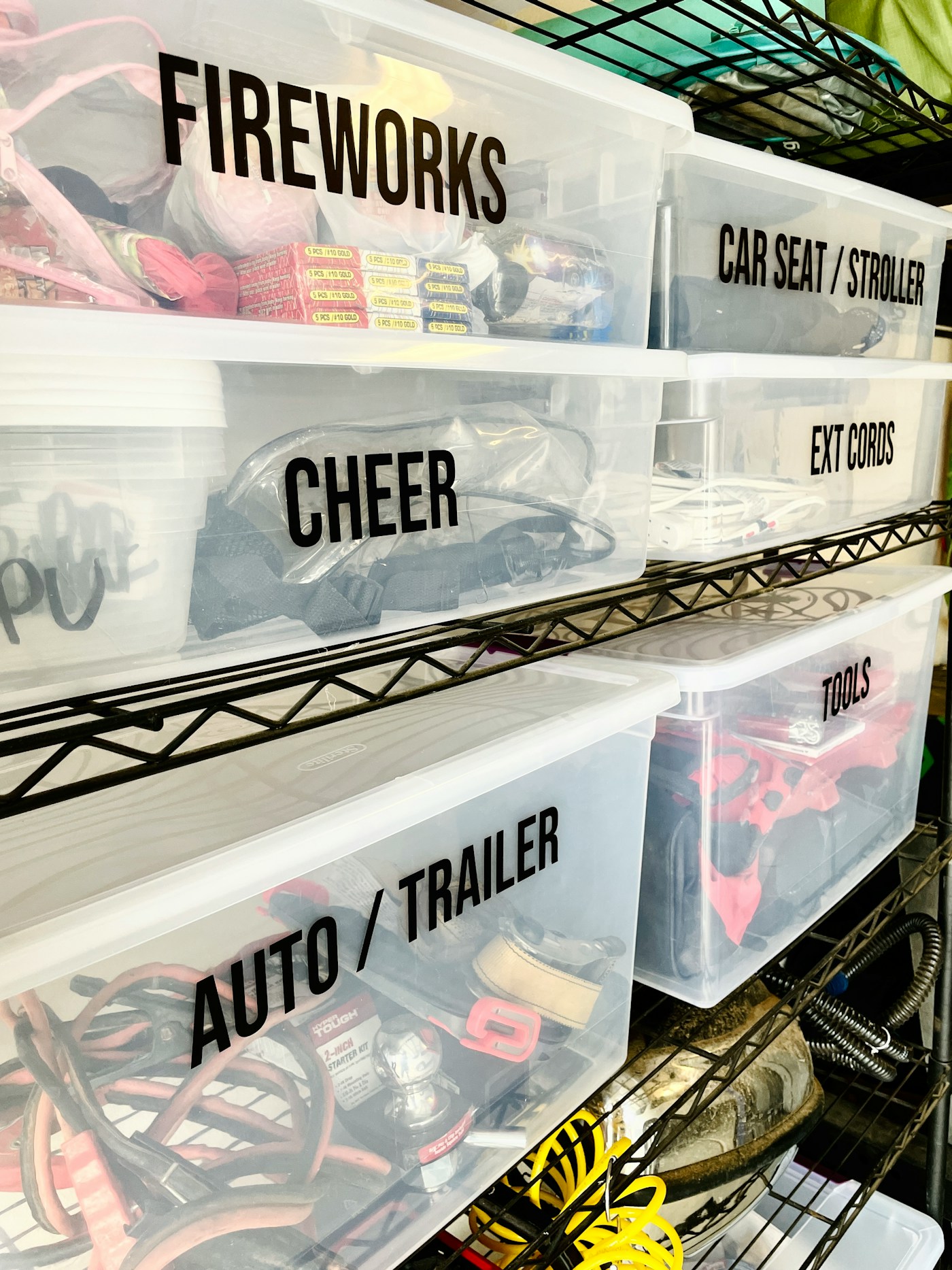
Deep bins and the heaviest loads: the Gladiator 24-inch-deep rack. Shelving you can roll or rearrange: the Seville Classics UltraDurable. A narrow strip beside the car: the Amazon Basics 14-inch-deep wire rack. Small items that fall through wire: the Edsal Muscle Rack with solid shelves. No floor space at all: Fleximounts wall shelves. Measure the depth you can spare before you look at anything else.
Measure these three things first
- Clear depth. Park the car, open the door on the shelving side as far as you normally do, and measure from the wall to the edge of the open door. That number, minus a few inches of walking room, is your maximum shelf depth.
- Height. Most freestanding units here are 72 inches tall. Check for a garage door track, an opener, a window or a sloped ceiling over the spot.
- Your biggest bin. Measure the length and width of the tote you store most. A lot of large lidded totes are deeper than 14 inches, so they hang off a shallow shelf. Measure yours rather than guessing.
Affiliate disclosure: As an Amazon Associate I earn from qualifying purchases. Some links go to a specific Amazon listing; others are clearly labeled searches where we couldn’t confirm the exact listing. Match the model, size and finish on the live listing before you order.
The five at a glance
| Unit | Listed size (W × D × H) | Listed capacity | Shelf surface |
|---|---|---|---|
| Gladiator EZ Connect rack, 24-in deep | 48 × 24 × 72 in | 1,000 lb per shelf | Laminate |
| Seville Classics UltraDurable | 48 × 18 × 72 in (75 in on wheels) | 800 lb per shelf on feet; 500 lb total on wheels | Steel wire |
| Amazon Basics 5-shelf wire rack | 36 × 14 × 72 in | 350 lb per shelf; 1,750 lb total | Steel wire |
| Edsal Muscle Rack, 36-in | 36 × 18 × 72 in | 800 lb per shelf; 4,000 lb total | Particleboard |
| Fleximounts WR14 wall shelves, 2-pack | Each 48 × 12 in | Varies by listing (see below) | Steel |
Capacity figures are the manufacturers’ or retailers’ listed numbers, and the listings that say so specify weight spread evenly across the shelf. Treat them as a ceiling, not a target.
Gladiator 48″ Wide EZ Connect Rack with Five 24″ Deep Shelves
Listed: model GARK485XGG · 72 H × 48 W × 24 D in · five full-width laminate shelves on a steel frame · up to 1,000 lb per shelf · click-and-lock frame, assembled by one person without tools · NSF certified · hammered granite finish
This is the deepest unit here, and it’s the one to look at if your storage is mostly large totes, coolers or camping bins. Twenty-four inches of depth swallows a big tote front to back, and laminate shelves give small things a flat surface to sit on. Gladiator also lists the same rack in 18-inch-deep versions if 24 inches is too much for your bay.
One thing to check on the live listing: the retailer page we used gives the warranty as a 10-year limited warranty in one place and “limited lifetime” in another, and Walmart’s listing says 10-year limited. Confirm on the product page or box before you rely on it.
The highest listed per-shelf rating in this group, solid shelves, and tool-free assembly.
Anyone parking beside it with less than about 30 inches between wall and open car door. Also skip it if you want to fine-tune shelf heights; the listings we found don’t say whether the shelves adjust.
Retailer listing with model, dimensions and rating · Walmart listing
Seville Classics UltraDurable 5-Tier NSF Steel Shelving, 48″ × 18″
Listed: SKU WEB725 · 48 W × 18 D × 72 H in (75 in on wheels) · commercial-grade steel, black epoxy powder coat, 1-in posts · NSF/ANSI Standard 2 certified for dry environments · 800 lb per shelf and 4,000 lb total on leveling feet; 500 lb total on wheels · shelves adjust in 1-in steps · four 3-in rubber wheels (two locking) plus four leveling feet · tool-free assembly · 10-year limited warranty
The useful twist here is that it comes with both wheels and leveling feet. On wheels, you can roll the whole unit out to get at what’s behind it or sweep under it. On feet, it carries far more. Seville lists 500 pounds total on wheels versus 4,000 on feet, so decide which job it has before you build it.
The 1-inch adjustment is fine enough to size each shelf to the bins on it, which wastes less height than racks that adjust in bigger steps. Wire shelves let dust fall through and air move, but small items can tip or slip between the wires, so plan to use bins or add shelf liners.
Wheels for flexibility, feet for heavy storage, fine shelf adjustment, and a clearly stated warranty.
Anyone planning to load it heavily and keep it on wheels. Also note the NSF certification is listed for dry environments; a garage that stays damp may not suit it.
Seville Classics product page with specifications. The Amazon listing may group several sizes and finishes; choose 48 × 18 in.
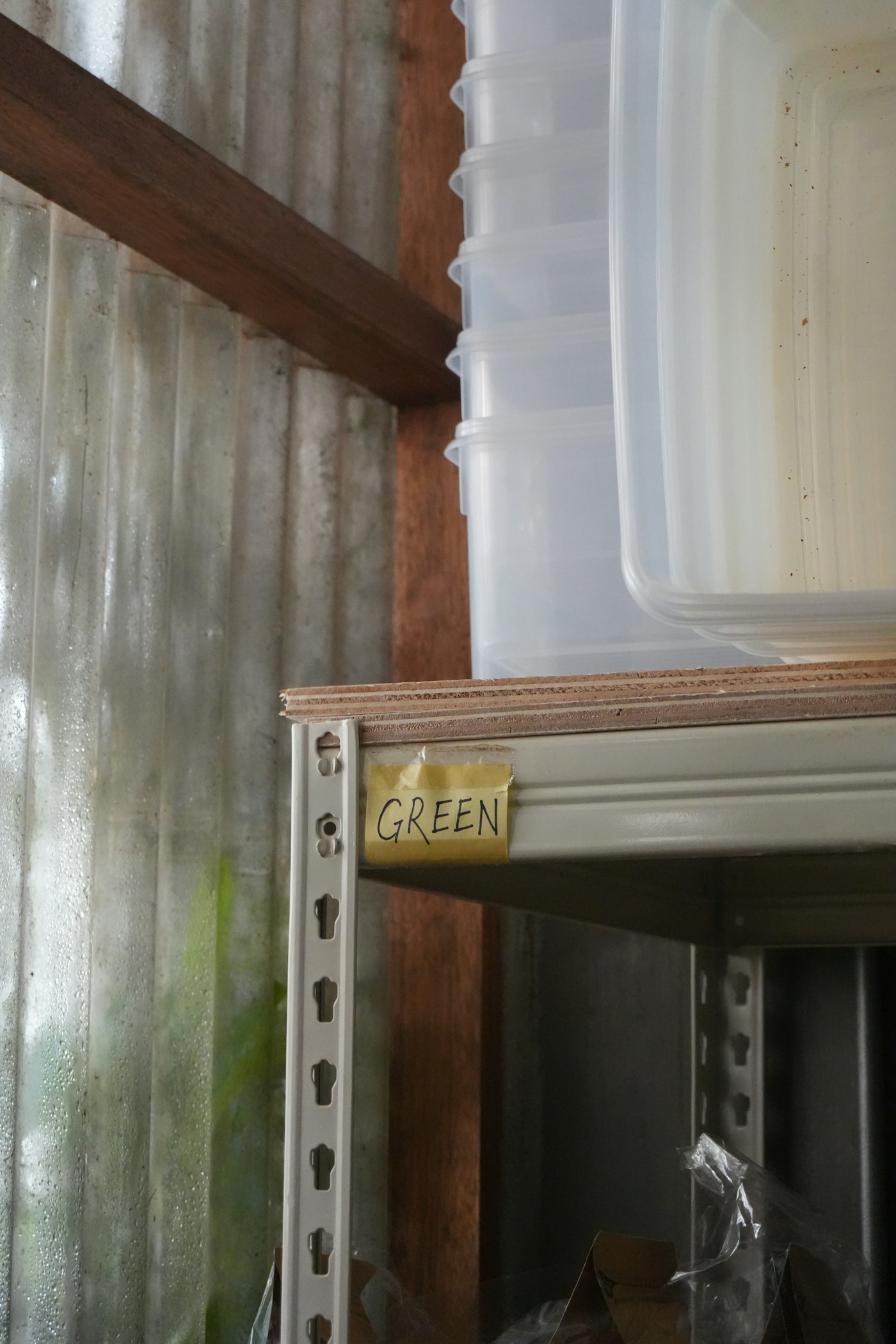
Amazon Basics 5-Shelf Adjustable Heavy Duty Steel Wire Rack, 36″ × 14″ × 72″
Listed: 36 × 14 × 72 in · alloy steel, chrome finish · 350 lb per shelf with weight evenly distributed, 1,750 lb total · shelves adjust in 1-in increments · four leveling feet · no-tool assembly
Fourteen inches is shallow enough to stand beside a parked car in many garages where an 18- or 24-inch unit would be in the way. It suits paint cans, spray bottles, car-care supplies, small bins and shoe-box-size containers. Three feet wide means two of them can flank a doorway or fill an awkward wall section.
The shallowest freestanding option here, with fine shelf adjustment and a confirmed listing.
Anyone storing large totes, which often overhang a 14-inch shelf. Small items also need bins or liners on wire shelves.
Edsal Muscle Rack 5-Shelf Steel Shelving, 36″ × 18″ × 72″
Listed: 36 W × 18 D × 72 H in · particleboard shelves on a riveted steel Z-beam frame · 800 lb per shelf, 4,000 lb total · shelves adjust in 1.5-in increments · no nuts or bolts; assembles with a hammer (not included) · can be set up as shelving or as a workbench
Solid particleboard decks are the simple answer to the wire-shelf problem: boxes of screws, spray cans and small parts sit flat and nothing drops through. This style of riveted, boltless shelving goes together by tapping the beams into the posts, which is why the listing calls for a hammer. A rubber mallet is the gentler choice for most people.
A high listed rating, a flat surface for small things, and the option to build it as a low workbench.
Garages where the floor gets wet or the unit would sit near a door that lets in rain or snowmelt; particleboard doesn’t hold up well to soaking. A wire or plastic unit suits a damp spot better.
Ace Hardware listing with dimensions and capacity. We couldn’t confirm a model number or Amazon listing; match the size on the live page.
Fleximounts WR14 Classic 2-Pack 1′ × 4′ Wall Shelving
Listed: two 12 × 48 in shelves · heavy-gauge, powder-coated steel · mounts to wood studs or solid concrete; not to metal walls or metal studs · includes a drilling template with bubble level, brackets and screws (manufacturer page)
Wall shelves are for the garage where the floor is spoken for. Mounted high, they can sit above the hood of a parked car, which is often the emptiest space in the room. They suit light, rarely used things: camping gear, spare bins, seasonal decor.
The capacity is where listings disagree. Fleximounts’ own page gives 300 pounds as the safe loading, Lowe’s says each shelf supports up to 100 pounds, and an Amazon title says 450 pounds. Go by the installation manual that comes in the box, and stay well under the lowest number until you’ve read it. The manufacturer lists bracket spacing for wood studs 18, 24 or 32 inches apart; with studs on the common 16-inch layout, 32 inches usually means every other stud, but confirm in the manual.
Uses wall space above the car, keeps bins off a floor that gets wet, and includes a drilling template.
Renters who can’t drill, anyone with metal studs, and anyone who’d store heavy items overhead. Heavy things belong low.
Worked example: one wall, two kinds of storage
Say the wall beside your car is 8 feet long, and with the door open you measured 22 inches from wall to door edge. Leave 4 inches so you aren’t brushing the shelf, and your limit is 18 inches deep.
- The Gladiator’s 24-inch depth is out for this spot. It would fit on the back wall in front of the car’s bumper, if you have room there.
- An 18-inch-deep unit (the Seville or the Edsal) fits with those 4 inches to spare, and either takes 4 feet or 3 feet of the wall.
- That leaves 4 to 5 feet of wall for a 14-inch Amazon Basics rack for car supplies, or a wall shelf mounted above the hood line.
Before loading anything, weigh one of your packed bins on a bathroom scale. Multiply by the number of bins per shelf. If that’s anywhere near the listed rating, spread the load over more shelves or move the heavy bins to the bottom.
Safety notes
- Anchor tall units to the wall. A 72-inch shelf loaded at the top can tip, especially if someone climbs it or pulls a bin out fast. The Consumer Product Safety Commission’s Anchor It campaign urges securing furniture to the wall, and children are the most at risk. Fasten into studs with hardware suited to your wall.
- Heavy items low, light items high. It keeps the center of gravity down and keeps you from lifting heavy bins overhead.
- Level it. Garage floors slope toward the door. Use the leveling feet so the unit stands plumb.
- Keep access clear. Don’t block the electrical panel, water heater, shutoff valves or the door into the house.
- Store chemicals as their labels direct, away from heat sources and out of children’s reach.
How we chose
This is a research-based comparison from listed specifications, not hands-on testing. We looked for units from established brands with dimensions and load ratings stated by the manufacturer or a major US retailer, then grouped them by the spot they suit: deep, mobile, shallow, solid-shelf and wall-mounted. Where sources disagreed, we say so. Specs were checked on October 24, 2026, from the pages linked under each product. We didn’t include prices or ratings because they change often. See our editorial policy.
- Clear depth, measured with the car parked and its door open.
- Height clearance under the door track, opener or window.
- Length and width of your most-used bin.
- Weight of one packed bin, times bins per shelf.
- Wire or solid shelves, based on what you store.
- Wood studs located where you’ll anchor or mount.
Choosing between shelving, rails and pegboard for the whole wall? Our garage wall storage plan walks through the three height bands, and garage ceiling storage covers the space overhead.
Keep reading
More guides for your space
THE KINDRED JOURNAL
Latest from the journal
- What Holiday Lights Really Cost to Run: LED vs. Incandescent, With the Math for Your Own Display
 Read the watts off each tag, multiply by your hours and your own rate, and the answer is clear: eight incandescent strings cost about $25.70 a season in our worked example and their LED versions about $2.18, big C9 bulbs pay back an LED swap in about three seasons, and working mini lights can wait.
- Ideal Indoor Humidity in Winter: Find Your Number, Check Your Meter, Then Add Only What the Room Needs
 Aim for 30 to 50% and never humidify past 50%, let the windows set the limit on the coldest nights, salt-test your hygrometer before you trust it, seal drafts first because a whole bedroom needs only about 4½ ounces of water, and clean the tank on a schedule: a winter humidity guide with the math worked out.
- Toy Storage Ideas: 13 Ways to Make Room Before the Holiday Toy Wave
 Edit the toys before the gifts arrive, give each kind of play one open bin on an anchored low shelf, keep small parts and spare batteries out of a toddler’s reach, skip latching lids and rotate the extras: thirteen toy storage ideas for the weeks before and after the holidays.
- Best Gift Wrap Organizers: 5 Picks for a Closet Corner, Under the Bed or the Back of a Door
 An upright box that holds up to 32 long rolls, a 41.5-inch under-bed bag for big collections, a water-resistant zip bag, an over-the-door organizer and a slim canvas case for eight rolls: five gift wrap organizers matched to the space you can give them.
- Cord and Cable Storage: 13 Ideas for the Spare Chargers, Cables and Adapters Nobody Can Find
 Match every cable to a device you still own, keep a sensible number of spares by connector type, coil them loosely, label the mystery bricks, hang the extension cords and send old batteries and dead cables to a proper drop-off: thirteen ways to store spare cords so the right one turns up in seconds.
- Window Condensation in Winter: Find Which Side the Water Is On, Then Match Humidity to the Forecast
 Do the wipe test to tell room-side fog from a failed seal, check a hygrometer against the outdoor low, keep humidity at or under 40% above 20°F and 30% below 10°F, run the fans, open the curtains by day and dry wet sills the same morning: a window condensation guide with a worked cold-week example.
- How to Clean a Range Hood Filter Before Holiday Cooking: Know Your Filter Type, Then Put It on the Calendar
 Wash metal mesh and baffle filters in hot soapy water or the dishwasher, replace charcoal filters instead of rinsing them, never run the hood with the filter out, and clean the weekend before Thanksgiving and again before Christmas: a range hood filter guide with a worked holiday cleaning calendar.
- Drying Clothes Indoors in Winter: Where the Rack Goes, How Much Rail You Need and What It Saves
 One load gives off about 2 liters of water as it air-dries, so put the rack where that moisture can leave, keep it 3 feet from the space heater, count inches of rail before you buy, space and turn the heavy things, watch humidity and window condensation, and know what the dryer you’re skipping really costs: indoor drying with the math.
- Hat, Glove and Scarf Storage by the Door: One Bin Per Person, Sized to What They Actually Wear
 Keep a daily set plus one dry spare per person, size an open bin for each from a quick measurement, dry wet mittens before they go in, clip pairs together, hang woven scarves and fold knits, skip long scarves on the playground and wash wool before it’s sealed away: a hat and glove station with a worked bin-size example.