The usual mistake when clearing a garage for winter is clearing exactly enough floor for the car. It fits, technically, and then you open the driver’s door into a shelf, squeeze out sideways, and carry groceries around the back bumper. A car needs its footprint plus room to open a door and walk past it. Plan that space first, with a tape measure, and the storage fits around it instead of the other way around.
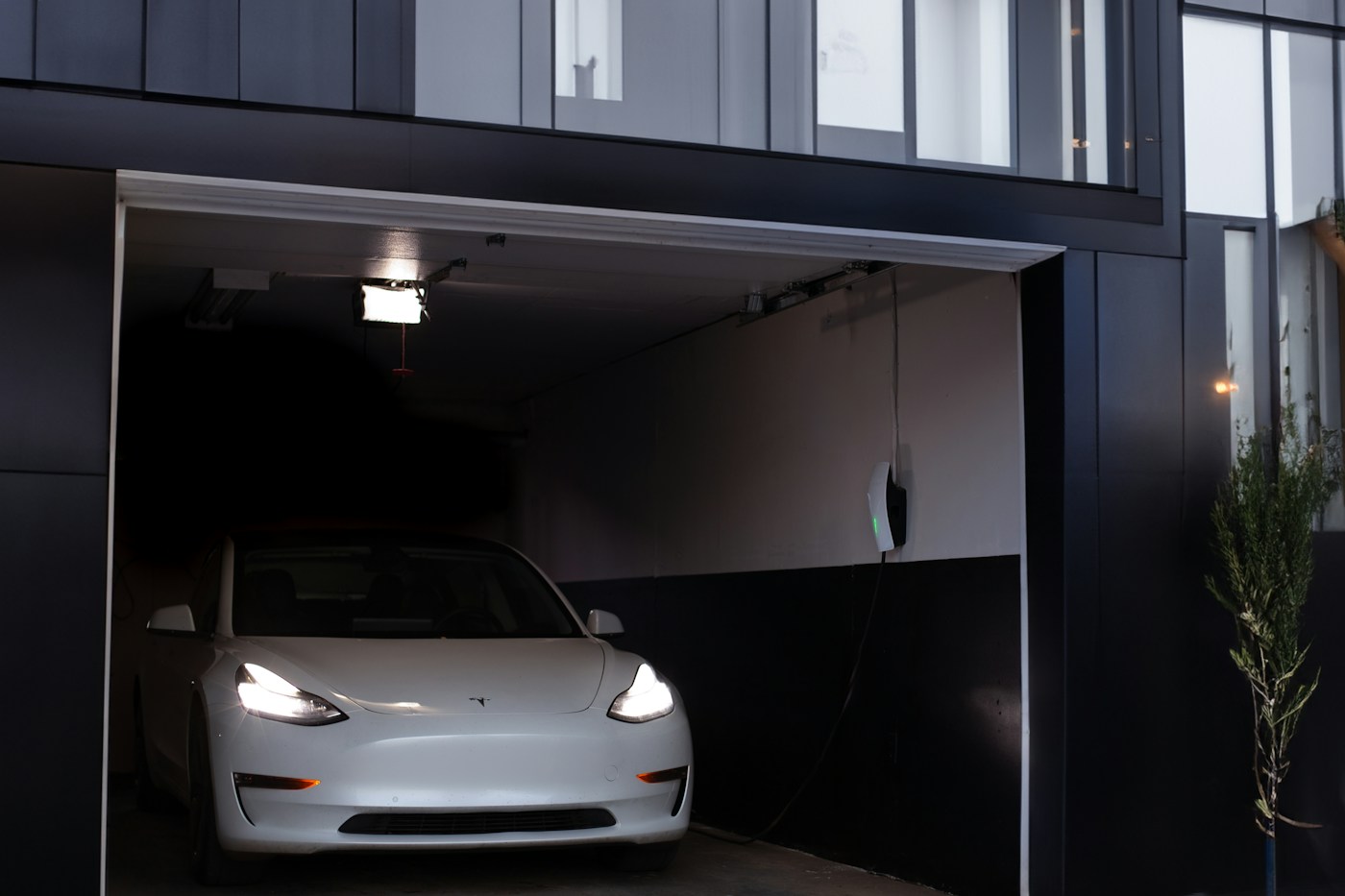
Measure the car with its doors open, mark a “parking box” on the floor with tape, and keep that box plus a walkway completely empty. Everything else goes on the walls, above the hood or out of the garage. Then add a simple parking stop so you land in the same spot every time.
Step 1: Measure the car the way you actually use it
Body width alone isn’t enough. You need three numbers:
- Width with mirrors. Check your owner’s manual or the manufacturer’s spec sheet; some list width with and without mirrors. Or measure mirror tip to mirror tip.
- Length. Bumper to bumper, plus any hitch or bike rack you leave on.
- Door swing. Open the driver’s door to the point where you can step out comfortably and measure from the side of the car to the outer edge of the door. Do the same for any door someone else uses, and for the rear hatch if you open it inside the garage.
Door swing is the number people skip, and it’s often the one that decides whether a shelf can go on that wall.
Step 2: Measure the garage, including what sticks out
Measure wall to wall and from the closed garage door to the back wall at floor level. Then note everything that eats into that space: the step up to the house door, the water heater or furnace, a support post, the freezer, the opener’s wall button. A 20-foot garage with a 3-foot landing at the house door is really 17 feet deep on that side.
Also look up. Note the garage door track, the opener rail and the height of the raised door so you don’t plan ceiling storage where the door travels. Our garage ceiling storage guide walks through those clearances.
Step 3: Mark the parking box and do the math
Use painter’s tape to outline where the car will sit, then add the door zone on the driver’s side and a walkway to the house door. Anything inside the tape stays empty all winter. What’s left is your storage space.
Lengthwise: a 264-inch-deep garage (22 feet) with a 190-inch car leaves 74 inches. Keep a walkway of about 30 to 36 inches in front of the car so you can get to the house door with bags, and a few inches behind the bumper so the door closes freely. That leaves roughly 2 feet at the front wall for shelving. These numbers are only an example; measure yours.
| Measure | How | What it decides |
|---|---|---|
| Car width with mirrors | Manual, spec sheet or tape | Minimum side clearance |
| Door swing | Door open to a comfortable exit | Whether that wall gets shelves |
| Car length | Bumper to bumper, plus racks | Space left for front-wall storage |
| Obstructions | Steps, water heater, posts | Where the walkway goes |
| Door track and rail height | Floor to track with door raised | Where ceiling storage can go |
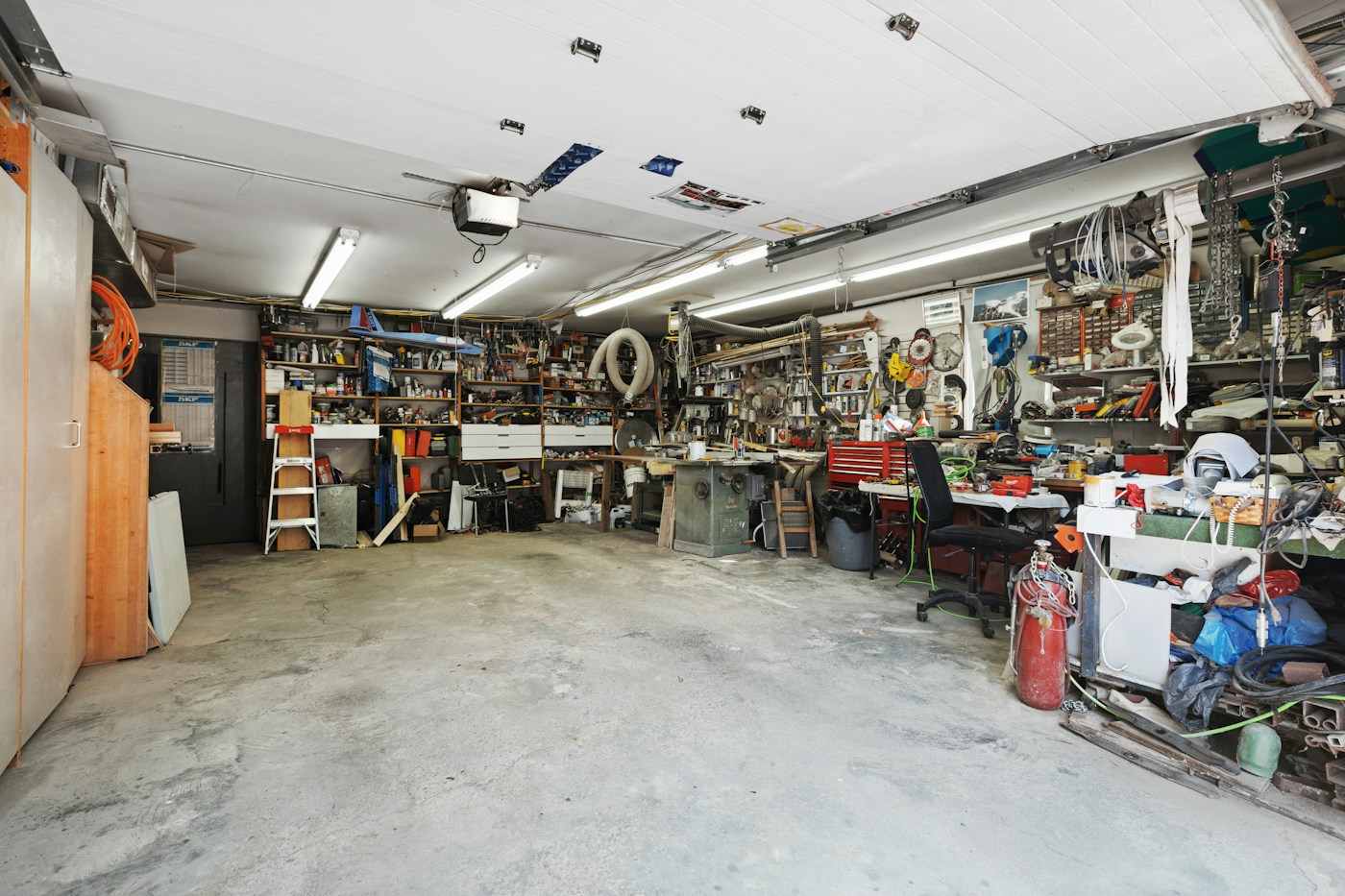
Step 4: Sort what’s on the floor into four piles
- Leaves the garage. Donations, trash and things that shouldn’t spend winter in an unheated space. Latex paint is a common one: our paint storage guide explains why freezing ruins it.
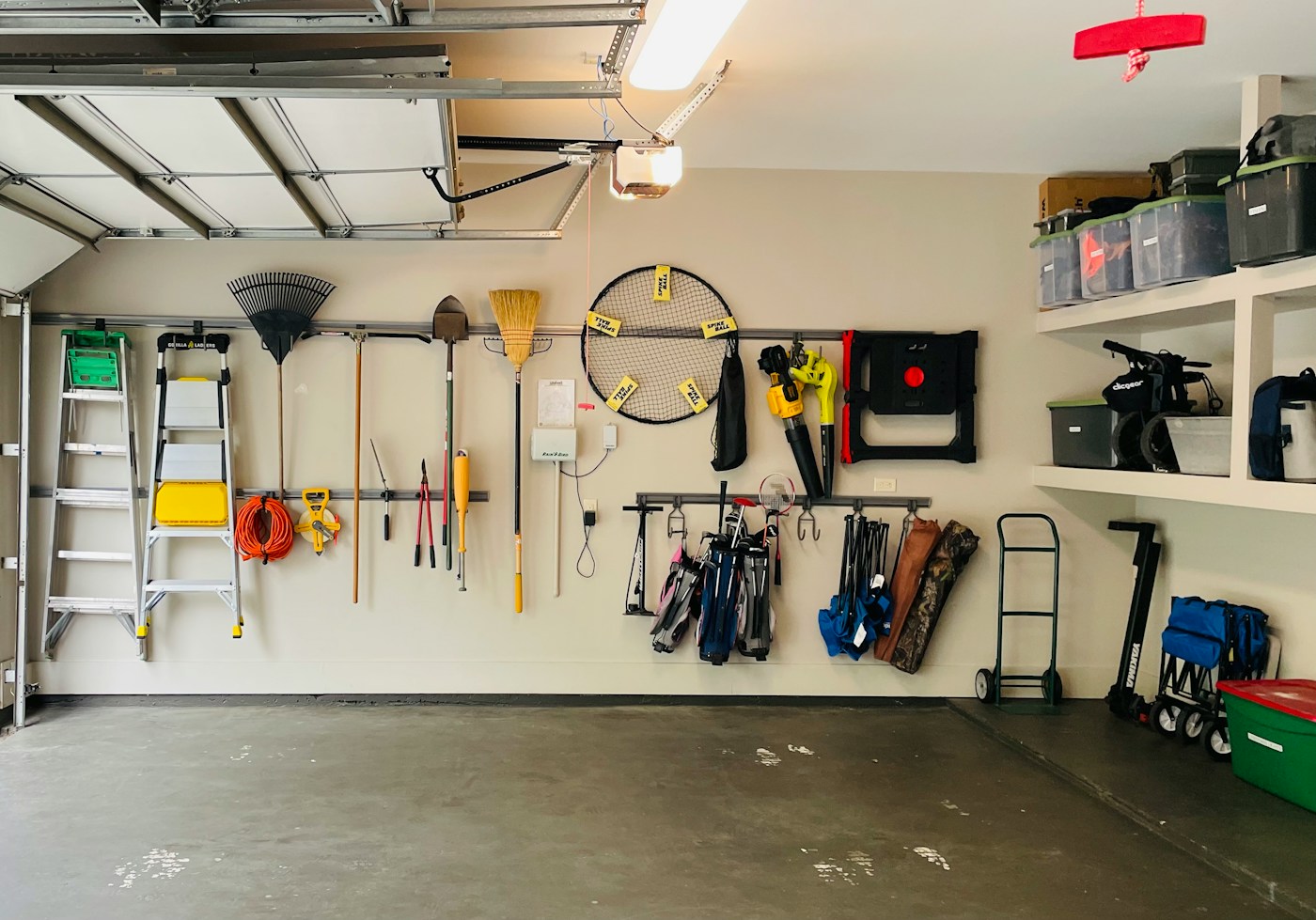
- Goes on the walls. Rakes, shovels, cords, ladders and sports gear on rails or hooks, mounted into studs. See our garage wall storage plan for height bands and load checks.
- Goes up. Seasonal bins and holiday decorations on overhead racks, as long as they clear the door track and the raised car hatch.
- Gets a shelf. Everything else, on shelving sized to the space you measured. A shallow unit fits beside the car; deeper racks fit the front wall. Our garage shelving comparison groups units by depth.
Bikes are their own puzzle; our garage bike storage guide compares wall hooks, floor stands and ceiling lifts by how much room each needs.
Step 5: Put winter gear where you’ll grab it
Shovels, a snow brush and ice melt belong by the door you walk out of, not at the back of a shelf. A couple of wall hooks plus a lidded bucket for ice melt is usually enough. Keep ice melt sealed and off the floor so it doesn’t absorb moisture and clump, and out of reach of kids and pets. For more on setting up a winter station by the door, see our garage organization ideas.
Step 6: Add a parking stop
Once the box is set, a simple guide helps you land in the same spot every time so you don’t creep forward into the walkway:
- Wall bumper: a foam or rubber pad on the front wall where the bumper or door edge might touch. Cheap and protects paint.
- Hanging ball: a tennis ball or a purpose-made marker on a cord from the ceiling that touches the windshield when you’re in place. Make sure it hangs clear of the door’s travel.
- Floor stop: a rubber curb your tire rolls against. Works well, but it’s a trip hazard in the walkway, so place it only under the tire path.
- Laser guide: a ceiling-mounted laser that points to a spot on the dashboard. Needs an outlet or batteries.
Safety checks before winter
- Never warm up the car in the garage. The CDC says never to run a car or truck inside a garage attached to your house, even with the garage door open, because of carbon monoxide. Back it out first.
- Store gasoline correctly. Utah’s Unified Fire Authority advises approved containers no larger than 5 gallons, never storing gasoline in the house, keeping cans away from heat or sparks such as a water heater, electric motor or car engine, and filling a can on the ground, not in a vehicle. Keep the can’s spout and vent closed.
- Test the door’s auto-reverse. The CPSC recommends checking the door and opener every 30 days and testing reversal by placing a 2×4 flat on the floor in the door’s path. If it doesn’t reverse, stop using the opener until it’s repaired. Its photo-eye sensors should sit 4 to 6 inches above the floor, so keep bins and bikes from blocking them.
- Keep the shutoffs reachable. Don’t stack storage in front of the water heater, the electrical panel or a water shutoff. If pipes run through the garage, our frozen pipe guide covers what to do before a hard freeze.
- Car width with mirrors, length and door swing measured.
- Garage measured, including steps, posts and the water heater.
- Parking box and walkway taped on the floor and kept empty.
- Floor items sorted: leave, walls, ceiling, shelves.
- Shelving depth matched to the side space you have.
- Winter tools hung by the exit door.
- Parking stop installed.
- Auto-reverse tested; photo eyes clear; gasoline stored safely.
Helpful garage parking gear
Affiliate disclosure: As an Amazon Associate I earn from qualifying purchases. These links open Amazon search results for each type of item, not recommendations for a specific model we’ve tested. Check your measurements before ordering.
Questions
How much space do you need to open a car door in a garage?
It depends on the car and the person. Open your door to the point where you can step out comfortably and measure it; many people find somewhere around 2½ to 3 feet works for the driver’s side. Measure yours rather than relying on a general figure.
Is it safe to warm up a car in the garage with the door open?
No. The CDC says never to run a car or truck inside a garage attached to your house, even if the garage door is open. Back the car out before letting it idle.
What shouldn’t be stored in an unheated garage over winter?
Anything that’s damaged by freezing, such as latex paint and some cleaning products and liquids. Check product labels for storage temperatures and move those indoors to a dry spot.
Sources: Centers for Disease Control and Prevention, Winter Safety Tips · Unified Fire Authority (Utah), Fuel Storage at Home · U.S. Consumer Product Safety Commission, garage door opener safety sheet. General guidance; local fire codes vary. See our editorial policy.
Keep reading
More guides for your space
THE KINDRED JOURNAL
Latest from the journal
- Winter Storm Emergency Kit: What to Pack and Where Each Part Should Live in the House
 Store a gallon of water per person per day for several days, split the kit into a light grab-and-go bin by the exit, a cool stay-put shelf for the heavy water and food, and a flashlight in every bedroom, keep generators 20 feet out, and check it all every spring and fall: a winter storm kit with a worked family-of-four example.
- Window Insulation Film: Does It Work? Sort Your Windows First, Then Do the Math
 Shrink film adds about R-1 and stops sash drafts, so it roughly halves heat loss through single-pane glass but barely helps a tight low-e window: sort your windows with the paper test, work out one window’s savings, keep the tape on trim and plan the way out of bedrooms.
- What Holiday Lights Really Cost to Run: LED vs. Incandescent, With the Math for Your Own Display
 Read the watts off each tag, multiply by your hours and your own rate, and the answer is clear: eight incandescent strings cost about $25.70 a season in our worked example and their LED versions about $2.18, big C9 bulbs pay back an LED swap in about three seasons, and working mini lights can wait.
- Ideal Indoor Humidity in Winter: Find Your Number, Check Your Meter, Then Add Only What the Room Needs
 Aim for 30 to 50% and never humidify past 50%, let the windows set the limit on the coldest nights, salt-test your hygrometer before you trust it, seal drafts first because a whole bedroom needs only about 4½ ounces of water, and clean the tank on a schedule: a winter humidity guide with the math worked out.
- Toy Storage Ideas: 13 Ways to Make Room Before the Holiday Toy Wave
 Edit the toys before the gifts arrive, give each kind of play one open bin on an anchored low shelf, keep small parts and spare batteries out of a toddler’s reach, skip latching lids and rotate the extras: thirteen toy storage ideas for the weeks before and after the holidays.
- Best Gift Wrap Organizers: 5 Picks for a Closet Corner, Under the Bed or the Back of a Door
 An upright box that holds up to 32 long rolls, a 41.5-inch under-bed bag for big collections, a water-resistant zip bag, an over-the-door organizer and a slim canvas case for eight rolls: five gift wrap organizers matched to the space you can give them.
- Cord and Cable Storage: 13 Ideas for the Spare Chargers, Cables and Adapters Nobody Can Find
 Match every cable to a device you still own, keep a sensible number of spares by connector type, coil them loosely, label the mystery bricks, hang the extension cords and send old batteries and dead cables to a proper drop-off: thirteen ways to store spare cords so the right one turns up in seconds.
- Window Condensation in Winter: Find Which Side the Water Is On, Then Match Humidity to the Forecast
 Do the wipe test to tell room-side fog from a failed seal, check a hygrometer against the outdoor low, keep humidity at or under 40% above 20°F and 30% below 10°F, run the fans, open the curtains by day and dry wet sills the same morning: a window condensation guide with a worked cold-week example.
- How to Clean a Range Hood Filter Before Holiday Cooking: Know Your Filter Type, Then Put It on the Calendar
 Wash metal mesh and baffle filters in hot soapy water or the dishwasher, replace charcoal filters instead of rinsing them, never run the hood with the filter out, and clean the weekend before Thanksgiving and again before Christmas: a range hood filter guide with a worked holiday cleaning calendar.