Here’s a quick test before cookie season: find your baking powder and check when you opened it. Extension food-storage guidance puts opened baking powder and baking soda at about three to six months, which means the can from last December probably won’t give you much lift this year. An afternoon spent checking dates and giving baking its own zone saves a lot of flat cookies and last-minute store runs.
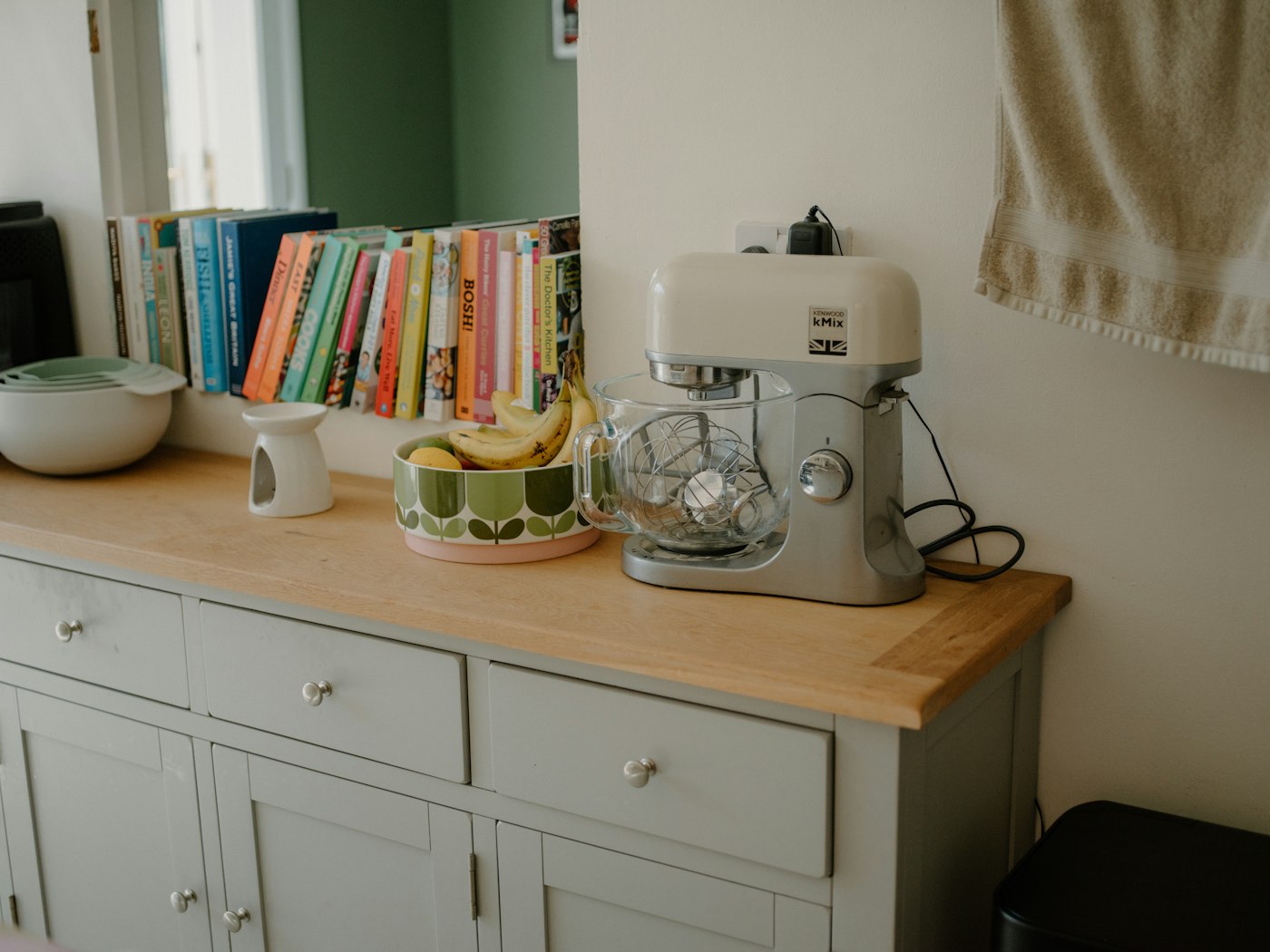
1. Pull everything out and check it
Gather every baking ingredient from every cabinet onto the counter. You’ll usually find two open bags of brown sugar and three half-used bottles of vanilla. Then check the dates against general guidance:
| Ingredient | Once opened | Tip |
|---|---|---|
| White flour | 6 to 8 months in the pantry, about 1 year refrigerated | Can be frozen for longer storage |
| Whole wheat flour | 6 to 8 months, refrigerated | Keep it in the fridge or freezer, not the pantry |
| Baking powder | 3 to 6 months | Write the opening date on the lid |
| Baking soda | 3 to 6 months | Use an older box for cleaning, not baking |
| Granulated, brown and powdered sugar | 18 to 24 months | Airtight keeps brown sugar soft |
| Opened nuts | Refrigerate; use within 4 to 6 months | Freeze for longer storage |
Times are from NDSU Extension’s Food Storage Guide. They’re quality guidelines; when in doubt, smell it and check the package date.
2. Give baking one zone
Baking goes faster when everything lives in one place close to where you mix. Pick one cabinet or two shelves near the mixer or your main counter. Avoid the cabinet right beside the oven or above the stove: the same guide recommends keeping cupboard staples cool and away from appliances that give off heat.
| Where | What goes there |
|---|---|
| Front of the easiest shelf | Flour, sugar, baking powder, baking soda, salt, vanilla |
| Behind or above | Cookie bin and decorating bin (step 4) |
| Fridge or freezer | Whole wheat flour, opened nuts, butter |
| A separate low cabinet | Sheet pans, mixing bowls, cooling racks |
3. Decant the big four, and label them
Flour and sugars are used in big scoops, so they’re worth moving into wide-mouth airtight containers you can get a measuring cup into. Write the date you filled each one on a strip of tape on the side. When you refill, use up the old flour before topping it with new.
Small things like extracts, sprinkles and food coloring can stay in their original bottles. A small turntable keeps them visible instead of lost at the back of the shelf.
4. Sort the extras into bins by job
- Cookie bin: chocolate chips, nuts you’ll use soon, oats, sprinkles, extracts.
- Decorating bin: piping bags and tips, food coloring, sprinkles for decorating, cookie stamps.
- Cutter bin: cookie cutters in a shallow box, so they don’t tangle in a deep drawer.
When you bake, pull out one bin instead of opening five cabinets. When you’re done, everything goes back in one place.
5. Stand the sheet pans up
Stacked sheet pans and cooling racks are the noisiest, most annoying part of a baking cabinet. A file-style divider or two tension rods inside a lower cabinet lets them stand upright so you can slide one out. Our deep cabinet guide has more on making low cabinets easier to reach.
If your stand mixer lives in a cabinet, store it at counter height or lower, near an outlet, and never on a high shelf where you’d lift a heavy machine overhead.
If you need a few pieces
Affiliate disclosure: As an Amazon Associate I earn from qualifying purchases. These links open Amazon search results for the item types above, not recommendations for a specific model. Measure your shelves before buying.
Looking for specific containers and a turntable? See our Black Friday organizers comparison.
Sources
Storage times and cupboard guidance: NDSU Extension, Food Storage Guide (FN579). Checked October 21, 2026. Practical organization guidance, not a hands-on product test. See our editorial policy.
Keep reading
More guides for your space
THE KINDRED JOURNAL
Latest from the journal
- What Holiday Lights Really Cost to Run: LED vs. Incandescent, With the Math for Your Own Display
 Read the watts off each tag, multiply by your hours and your own rate, and the answer is clear: eight incandescent strings cost about $25.70 a season in our worked example and their LED versions about $2.18, big C9 bulbs pay back an LED swap in about three seasons, and working mini lights can wait.
- Ideal Indoor Humidity in Winter: Find Your Number, Check Your Meter, Then Add Only What the Room Needs
 Aim for 30 to 50% and never humidify past 50%, let the windows set the limit on the coldest nights, salt-test your hygrometer before you trust it, seal drafts first because a whole bedroom needs only about 4½ ounces of water, and clean the tank on a schedule: a winter humidity guide with the math worked out.
- Toy Storage Ideas: 13 Ways to Make Room Before the Holiday Toy Wave
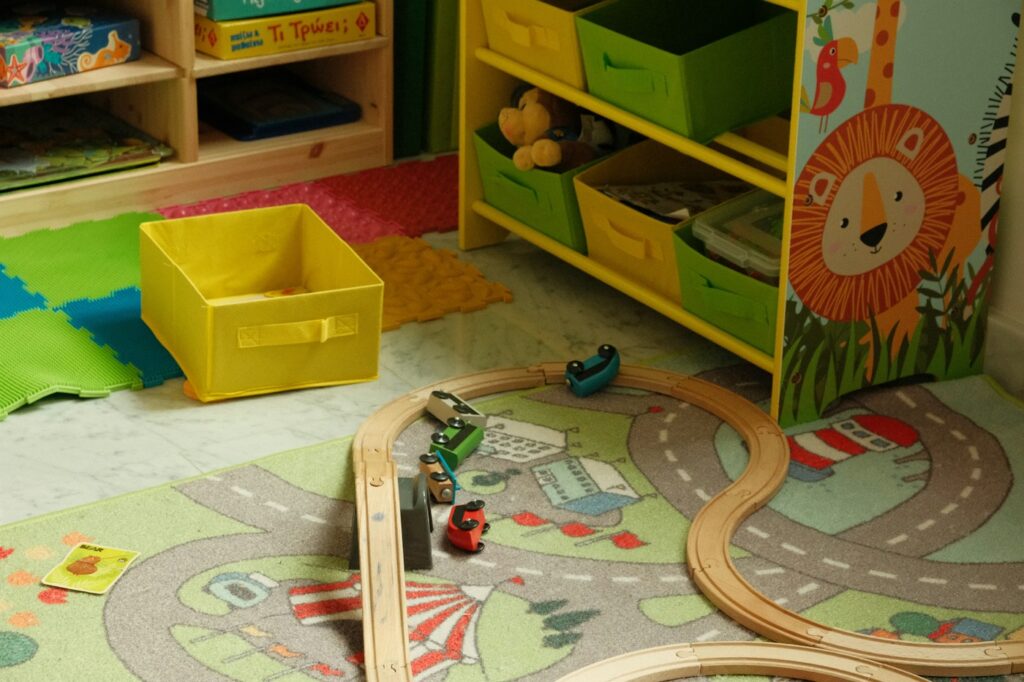 Edit the toys before the gifts arrive, give each kind of play one open bin on an anchored low shelf, keep small parts and spare batteries out of a toddler’s reach, skip latching lids and rotate the extras: thirteen toy storage ideas for the weeks before and after the holidays.
- Best Gift Wrap Organizers: 5 Picks for a Closet Corner, Under the Bed or the Back of a Door
 An upright box that holds up to 32 long rolls, a 41.5-inch under-bed bag for big collections, a water-resistant zip bag, an over-the-door organizer and a slim canvas case for eight rolls: five gift wrap organizers matched to the space you can give them.
- Cord and Cable Storage: 13 Ideas for the Spare Chargers, Cables and Adapters Nobody Can Find
 Match every cable to a device you still own, keep a sensible number of spares by connector type, coil them loosely, label the mystery bricks, hang the extension cords and send old batteries and dead cables to a proper drop-off: thirteen ways to store spare cords so the right one turns up in seconds.
- Window Condensation in Winter: Find Which Side the Water Is On, Then Match Humidity to the Forecast
 Do the wipe test to tell room-side fog from a failed seal, check a hygrometer against the outdoor low, keep humidity at or under 40% above 20°F and 30% below 10°F, run the fans, open the curtains by day and dry wet sills the same morning: a window condensation guide with a worked cold-week example.
- How to Clean a Range Hood Filter Before Holiday Cooking: Know Your Filter Type, Then Put It on the Calendar
 Wash metal mesh and baffle filters in hot soapy water or the dishwasher, replace charcoal filters instead of rinsing them, never run the hood with the filter out, and clean the weekend before Thanksgiving and again before Christmas: a range hood filter guide with a worked holiday cleaning calendar.
- Drying Clothes Indoors in Winter: Where the Rack Goes, How Much Rail You Need and What It Saves
 One load gives off about 2 liters of water as it air-dries, so put the rack where that moisture can leave, keep it 3 feet from the space heater, count inches of rail before you buy, space and turn the heavy things, watch humidity and window condensation, and know what the dryer you’re skipping really costs: indoor drying with the math.
- Hat, Glove and Scarf Storage by the Door: One Bin Per Person, Sized to What They Actually Wear
 Keep a daily set plus one dry spare per person, size an open bin for each from a quick measurement, dry wet mittens before they go in, clip pairs together, hang woven scarves and fold knits, skip long scarves on the playground and wash wool before it’s sealed away: a hat and glove station with a worked bin-size example.