Laundry rooms are often small, and much of the wall is spoken for: a top-load lid that swings up, a dryer vent, water shutoff valves, an outlet, and maybe a utility sink. A shelf hung in the wrong spot blocks one of them. Measure those first and the right shelving becomes clear, whether that’s a single shelf above the machines, a narrow cart in the gap beside them, or a freestanding unit on the opposite wall.
Mark the space you can’t block: the open lid of a top-loader, the dryer vent and its duct, the water valves, the outlet, and the room door. Put daily detergent on a shelf at a comfortable height, heavy jugs low, and rarely used items up high. Mount wall shelves into studs, keep detergent pods high or locked away from children, and leave the dryer and its vent clear.
1. Sort what lives in the laundry room
Clear every surface, including the top of the machines, and sort into groups:
- Every load: detergent, fabric softener or dryer sheets, stain remover.
- Weekly: bleach or oxygen cleaner, delicates bags, a lint roller.
- Backstock: unopened jugs and boxes bought in bulk.
- Tools: a drying rack, a hamper or two, an ironing board, a steamer.
- Things that wandered in: cleaning supplies, pet items, recycling, tools. Keep them only if this is truly their best home.
Check expiration or “best by” dates on liquid products, combine half-empty containers of the same product only if the labels allow it, and never mix different cleaning chemicals.
2. Measure the clearances you can’t block
- Top-load washer lid: open it fully and measure from the floor to the highest point of the lid. A shelf above must clear that with room for your hand to reach in.
- Front-load machines: the top of the machines, and the door swing in front so a cart or shelf doesn’t block it.
- Dryer vent: where the duct leaves the dryer and enters the wall. Keep it uncrushed and accessible.
- Water shutoff valves and drain: you need to reach these quickly in a leak.
- Outlets and any gas shutoff: keep access clear.
- Gaps beside the machines: width, depth, and height, for a narrow cart.
- Room door and walkway: how far the door swings and the space you need to carry a basket.
Write the numbers on a sketch of the wall. Use painter’s tape to mark the no-shelf areas directly on the wall before you buy anything.
3. Zone by reach and weight
Light backstock, pods out of reach
Daily detergent, stain remover
Heavy jugs, hampers, cart
Large detergent jugs are heavy and awkward to lift down from above head height, especially when full. Keep them on a low shelf or a sturdy cart and decant a smaller amount up to the daily shelf if that’s easier, using a container labeled with the product name. Light items, like extra dryer sheets and spare bags, go highest.
4. Seven laundry room shelving options
| Option | Best for | Check first |
|---|---|---|
| Wall shelf above the machines | Daily detergent and stain remover | Lid clearance, studs, and that the shelf depth doesn’t hit your head as you lean in |
| Wall shelf with a hanging rod | Air-drying and hanging shirts straight from the dryer | Rod rating and the space below for hanging clothes |
| Freestanding shelving unit | Backstock, baskets, renters | Footprint, walkway clearance, wall anchoring |
| Over-the-washer freestanding rack | Shelves above side-by-side machines without drilling | Inside width and height against your machines, legs clear of hoses and vents, stability |
| Slim rolling cart | The gap beside the washer or dryer | Gap width and depth; keep it clear of the dryer vent and hoses |
| Wall cabinet with doors | Chemicals and pods out of children’s reach | Studs, door swing, and a child lock if needed |
| Over-door rack or hooks | Ironing board, lint roller, delicates bags | Door thickness and that the door still closes |
For wall mounting basics and finding studs, our garage wall storage guide walks through the same checks.
Worked example: a shelf over side-by-side machines
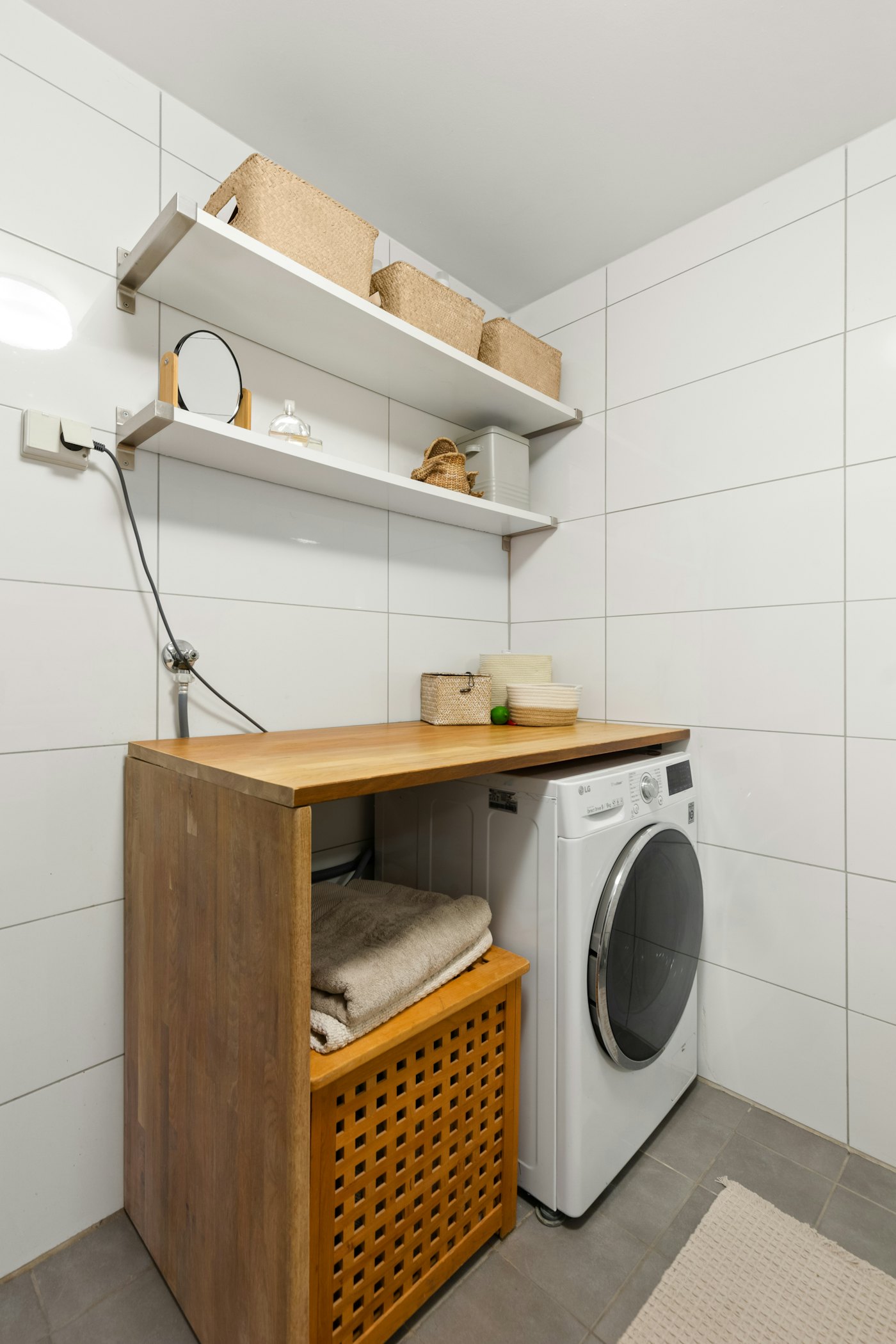
Say a top-load washer and a dryer sit side by side across about 56 inches of wall, and you want one long shelf above both. With the washer lid fully open, the highest point is about 54 inches from the floor in this example. Lids vary a lot, so measure yours.
Add about 6 inches so you can reach in and the lid doesn’t strike the shelf, and the bottom of the shelf goes no lower than about 60 inches. A 12-inch-deep shelf at 60 inches holds most detergent bottles and keeps them within reach of many adults, but check it against your own reach and the tallest bottle you’ll store. If you want a second shelf above, leave enough height between shelves for your tallest container plus a couple of inches to lift it out.
Now check what’s on the wall. If the dryer vent enters the wall at about 40 inches and the water valves sit at about 44 inches, a shelf at 60 inches clears both. Mount the brackets into studs and keep the brackets themselves away from the vent duct. A 5-inch gap between the dryer and the wall can take a slim cart for dryer sheets, as long as the cart doesn’t press on the vent hose. Everything here is an example; measure your room.
5. Safety
- Detergent pods: brightly colored single-dose packets can be mistaken for candy. Store them in their original closed container, up high or in a locked cabinet, out of sight and reach of children, and follow the label directions. If anyone swallows one or gets it in their eyes, call Poison Help at 1-800-222-1222 or emergency services.
- Keep all laundry and cleaning chemicals in their original labeled containers, closed, and never mix products.
- Keep the dryer vent and the area around and behind the dryer clear of lint, boxes, and clothes. Clean the lint filter after every load, and follow the dryer manufacturer’s guidance on duct material and cleaning.
- Don’t store anything on top of the dryer that could block airflow or fall behind it.
- Washers vibrate, especially during the spin cycle. Don’t store bottles on top of the machines where they can walk off or fall.
- Mount shelves into studs with hardware rated for the load, and anchor tall freestanding units to the wall.
- Keep access to the water shutoff valves, the outlet, and any gas shutoff clear at all times.
6. What to buy, in order
- A stud finder, if you’ll mount shelves on the wall. A basic stud finder pays for itself the first time it keeps a loaded shelf from pulling out of drywall.
- One shelf over the machines. A wall shelf with a hanging rod, or a freestanding over-the-washer rack if you can’t drill, sized to your clearance measurements.
- Child-safe pod storage if children live in or visit the home: a wall cabinet with doors mounted high, with a child lock if needed.
- A slim rolling cart for the gap beside the machines. Measure the gap first; slim laundry carts come in a range of widths.
- Handled baskets for backstock on higher shelves, so you can lift a whole basket down instead of reaching blind.
Compare laundry room shelving
Affiliate disclosure: As an Amazon Associate I earn from qualifying purchases. These links open Amazon search results for the formats in this guide, not recommendations for a specific model. Check dimensions, weight ratings, and mounting requirements against your room before buying.
Questions
How high should a shelf be above a washer and dryer?
There’s no single number. For a top-loader, measure the highest point of the fully open lid and leave room for your hand above it. For front-loaders, the shelf mainly needs to clear the top of the machines and stay within your comfortable reach.
Can I put shelves in a laundry room without drilling?
Yes. A freestanding over-the-washer rack, a freestanding shelving unit, a slim rolling cart, and over-door hooks all work without drilling. Check stability, and anchor tall units if the manufacturer recommends it.
Where should detergent pods be stored?
In their original closed container, up high or locked, out of sight and reach of children, as the product label directs. Avoid open shelves at a child’s height and clear decanting jars that make pods look like candy.
Related: Dryer vent warning signs
Keep reading
More guides for your space
THE KINDRED JOURNAL
Latest from the journal
- What Holiday Lights Really Cost to Run: LED vs. Incandescent, With the Math for Your Own Display
 Read the watts off each tag, multiply by your hours and your own rate, and the answer is clear: eight incandescent strings cost about $25.70 a season in our worked example and their LED versions about $2.18, big C9 bulbs pay back an LED swap in about three seasons, and working mini lights can wait.
- Ideal Indoor Humidity in Winter: Find Your Number, Check Your Meter, Then Add Only What the Room Needs
 Aim for 30 to 50% and never humidify past 50%, let the windows set the limit on the coldest nights, salt-test your hygrometer before you trust it, seal drafts first because a whole bedroom needs only about 4½ ounces of water, and clean the tank on a schedule: a winter humidity guide with the math worked out.
- Toy Storage Ideas: 13 Ways to Make Room Before the Holiday Toy Wave
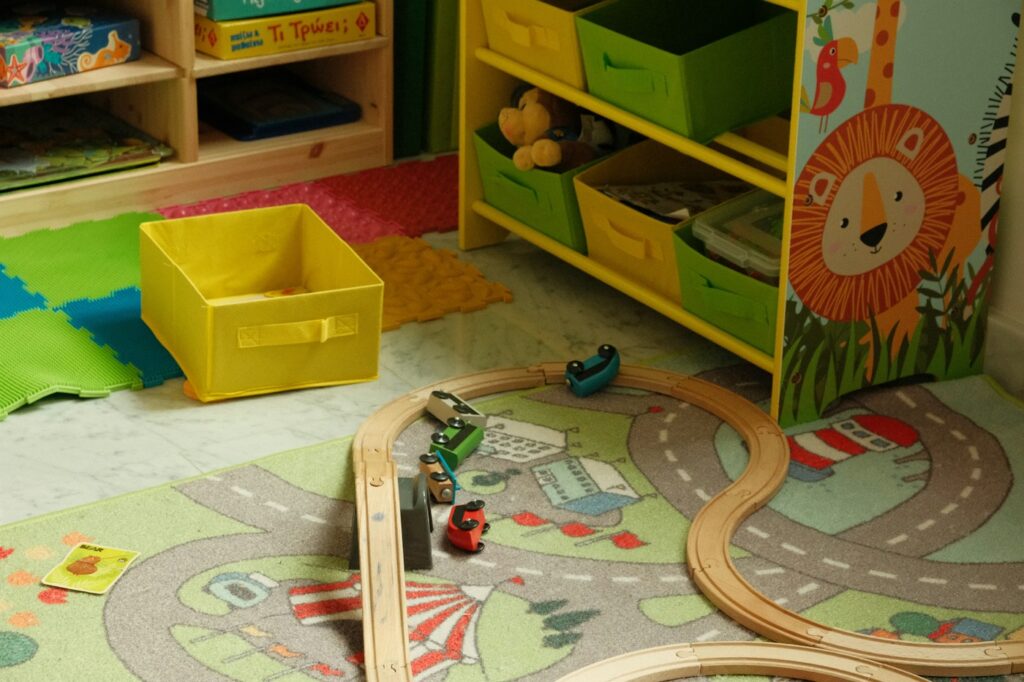 Edit the toys before the gifts arrive, give each kind of play one open bin on an anchored low shelf, keep small parts and spare batteries out of a toddler’s reach, skip latching lids and rotate the extras: thirteen toy storage ideas for the weeks before and after the holidays.
- Best Gift Wrap Organizers: 5 Picks for a Closet Corner, Under the Bed or the Back of a Door
 An upright box that holds up to 32 long rolls, a 41.5-inch under-bed bag for big collections, a water-resistant zip bag, an over-the-door organizer and a slim canvas case for eight rolls: five gift wrap organizers matched to the space you can give them.
- Cord and Cable Storage: 13 Ideas for the Spare Chargers, Cables and Adapters Nobody Can Find
 Match every cable to a device you still own, keep a sensible number of spares by connector type, coil them loosely, label the mystery bricks, hang the extension cords and send old batteries and dead cables to a proper drop-off: thirteen ways to store spare cords so the right one turns up in seconds.
- Window Condensation in Winter: Find Which Side the Water Is On, Then Match Humidity to the Forecast
 Do the wipe test to tell room-side fog from a failed seal, check a hygrometer against the outdoor low, keep humidity at or under 40% above 20°F and 30% below 10°F, run the fans, open the curtains by day and dry wet sills the same morning: a window condensation guide with a worked cold-week example.
- How to Clean a Range Hood Filter Before Holiday Cooking: Know Your Filter Type, Then Put It on the Calendar
 Wash metal mesh and baffle filters in hot soapy water or the dishwasher, replace charcoal filters instead of rinsing them, never run the hood with the filter out, and clean the weekend before Thanksgiving and again before Christmas: a range hood filter guide with a worked holiday cleaning calendar.
- Drying Clothes Indoors in Winter: Where the Rack Goes, How Much Rail You Need and What It Saves
 One load gives off about 2 liters of water as it air-dries, so put the rack where that moisture can leave, keep it 3 feet from the space heater, count inches of rail before you buy, space and turn the heavy things, watch humidity and window condensation, and know what the dryer you’re skipping really costs: indoor drying with the math.
- Hat, Glove and Scarf Storage by the Door: One Bin Per Person, Sized to What They Actually Wear
 Keep a daily set plus one dry spare per person, size an open bin for each from a quick measurement, dry wet mittens before they go in, clip pairs together, hang woven scarves and fold knits, skip long scarves on the playground and wash wool before it’s sealed away: a hat and glove station with a worked bin-size example.