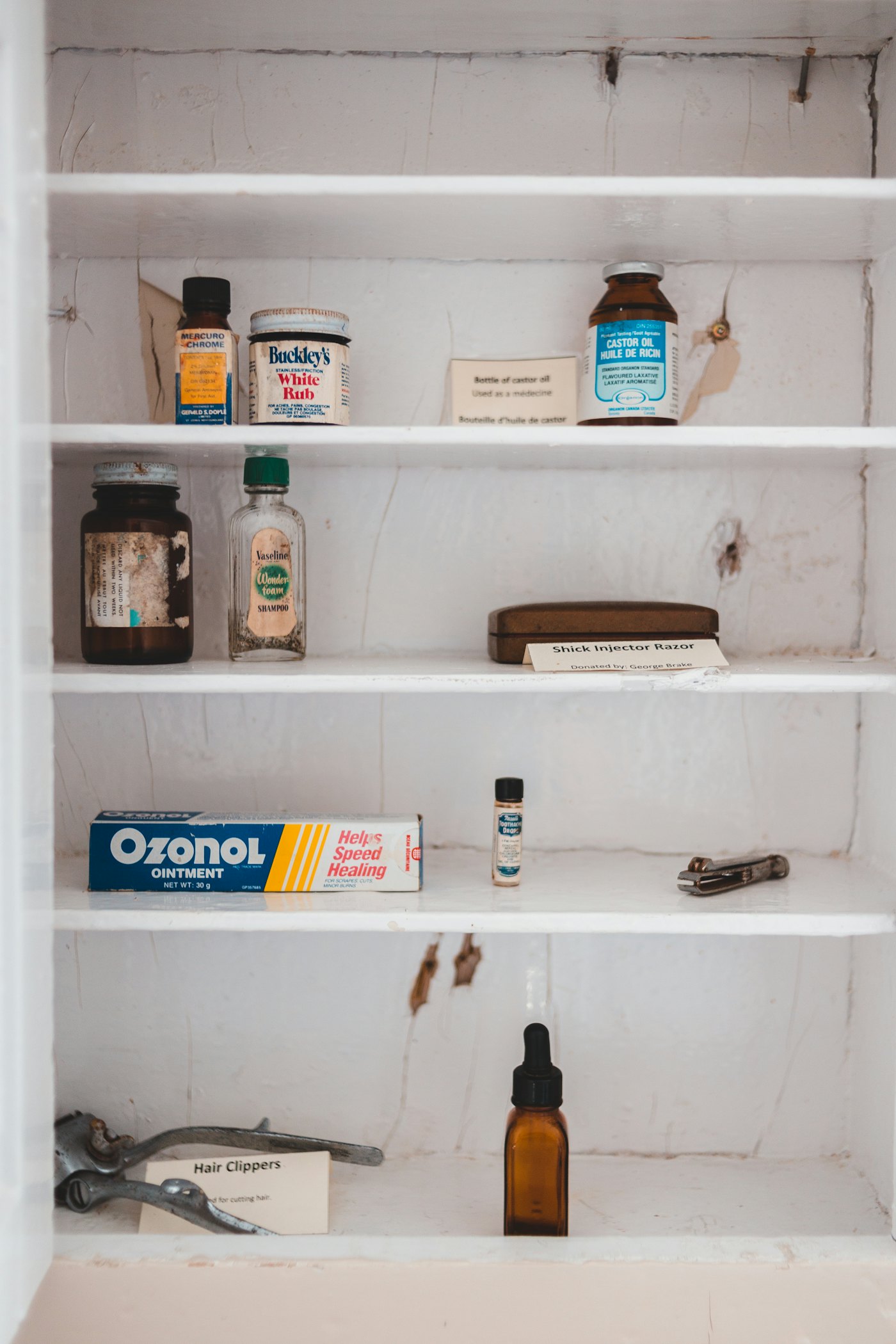
The mirrored cabinet over the sink is usually the shallowest storage in the house, and it fills up with half-used tubes, loose bobby pins, and bottles nobody has checked in years. Despite the name, it’s often not the best place for medicine. A good reset starts with what to take out, then sets each shelf by how often you reach for it.
Empty the cabinet, discard expired and unused items properly, and move medicines whose labels call for cool, dry storage somewhere outside the steamy bathroom and out of children’s reach. Then put daily items at eye level, light backups up top, and heavier bottles on the lowest shelf, using narrow bins measured to the cabinet’s shallow depth.
1. Empty it and edit
Take everything out and set it on a towel. Check each item against three questions:
- Is it expired? Look for the date on the box, bottle, or crimp of the tube. Sunscreen, medicines, and some cosmetics carry one.
- Has it changed? Separated lotions, odd smells, or dried-out products are done, whatever the date says.
- Do you use it? A product you haven’t opened in a year is taking space from one you use daily.
Don’t flush medicines or toss them loosely into the trash. Many pharmacies and police stations host drug take-back drop boxes, and the FDA publishes household disposal instructions for when no take-back option is available. Check the medicine’s label or ask a pharmacist.
2. Decide what belongs in this cabinet
Showers make bathrooms warm and humid. Many medicine labels say to store them in a cool, dry place, and federal health guidance generally suggests that a bathroom cabinet isn’t ideal for that. Follow each product’s label and ask your pharmacist if you’re unsure.
| Item group | Where it fits best | Why |
|---|---|---|
| Daily toiletries: toothpaste, floss, deodorant, skincare | Medicine cabinet, eye-level shelf | Used every day at the sink |
| Small tools: tweezers, nail clippers, bobby pins | Medicine cabinet, in a small cup or on a magnetic strip | Small and easy to lose in a drawer |
| First-aid basics: bandages, ointment | Cabinet or a labeled kit nearby | Fast to grab; check the labels for storage temperature |
| Prescription and over-the-counter medicines | A cool, dry spot up high, outside the bathroom | Many labels ask for cool, dry storage; keep out of children’s reach |
| Backstock and bulky bottles | Under the sink or a hall closet | Takes space the shallow shelves need |
3. Measure the shelves
- Shelf depth: from the back wall to the front edge of the shelf. Many recessed and surface-mounted cabinets are only a few inches deep, so measure yours.
- Clearance with the door closed: some doors have shelves, a mirror frame, or a lip that cuts into the usable depth.
- Space between shelves: and whether the shelves are adjustable. Many have clips or pegs you can move.
- Inside width: wall to wall at shelf height.
- Inside of the door: flat area for a magnetic strip or slim adhesive pocket, if the door closes fully with it in place.
4. Set the cabinet shelf by shelf
Light, occasional
Daily, eye level
Taller, heavier bottles
- Middle shelf, roughly eye level: the things you use every morning and night. Nothing else.
- Top shelf: light items used now and then, such as spare floss or travel sizes. Nothing heavy or breakable above your face.
- Bottom shelf: the tallest and heaviest bottles, so they don’t fall into the sink when the door opens.
- Inside the door: metal tools on a magnetic strip, if your door has room.
Adjust shelf heights to the tallest item on each shelf plus about an inch. Grouping items in narrow bins means you pull out one bin instead of knocking over a row of bottles.
Worked example: a shallow three-shelf cabinet
Imagine a cabinet 14 inches wide inside, with shelves about 3 1/2 inches deep once the door closes. Bins have to be narrower front to back than that, so look for bins listed at about 3 inches deep or less.
With 14 inches of width, two bins about 6 1/2 inches wide fit with about 1 inch of slack. On the daily shelf, one bin holds dental care and the other holds skincare. Toothpaste and a small pump bottle sit between them only if there’s room left. On the bottom shelf, if your tallest bottle is 7 inches, set the shelf above it at about 8 inches so the bottle lifts out without tipping.
That plan uses two narrow bins and one shelf adjustment. If the cabinet is still crowded, the overflow belongs under the sink, not in another organizer.
5. Safety notes
- Keep all medicines, vitamins, and supplements up and away, out of children’s sight and reach, and close child-resistant caps fully after each use.
- Many medicine cabinets can be opened by a child standing on the counter or a stool. If small children visit, store medicines elsewhere or use a locking box.
- Keep medicines in their original labeled containers so dosage and expiration stay with them.
- Don’t store glass bottles on the top shelf, where they could fall into the sink.
- Don’t overload a cabinet or its shelves, and check that a surface-mounted cabinet is fastened securely.
6. What to buy, and in what order
- Nothing, until you’ve edited and measured.
- Two or three narrow bins sized to the shelf depth.
- A magnetic strip for the door, if it has clearance.
- A small locking box for medicines, if children live in or visit the home.
Compare medicine cabinet organizers
Affiliate disclosure: As an Amazon Associate I earn from qualifying purchases. These links open Amazon search results for the item types in this guide, not recommendations for a specific model. Check depth against your shelves before buying.
Questions
Where should I keep medicines instead?
Somewhere cool, dry, and high, such as a kitchen cabinet away from the stove and sink or a bedroom closet shelf. Follow each label’s storage instructions and keep everything out of children’s reach.
How often should I clean out the medicine cabinet?
A quick check every few months, and a full edit about once a year, catches expired products before they pile up. Some people pair it with a seasonal routine such as changing smoke alarm batteries.
Do turntables work in a medicine cabinet?
Only if the shelf is deep enough for the turntable’s full diameter with the door closed. In most shallow cabinets, narrow rectangular bins use the space better.
Keep reading
More guides for your space
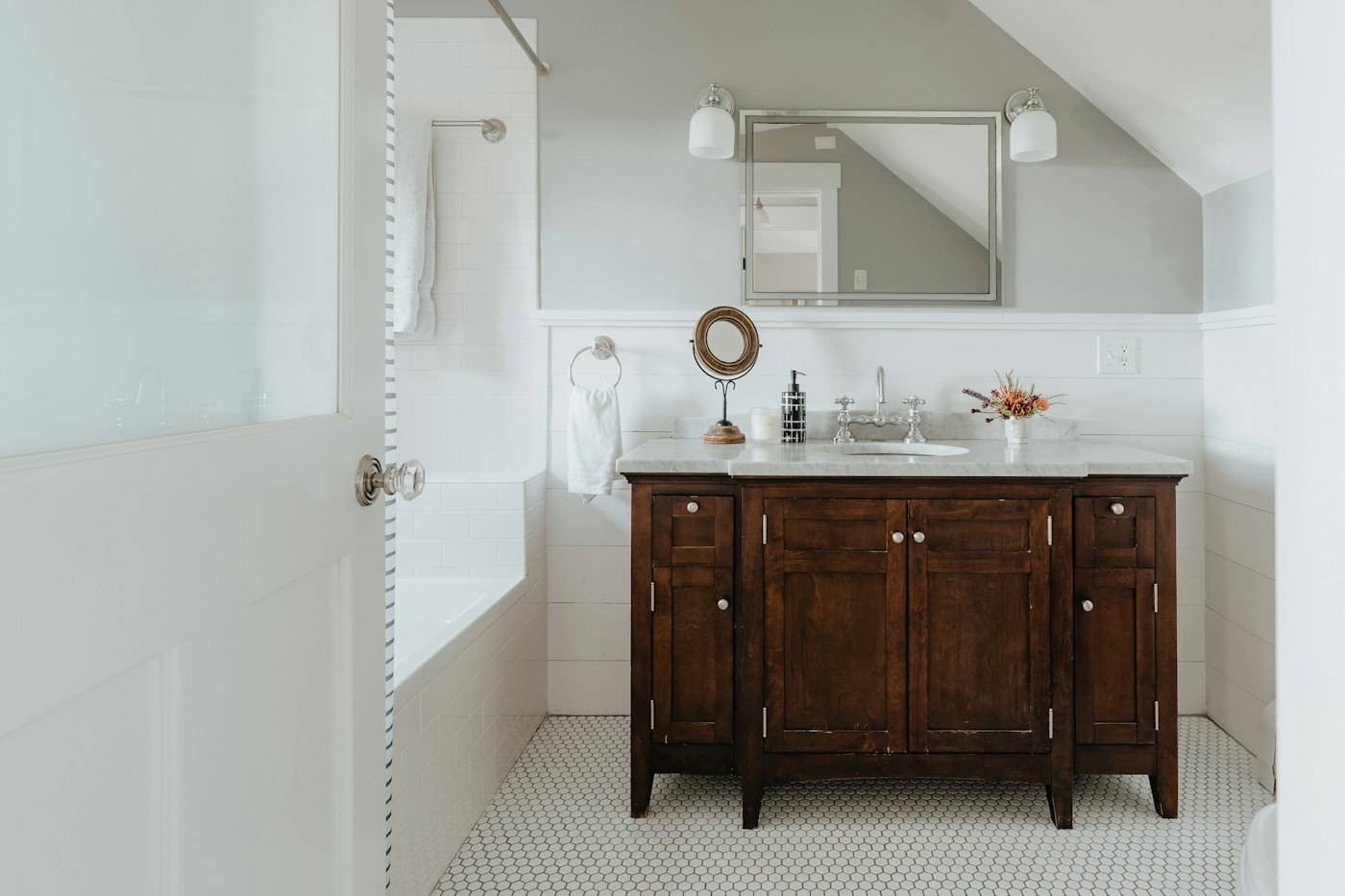
THE KINDRED JOURNAL
Latest from the journal
- What Holiday Lights Really Cost to Run: LED vs. Incandescent, With the Math for Your Own Display
 Read the watts off each tag, multiply by your hours and your own rate, and the answer is clear: eight incandescent strings cost about $25.70 a season in our worked example and their LED versions about $2.18, big C9 bulbs pay back an LED swap in about three seasons, and working mini lights can wait.
- Ideal Indoor Humidity in Winter: Find Your Number, Check Your Meter, Then Add Only What the Room Needs
 Aim for 30 to 50% and never humidify past 50%, let the windows set the limit on the coldest nights, salt-test your hygrometer before you trust it, seal drafts first because a whole bedroom needs only about 4½ ounces of water, and clean the tank on a schedule: a winter humidity guide with the math worked out.
- Toy Storage Ideas: 13 Ways to Make Room Before the Holiday Toy Wave
 Edit the toys before the gifts arrive, give each kind of play one open bin on an anchored low shelf, keep small parts and spare batteries out of a toddler’s reach, skip latching lids and rotate the extras: thirteen toy storage ideas for the weeks before and after the holidays.
- Best Gift Wrap Organizers: 5 Picks for a Closet Corner, Under the Bed or the Back of a Door
 An upright box that holds up to 32 long rolls, a 41.5-inch under-bed bag for big collections, a water-resistant zip bag, an over-the-door organizer and a slim canvas case for eight rolls: five gift wrap organizers matched to the space you can give them.
- Cord and Cable Storage: 13 Ideas for the Spare Chargers, Cables and Adapters Nobody Can Find
 Match every cable to a device you still own, keep a sensible number of spares by connector type, coil them loosely, label the mystery bricks, hang the extension cords and send old batteries and dead cables to a proper drop-off: thirteen ways to store spare cords so the right one turns up in seconds.
- Window Condensation in Winter: Find Which Side the Water Is On, Then Match Humidity to the Forecast
 Do the wipe test to tell room-side fog from a failed seal, check a hygrometer against the outdoor low, keep humidity at or under 40% above 20°F and 30% below 10°F, run the fans, open the curtains by day and dry wet sills the same morning: a window condensation guide with a worked cold-week example.
- How to Clean a Range Hood Filter Before Holiday Cooking: Know Your Filter Type, Then Put It on the Calendar
 Wash metal mesh and baffle filters in hot soapy water or the dishwasher, replace charcoal filters instead of rinsing them, never run the hood with the filter out, and clean the weekend before Thanksgiving and again before Christmas: a range hood filter guide with a worked holiday cleaning calendar.
- Drying Clothes Indoors in Winter: Where the Rack Goes, How Much Rail You Need and What It Saves
 One load gives off about 2 liters of water as it air-dries, so put the rack where that moisture can leave, keep it 3 feet from the space heater, count inches of rail before you buy, space and turn the heavy things, watch humidity and window condensation, and know what the dryer you’re skipping really costs: indoor drying with the math.
- Hat, Glove and Scarf Storage by the Door: One Bin Per Person, Sized to What They Actually Wear
 Keep a daily set plus one dry spare per person, size an open bin for each from a quick measurement, dry wet mittens before they go in, clip pairs together, hang woven scarves and fold knits, skip long scarves on the playground and wash wool before it’s sealed away: a hat and glove station with a worked bin-size example.