Every pantry has a back row: the can of pumpkin from two Thanksgivings ago, the second bag of rice someone bought because the first one was hidden. Knowing how long shelf-stable food actually lasts, and setting the shelf up so the oldest item is always in front, is how you stop throwing food away and stop buying doubles.
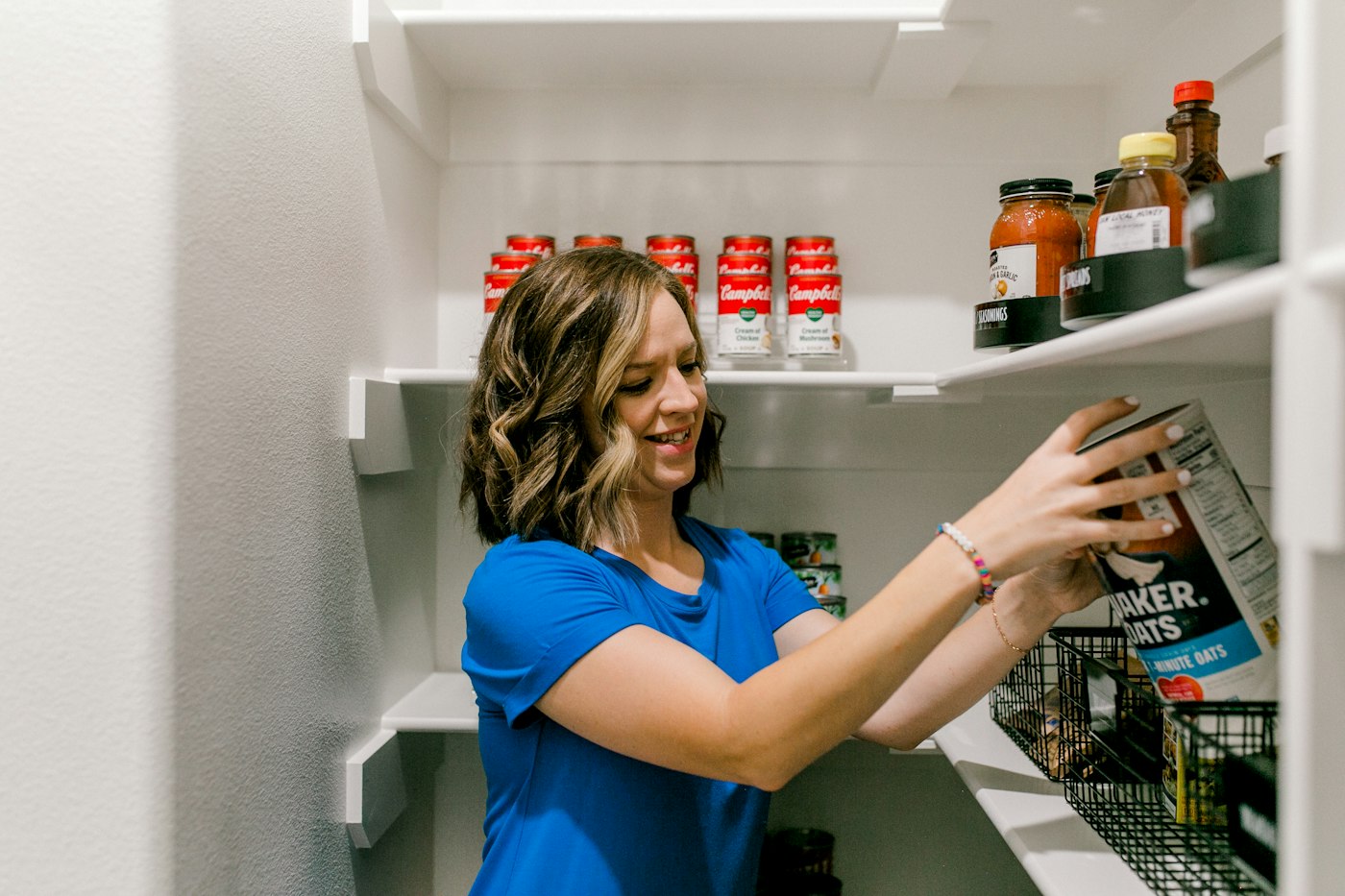
USDA guidance puts low-acid canned goods like soup, beans and vegetables at 2 to 5 years, and high-acid cans like tomatoes and fruit at 12 to 18 months. Store everything somewhere below 85°F and away from the stove, the sink and the garage. Toss cans that bulge, leak, are deeply dented or rusted inside. Then put new purchases behind old ones, every time.
How long pantry staples keep
These storage times come from the USDA Food Safety and Inspection Service. They’re for unopened products stored in a cool, dry place.
| Item | Unopened, in the pantry | After opening |
|---|---|---|
| Low-acid canned goods (meat, poultry, stews, most soups, beans, corn, peas, potatoes) | 2 to 5 years | Refrigerate, use in 3 to 4 days |
| High-acid canned goods (tomatoes, most fruit, juice, pickles, sauerkraut) | 12 to 18 months | Refrigerate, use in 5 to 7 days |
| Rice and dried pasta | 2 years | Cooked: refrigerate, use in 3 to 4 days |
| Tuna and seafood in pouches | 18 months | Refrigerate after opening |
| Commercial jerky | 12 months | Follow the package |
Which cans to throw away
USDA advises discarding cans that are:
- Deeply dented, meaning you can lay a finger in the dent, especially on a seam. Small dents on an otherwise sound can are generally safe.
- Bulging, swollen or leaking.
- Heavily rusted. Surface rust that wipes off with a paper towel isn’t serious, but rust inside the can is.
- Frozen and thawed, or that spurt or hiss loudly when opened.
Where the pantry should (and shouldn’t) be
USDA says temperatures below 85°F are best for canned and shelf-stable foods, and that spoilage risk rises sharply above 100°F. It specifically advises against storing them above or beside the stove, under the sink, or in damp garages and basements. If your only spare shelf is in the garage, keep it for paper goods and drinks, not food.
Set up a first-in, first-out shelf
“First in, first out” just means you always reach for the oldest item first. The trick is making that the easiest thing to do:
- Load from the back. When you unpack groceries, slide older items forward and put new ones behind them.
- Group by type, in lanes. One lane for each kind of can, front to back, so you can see at a glance how many you have.
- Mark the date. A quick marker note of the month and year bought on the lid makes rotation obvious.
- Keep a “use soon” spot. One small bin at eye level for anything close to its date.
Keep dry goods sealed
Flour, rice, cereal, pasta and nuts last longest and stay free of pantry moths in airtight containers. Clear, square containers also use shelf space better than round ones. Write the product and the date on a piece of tape on the lid, and keep cooking instructions by cutting them off the original bag and taping them to the back. Our small pantry reset walks through measuring shelves for containers.
Pantry rotation supplies
Affiliate disclosure: As an Amazon Associate I earn from qualifying purchases. These links open Amazon search results for each type of item, not recommendations for a specific model we’ve tested. Check dimensions against your shelf depth and height before ordering.
- Everything pulled off one shelf at a time.
- Bulging, leaking, deeply dented or rusted-inside cans thrown out.
- Items past their storage window used or discarded.
- Cans grouped into lanes by type.
- Oldest items in front, dates marked.
- Dry goods moved into sealed containers.
- “Use soon” bin set at eye level.
Questions
Can I store canned food in the garage?
USDA advises against damp garages, and many garages swing well above 85°F in summer or freeze in winter. Both shorten shelf life, and freezing can damage cans.
How long do opened canned foods last in the fridge?
USDA says 3 to 4 days for low-acid foods and 5 to 7 days for high-acid foods like tomatoes and fruit. Move them into a covered container rather than leaving them in the open can.
How do I keep pantry moths out?
Store grains, flour, nuts, dried fruit and pet food in airtight containers, wipe up spills promptly, and check new bags before putting them away.
Sources: USDA Food Safety and Inspection Service, Shelf-Stable Food Safety. General guidance; follow package instructions. See our editorial policy.
Related: Get baking supplies ready for the holidays
Keep reading
More guides for your space
THE KINDRED JOURNAL
Latest from the journal
- What Holiday Lights Really Cost to Run: LED vs. Incandescent, With the Math for Your Own Display
 Read the watts off each tag, multiply by your hours and your own rate, and the answer is clear: eight incandescent strings cost about $25.70 a season in our worked example and their LED versions about $2.18, big C9 bulbs pay back an LED swap in about three seasons, and working mini lights can wait.
- Ideal Indoor Humidity in Winter: Find Your Number, Check Your Meter, Then Add Only What the Room Needs
 Aim for 30 to 50% and never humidify past 50%, let the windows set the limit on the coldest nights, salt-test your hygrometer before you trust it, seal drafts first because a whole bedroom needs only about 4½ ounces of water, and clean the tank on a schedule: a winter humidity guide with the math worked out.
- Toy Storage Ideas: 13 Ways to Make Room Before the Holiday Toy Wave
 Edit the toys before the gifts arrive, give each kind of play one open bin on an anchored low shelf, keep small parts and spare batteries out of a toddler’s reach, skip latching lids and rotate the extras: thirteen toy storage ideas for the weeks before and after the holidays.
- Best Gift Wrap Organizers: 5 Picks for a Closet Corner, Under the Bed or the Back of a Door
 An upright box that holds up to 32 long rolls, a 41.5-inch under-bed bag for big collections, a water-resistant zip bag, an over-the-door organizer and a slim canvas case for eight rolls: five gift wrap organizers matched to the space you can give them.
- Cord and Cable Storage: 13 Ideas for the Spare Chargers, Cables and Adapters Nobody Can Find
 Match every cable to a device you still own, keep a sensible number of spares by connector type, coil them loosely, label the mystery bricks, hang the extension cords and send old batteries and dead cables to a proper drop-off: thirteen ways to store spare cords so the right one turns up in seconds.
- Window Condensation in Winter: Find Which Side the Water Is On, Then Match Humidity to the Forecast
 Do the wipe test to tell room-side fog from a failed seal, check a hygrometer against the outdoor low, keep humidity at or under 40% above 20°F and 30% below 10°F, run the fans, open the curtains by day and dry wet sills the same morning: a window condensation guide with a worked cold-week example.
- How to Clean a Range Hood Filter Before Holiday Cooking: Know Your Filter Type, Then Put It on the Calendar
 Wash metal mesh and baffle filters in hot soapy water or the dishwasher, replace charcoal filters instead of rinsing them, never run the hood with the filter out, and clean the weekend before Thanksgiving and again before Christmas: a range hood filter guide with a worked holiday cleaning calendar.
- Drying Clothes Indoors in Winter: Where the Rack Goes, How Much Rail You Need and What It Saves
 One load gives off about 2 liters of water as it air-dries, so put the rack where that moisture can leave, keep it 3 feet from the space heater, count inches of rail before you buy, space and turn the heavy things, watch humidity and window condensation, and know what the dryer you’re skipping really costs: indoor drying with the math.
- Hat, Glove and Scarf Storage by the Door: One Bin Per Person, Sized to What They Actually Wear
 Keep a daily set plus one dry spare per person, size an open bin for each from a quick measurement, dry wet mittens before they go in, clip pairs together, hang woven scarves and fold knits, skip long scarves on the playground and wash wool before it’s sealed away: a hat and glove station with a worked bin-size example.