Most fridges aren’t messy because there’s too much food. They’re messy because nothing has a fixed home, so the yogurt drifts to the back, the leftovers stack on top of the produce, and half a container of soup is found three weeks later. A refrigerator also isn’t the same temperature everywhere, which means where something sits affects how long it lasts. Set it up once by zone and it mostly stays that way.
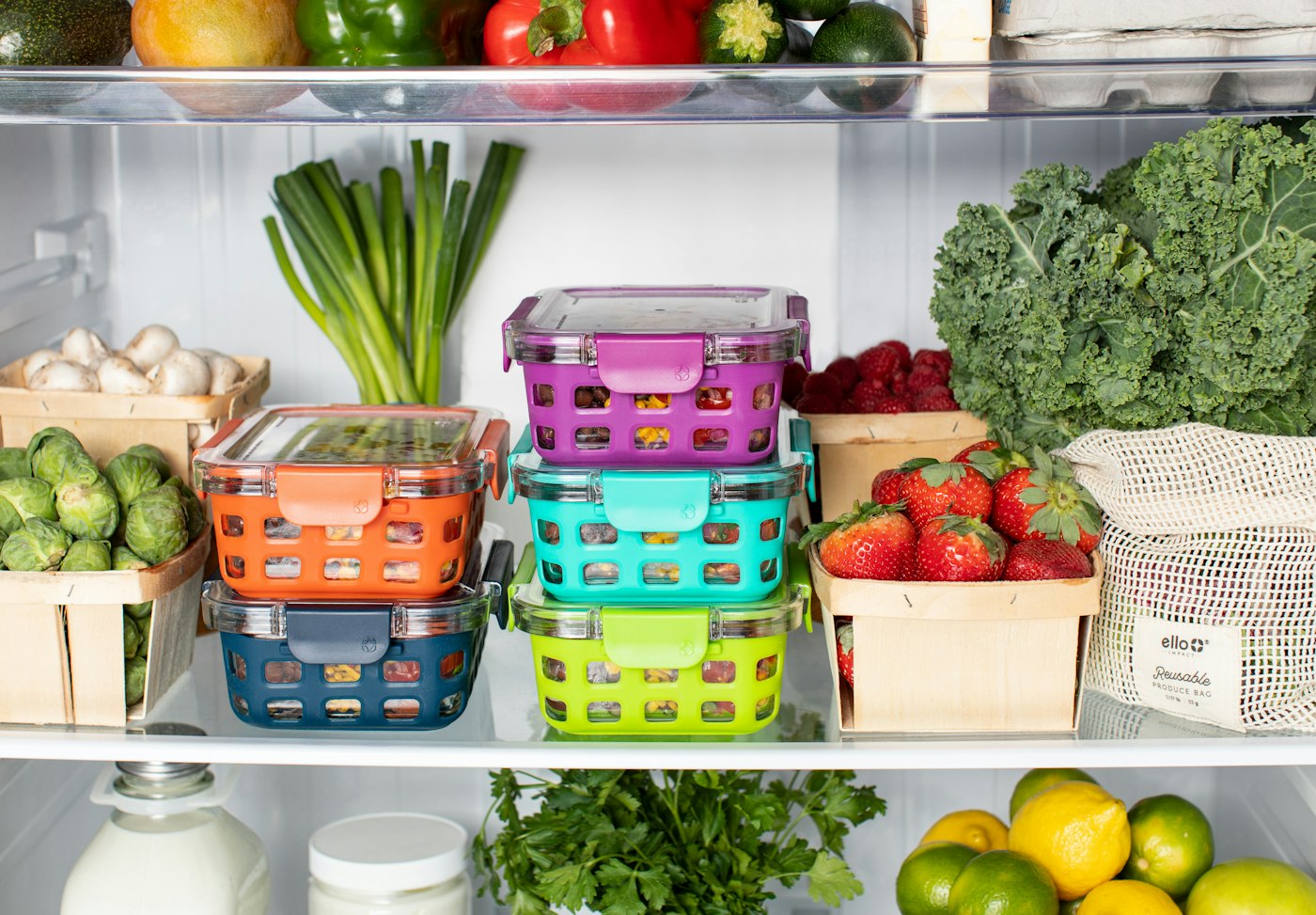
Keep the fridge at or below 40°F and the freezer at 0°F, and check with a thermometer. Raw meat goes on the bottom shelf in a tray, leftovers and ready-to-eat food go at eye level, eggs and milk go inside the main compartment rather than on the door, and the door holds condiments. Leave space between items so cold air can circulate.
1. Check the temperature before you rearrange anything
The FDA advises keeping the refrigerator at or below 40°F (4°C) and the freezer at 0°F (-18°C). The dial inside most fridges is a setting, not a reading, so the FDA recommends an inexpensive appliance thermometer, placed toward the front where you can read it easily and checked at least once a week.
2. Learn your fridge’s warm and cold spots
Every time the door opens, the door shelves and the front of the top shelf warm up first. The back of the lower shelves usually stays coldest. Use that pattern:
| Zone | Best for | Why |
|---|---|---|
| Door shelves | Condiments, sauces, pickles, juice, butter | Warmest part of the fridge; these items hold up to temperature swings |
| Top shelf | Drinks, snacks, ready-to-eat foods | Easy to see and grab, and nothing above to drip on it |
| Middle shelf (eye level) | Leftovers, dairy, eggs in their carton | Where you’ll actually notice what needs eating |
| Bottom shelf | Raw meat, poultry and fish, in a tray or bin | Usually coldest, and any drips can’t land on other food |
| Crisper drawers | Fruit in one, vegetables in the other | Holds humidity; separating them keeps produce fresher |
3. Move eggs and milk off the door
The FDA specifically advises keeping eggs in their carton in the main compartment rather than on the door, where the temperature is warmer. The same logic applies to milk: it lasts better on a shelf than in the door bin it was designed for. The carton also protects eggs from absorbing odors and shows the pack date.
4. Give raw meat the bottom shelf, in a tray
The FDA recommends keeping raw foods separate from ready-to-eat foods and preventing juices from thawing meat from dripping onto other foods. The simplest way is a rimmed tray or a clear bin on the bottom shelf, used only for raw meat, poultry and fish. Thaw frozen meat in that bin, too, never on a top shelf.
5. Measure before you buy fridge bins
Fridge bins work best when they fit the shelf exactly, front to back, so nothing gets pushed behind them.
Two bins that pay off in almost any fridge: one labeled “eat first” for leftovers and opened items, and one for raw meat on the bottom shelf. A small turntable on a deep shelf brings jars from the back to the front with one spin; our guide to deep cabinets uses the same idea.
6. Leave room for air
Cold air needs to move around food to keep it cold. Packing every shelf solid, or pushing containers against the back wall, can create warm pockets and freeze food in others. If your fridge is always full, the fix is usually a clear-out, not more bins.
7. Keep leftovers on a clock
The FDA advises that refrigerated foods, including leftovers and takeout, not sit at room temperature for more than two hours, or one hour when it’s above 90°F. Store leftovers in covered containers, and put the date on a strip of masking tape so nobody has to guess.
Fridge setup supplies
Affiliate disclosure: As an Amazon Associate I earn from qualifying purchases. These links open Amazon search results for each type of item, not recommendations for a specific model we’ve tested. Check the depth and height against your shelves before ordering.
- Thermometer in place; fridge at or below 40°F, freezer at 0°F.
- Expired and forgotten food cleared out.
- Raw meat in a tray on the bottom shelf.
- Eggs and milk moved off the door.
- Leftovers dated and grouped at eye level.
- Fruit and vegetables in separate drawers.
- Gaps left between items for air.
Questions
Should fruit and vegetables share a crisper drawer?
It’s better to separate them. Some fruits, like apples, give off ethylene gas, which can speed up ripening and spoilage in nearby vegetables, especially leafy greens.
Is it safe to put hot leftovers straight into the fridge?
Yes, and it’s better than leaving them out past the two-hour limit. Divide large batches into shallow containers so they cool faster.
How often should I clean the fridge out?
A quick check before your weekly grocery trip, when the fridge is emptiest, keeps it manageable. Wipe shelves and drawers fully a few times a year.
Sources: U.S. Food and Drug Administration, Are You Storing Food Safely? General guidance; follow your refrigerator manufacturer’s instructions. See our editorial policy.
Related: Best food storage containers for leftovers
Keep reading
More guides for your space
THE KINDRED JOURNAL
Latest from the journal
- Ideal Indoor Humidity in Winter: Find Your Number, Check Your Meter, Then Add Only What the Room Needs
 Aim for 30 to 50% and never humidify past 50%, let the windows set the limit on the coldest nights, salt-test your hygrometer before you trust it, seal drafts first because a whole bedroom needs only about 4½ ounces of water, and clean the tank on a schedule: a winter humidity guide with the math worked out.
- Toy Storage Ideas: 13 Ways to Make Room Before the Holiday Toy Wave
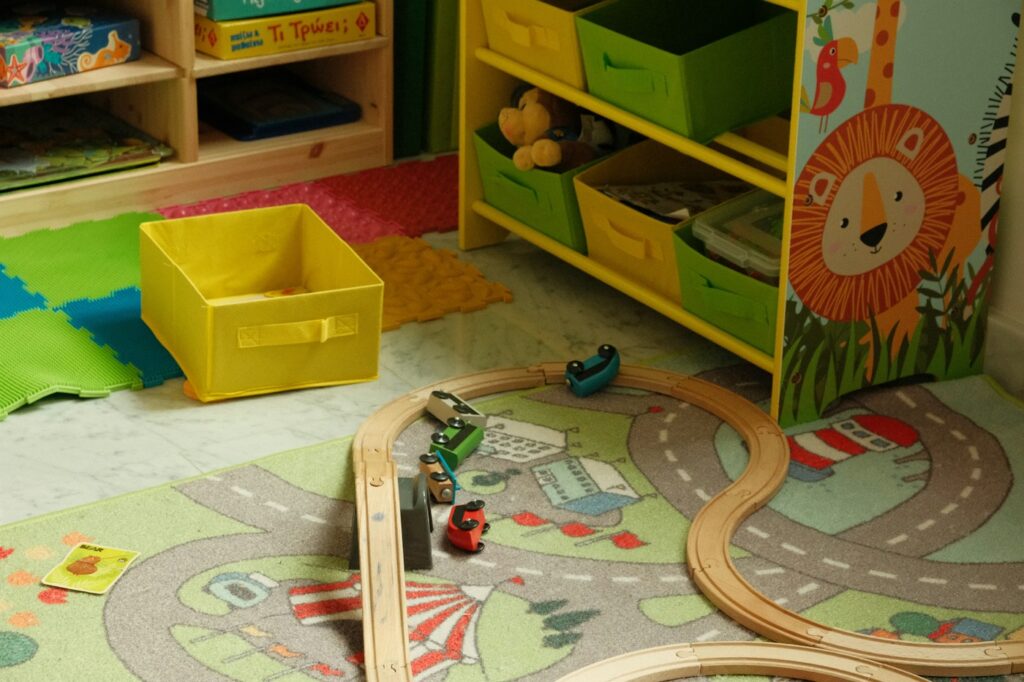 Edit the toys before the gifts arrive, give each kind of play one open bin on an anchored low shelf, keep small parts and spare batteries out of a toddler’s reach, skip latching lids and rotate the extras: thirteen toy storage ideas for the weeks before and after the holidays.
- Best Gift Wrap Organizers: 5 Picks for a Closet Corner, Under the Bed or the Back of a Door
 An upright box that holds up to 32 long rolls, a 41.5-inch under-bed bag for big collections, a water-resistant zip bag, an over-the-door organizer and a slim canvas case for eight rolls: five gift wrap organizers matched to the space you can give them.
- Cord and Cable Storage: 13 Ideas for the Spare Chargers, Cables and Adapters Nobody Can Find
 Match every cable to a device you still own, keep a sensible number of spares by connector type, coil them loosely, label the mystery bricks, hang the extension cords and send old batteries and dead cables to a proper drop-off: thirteen ways to store spare cords so the right one turns up in seconds.
- Window Condensation in Winter: Find Which Side the Water Is On, Then Match Humidity to the Forecast
 Do the wipe test to tell room-side fog from a failed seal, check a hygrometer against the outdoor low, keep humidity at or under 40% above 20°F and 30% below 10°F, run the fans, open the curtains by day and dry wet sills the same morning: a window condensation guide with a worked cold-week example.
- How to Clean a Range Hood Filter Before Holiday Cooking: Know Your Filter Type, Then Put It on the Calendar
 Wash metal mesh and baffle filters in hot soapy water or the dishwasher, replace charcoal filters instead of rinsing them, never run the hood with the filter out, and clean the weekend before Thanksgiving and again before Christmas: a range hood filter guide with a worked holiday cleaning calendar.
- Drying Clothes Indoors in Winter: Where the Rack Goes, How Much Rail You Need and What It Saves
 One load gives off about 2 liters of water as it air-dries, so put the rack where that moisture can leave, keep it 3 feet from the space heater, count inches of rail before you buy, space and turn the heavy things, watch humidity and window condensation, and know what the dryer you’re skipping really costs: indoor drying with the math.
- Hat, Glove and Scarf Storage by the Door: One Bin Per Person, Sized to What They Actually Wear
 Keep a daily set plus one dry spare per person, size an open bin for each from a quick measurement, dry wet mittens before they go in, clip pairs together, hang woven scarves and fold knits, skip long scarves on the playground and wash wool before it’s sealed away: a hat and glove station with a worked bin-size example.
- Guest Room That Doubles as Storage: Pick the Bed by Floor Space, Keep the Window Clear
 Count the nights the room really hosts, compare bed footprints before comfort, put storage on one wall behind a curtain, keep the window and door clear, leave guests half the closet and one drawer, and pack a single guest bin: a storage room that turns into a guest room in fifteen minutes, with a worked 10 by 11 foot example.