Most reach-in closets have a single rod at about head height, with shirts hanging halfway down and a few feet of empty air below them. Adding a second rod underneath turns that air into another full row of hanging space. The whole trick is getting the heights right, so the top row’s hems don’t brush the lower row’s hangers.
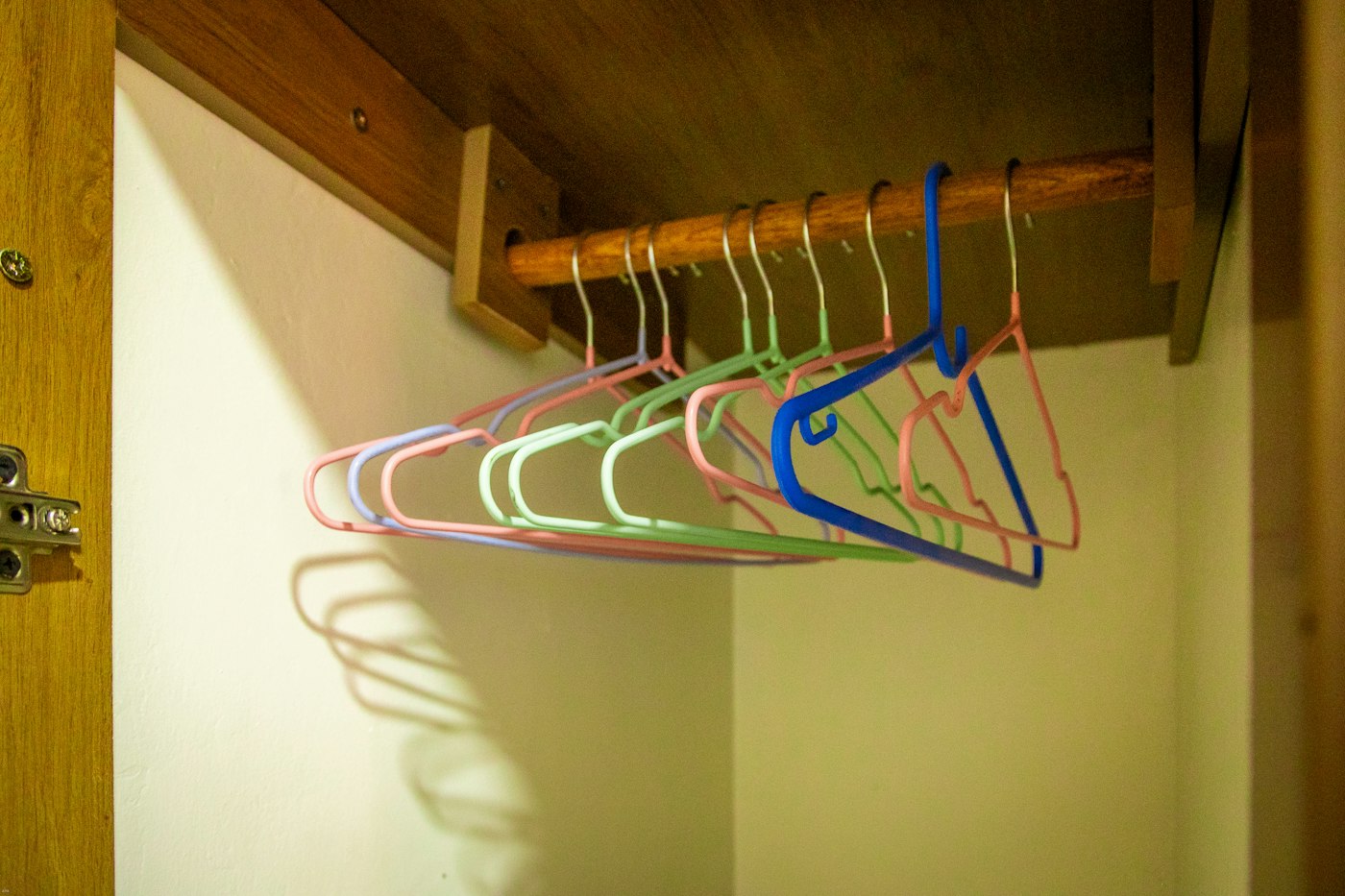
Measure the longest item that will hang on top, from the top of the hanger to the hem. Place the lower rod a few inches below that hem, and make sure what hangs from the lower rod clears the floor. Keep one section of single-height rod for dresses, coats and long trousers. Renters can hang an adjustable second rod from the existing one, within its weight limit.
1. Decide what goes where
Double hanging works for short pieces: shirts, blouses, skirts, jackets and trousers folded over a hanger. It doesn’t work for dresses, long coats or trousers hung full-length. Pull everything out and sort into two groups:
- Short hang: anything that hangs about 40 inches or less from the top of its hanger.
- Long hang: everything longer.
Then measure how many inches of rod each group fills when hung normally, shoulder to shoulder. That tells you how wide the double-hang section and the long-hang section need to be. Our coat closet guide uses the same rod-inch method.
2. Measure your garments, not a chart
Published “standard” rod heights assume average-length clothing. Your longest shirt may be longer, and your tallest family member’s trousers may need more drop. Measure:
- A: the longest top-row item, from the top of the hanger hook to the hem.
- B: the longest lower-row item, measured the same way.
- C: the height of your existing rod from the floor.
| Layout | Typical rod height from floor | Works for |
|---|---|---|
| Single rod (long hang) | About 66 to 72 inches | Dresses, long coats, full-length trousers |
| Double hang, top rod | About 80 to 84 inches | Shirts, blouses, jackets |
| Double hang, lower rod | About 40 to 42 inches | Folded trousers, skirts, shorter tops |
| Kids’ closet lower rod | At the child’s comfortable reach | See our kids’ closet guide |
Use the table as a starting point, then adjust to your own measurements.
3. Pick how you’ll add the second rod
Option A: adjustable hanging rod (no drilling)
These hook over the existing rod and hang a second bar below it on adjustable straps or poles. They’re renter-friendly and take five minutes to put up. The tradeoffs: all the weight hangs from the original rod and its brackets, so stay well within both the product’s listed capacity and what your existing rod can handle, and expect a little swing when you pull hangers off.
Option B: second rod on wall brackets
A permanent rod mounted on the side walls, or on the back wall into studs, is sturdier and doesn’t load the top rod. Use brackets rated for closet rods, fasten into studs or appropriate anchors, and add a center support on long spans. A wardrobe full of clothes is heavier than it looks, and long rods sag over time without support in the middle.
Option C: a freestanding double-rod rack
If the closet has no rod you can trust, or you need hanging space in a bedroom alcove, a freestanding double-rod garment rack works. Choose a sturdy frame with a listed weight capacity and lockable casters.
4. Load it so it stays usable
- Use the same slim hangers on both rods. They save rod space and keep everything at a consistent height. Our best hangers comparison lists thickness and load ratings for five types.
- Put daily clothes on the top rod if you’re an adult, where they’re at eye level; less-used items go below.
- Keep the floor clear under the lower rod for shoes or a low bin. Our small closet shoe storage guide shows what fits.
- Leave a hand’s width of space at each end of the rod so you can flip through without squashing.
Supplies for this project
Affiliate disclosure: As an Amazon Associate I earn from qualifying purchases. These links open Amazon search results for each type of item, not recommendations for a specific model we’ve tested. Check listed weight capacity and adjustable length against your measurements before ordering.
- Clothes sorted into short hang and long hang.
- Rod inches counted for each group.
- Longest top-row and lower-row items measured.
- Lower rod height worked out from your measurements.
- Mounting method chosen and weight limits checked.
- Long-hang section kept for dresses and coats.
- Matching slim hangers on both rods.
Questions
Can I double hang the whole closet?
Only if you have no long items. Most adults need at least a short section of single-height rod for dresses, coats or full-length trousers.
Will a hanging second rod damage my closet?
Overloading can pull the original rod brackets out of the wall. Check how they’re fastened, stay under the listed capacity, and move heavy items like winter coats to a permanently mounted rod.
Should I add shelves instead?
Folded sweaters and jeans often do better on shelves, and shelf dividers keep stacks from toppling. Many closets work best with a mix: double hang on one side, shelves or long hang on the other.
Notes: Rod heights are common starting points used by closet installers, not a building-code requirement. Measure your own clothes and follow the hardware manufacturer’s weight ratings and installation instructions. See our editorial policy.
Keep reading
More guides for your space
THE KINDRED JOURNAL
Latest from the journal
- Toy Storage Ideas: 13 Ways to Make Room Before the Holiday Toy Wave
 Edit the toys before the gifts arrive, give each kind of play one open bin on an anchored low shelf, keep small parts and spare batteries out of a toddler’s reach, skip latching lids and rotate the extras: thirteen toy storage ideas for the weeks before and after the holidays.
- Best Gift Wrap Organizers: 5 Picks for a Closet Corner, Under the Bed or the Back of a Door
 An upright box that holds up to 32 long rolls, a 41.5-inch under-bed bag for big collections, a water-resistant zip bag, an over-the-door organizer and a slim canvas case for eight rolls: five gift wrap organizers matched to the space you can give them.
- Cord and Cable Storage: 13 Ideas for the Spare Chargers, Cables and Adapters Nobody Can Find
 Match every cable to a device you still own, keep a sensible number of spares by connector type, coil them loosely, label the mystery bricks, hang the extension cords and send old batteries and dead cables to a proper drop-off: thirteen ways to store spare cords so the right one turns up in seconds.
- Window Condensation in Winter: Find Which Side the Water Is On, Then Match Humidity to the Forecast
 Do the wipe test to tell room-side fog from a failed seal, check a hygrometer against the outdoor low, keep humidity at or under 40% above 20°F and 30% below 10°F, run the fans, open the curtains by day and dry wet sills the same morning: a window condensation guide with a worked cold-week example.
- How to Clean a Range Hood Filter Before Holiday Cooking: Know Your Filter Type, Then Put It on the Calendar
 Wash metal mesh and baffle filters in hot soapy water or the dishwasher, replace charcoal filters instead of rinsing them, never run the hood with the filter out, and clean the weekend before Thanksgiving and again before Christmas: a range hood filter guide with a worked holiday cleaning calendar.
- Drying Clothes Indoors in Winter: Where the Rack Goes, How Much Rail You Need and What It Saves
 One load gives off about 2 liters of water as it air-dries, so put the rack where that moisture can leave, keep it 3 feet from the space heater, count inches of rail before you buy, space and turn the heavy things, watch humidity and window condensation, and know what the dryer you’re skipping really costs: indoor drying with the math.
- Hat, Glove and Scarf Storage by the Door: One Bin Per Person, Sized to What They Actually Wear
 Keep a daily set plus one dry spare per person, size an open bin for each from a quick measurement, dry wet mittens before they go in, clip pairs together, hang woven scarves and fold knits, skip long scarves on the playground and wash wool before it’s sealed away: a hat and glove station with a worked bin-size example.
- Guest Room That Doubles as Storage: Pick the Bed by Floor Space, Keep the Window Clear
 Count the nights the room really hosts, compare bed footprints before comfort, put storage on one wall behind a curtain, keep the window and door clear, leave guests half the closet and one drawer, and pack a single guest bin: a storage room that turns into a guest room in fifteen minutes, with a worked 10 by 11 foot example.
- Dining Room Storage for Holiday Hosting: Measure the Walkway First, Then Fit the Sideboard
 Measure the table with the leaf in, leave 44 inches where people walk and 32 where nobody passes, subtract the sideboard’s depth before you buy, anchor the hutch and give the leaf, extra chairs and holiday linens a home: dining room storage planned for the biggest night of the year, with a worked placement example.