In a lot of homes, the “guest room” is really the storage room that gets cleared out in a panic twice a year. The bins migrate to the hallway, the air mattress comes out, and by the time the visitors arrive nobody remembers where the extra towels went. It works better to admit what the room is: storage most nights, a bedroom on a few. That means choosing a bed that leaves floor for the storage, putting the storage where it won’t block the window or the door, and setting things up so the switch from one job to the other takes fifteen minutes instead of a weekend.
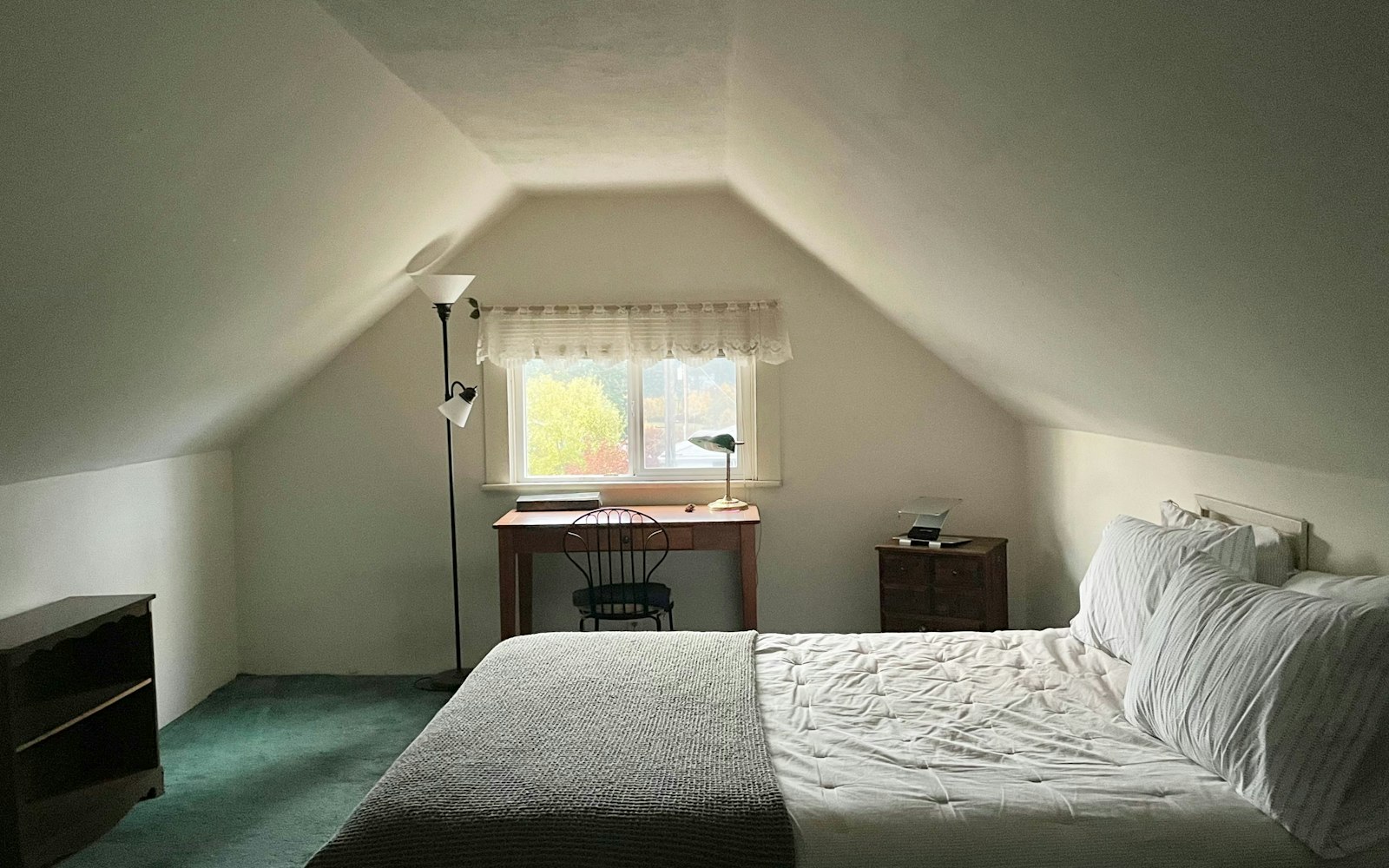
Decide how many nights a year the room hosts, then size the bed to that, not to a hotel. A twin daybed takes about 40 percent less floor than a queen, which is the difference between a wall of storage and a squeeze. Put shelving on one wall only, keep the window and door clear because the room still needs two ways out, give guests one empty drawer and half the closet rod, and keep everything they need in a single grab-and-go bin. A space heater stays 3 feet from the bed and goes off at night.
First, be honest about the split
Count the nights the room actually had a guest in it last year. For many households it’s somewhere between a handful and a few weeks. If it’s under a month, the room is a storage room that hosts, and storage should get the better wall, the better shelves and most of the floor. If guests stay for months at a time, flip that: it’s a bedroom with a little storage, and you plan it like one.
That count shapes every decision below, especially the bed.
Choose the bed by floor space, not by habit
1. Compare footprints before you compare comfort
The Better Sleep Council lists standard mattress sizes as 38 by 75 inches for a twin, 53 by 75 for a full and 60 by 80 for a queen. Frames add a little on each side, but the mattress gives you the floor you lose for sure. A queen covers 4,800 square inches; a twin covers 2,850. In a small room that gap is roughly one bookcase-sized wall of storage.
Try it if your guests are mostly single visitors, kids or grandkids. Skip it if you regularly host couples for a week; a full or queen is worth the floor, and the storage moves into the closet and under the bed instead.
2. A daybed with a trundle seats by day and sleeps two at night
A daybed pushed along a wall reads as a sofa most of the year, which keeps the room usable as an office or reading spot. A pull-out trundle adds a second twin when needed. The trade-off is the space under the bed: a trundle takes it, so the under-bed bins you’d otherwise use have to go elsewhere.
3. Use under-bed storage only if the bed doesn’t move
If you choose a standard bed instead, the space under it is prime storage for flat things: wrapping paper, out-of-season clothes, spare bedding. Measure the clearance first; our under-bed storage guide covers bins, rolling drawers and risers by height. Save it for things you don’t need while guests are staying, so nobody has to crawl under their bed to get your tax files.
4. Murphy beds and sleeper sofas: check the open footprint
A wall bed or sleeper sofa frees the floor most of the year, but it needs its full open footprint clear every time you use it, so storage can’t live in front of it. Measure the bed open, tape that rectangle on the floor and keep it empty. Wall beds must be installed and secured exactly as the maker’s instructions say; this isn’t a place to improvise.
Worked example: a 10 by 11 foot room
Here’s how the bed choice changes the room. The room is 10 by 11 feet (120 by 132 inches), or 15,840 square inches. One 120-inch wall gets a run of shelving 15 inches deep for labeled bins. The bed goes against the opposite 120-inch wall.
| Bed | Mattress footprint | Share of the floor | Floor left after bed and shelves | Gap from bed to shelf face |
|---|---|---|---|---|
| Queen (60 x 80 in) | 4,800 sq in (33.3 sq ft) | 4,800 ÷ 15,840 = 30% | 15,840 − 1,800 − 4,800 = 9,240 sq in (64.2 sq ft) | 132 − 15 − 80 = 37 in |
| Full (53 x 75 in) | 3,975 sq in (27.6 sq ft) | 25% | 10,065 sq in (69.9 sq ft) | 132 − 15 − 75 = 42 in |
| Twin daybed (38 x 75 in), along the long wall | 2,850 sq in (19.8 sq ft) | 18% | 11,190 sq in (77.7 sq ft) | Bed runs beside the shelves; 120 − 38 = 82 in open across the room |
The shelving takes 120 × 15 = 1,800 square inches either way. With a queen, there are 37 inches between the foot of the bed and the shelves. Pull a 15-inch bin off a shelf and you’re left with 22 inches to stand in, which is tight while a suitcase is open on the floor. The twin daybed, turned to run along the long wall, leaves an 82-inch-wide stretch of open floor and a 2,850-square-inch footprint, about 41 percent less than the queen’s 4,800 (1 − 2,850 ÷ 4,800 = 0.41). That’s room for a second shelf run, a desk, or simply space for a guest to unpack. Use your own room’s numbers, but run the same three subtractions before you buy a bed.
Put the storage where it can stay put
5. One wall of shelving, with a curtain or doors
Concentrate storage on one wall rather than spreading boxes around the edges. A single run of shelves with matching labeled bins looks deliberate, and a ceiling-mounted curtain or cabinet doors across it makes the room feel like a bedroom when guests arrive. Put the things you need year-round at waist-to-eye height and the rarely used bins up top. If the shelving is tall, anchor it to the wall: the CPSC’s Anchor It! guidance is to fasten a bracket into a stud, attach the other bracket to a solid part of the unit, and tighten the strap until there’s no slack.
6. Keep the window and door completely clear
This is the rule a storage room breaks most often. The U.S. Fire Administration says every room needs two ways out and that doors and windows should stay unblocked. A stack of bins in front of the guest room window turns the second exit into a wall, and guests don’t know the house well enough to find another way out in the dark. Leave the floor in front of the window empty and make sure the window opens without moving anything. Our smoke and CO alarm audit covers alarm placement for sleeping rooms, which is worth checking in a room that only becomes a bedroom now and then.
Skip it if you’re tempted to “just for now” park bins on the windowsill side; that’s how they stay there.
7. Split the closet: half yours, half theirs
Guests need somewhere to hang a few things, not a whole closet. Mark half the rod as the guest side with a few empty hangers, and use the other half and the upper shelf for your own seasonal clothes or keepsakes. If those clothes are wool or out of season, our seasonal clothes storage guide covers packing them so they come back hole-free.
8. Leave one empty drawer and one empty surface
The most welcoming thing in a storage-heavy room is a bit of nothing: one drawer with nothing in it, and a clear top on the nightstand or dresser for a phone, glasses and a glass of water. A folding luggage rack that lives flat behind the door gives the suitcase somewhere to sit that isn’t the bed.
Make the switch a fifteen-minute job
9. Pack a guest bin
Everything a guest needs goes in one labeled bin on the shelf: a set of sheets that fits the bed, two bath towels and a hand towel, a spare blanket, a phone charger, a night-light and a few toiletries. On conversion day you pull one bin instead of searching three closets. Wash and refill it after each visit so it’s ready next time.
10. If the room is also an office, give work a lid
A desk in the guest room is common and fine, as long as the work can disappear. File papers in a lidded box or a drawer, and keep cords tidy enough that a guest isn’t tripping over a power strip. Our small home office storage guide covers fitting papers and tech into less space.
11. Handle extra heat carefully
Rooms that sit closed up most of the year are often the coldest in the house, so a space heater gets wheeled in for guests. The U.S. Fire Administration advises keeping anything that can burn at least 3 feet from a space heater and turning it off when you leave the room or go to bed. In a small room with storage on one wall and a bed on another, find the 3-foot spot before guests arrive, and tell them to switch it off at bedtime. Our space heater picks for small rooms compare models and running costs.
12. Do a five-minute walk-through the day before
Lie on the bed and look around: can you reach a light switch or lamp, is the window clear, is there a place to put a phone and a suitcase? Fix whatever a guest would have to ask about. It’s the same idea as our holiday guest prep ideas, applied to one room that has to do two jobs.
Affiliate disclosure: As an Amazon Associate I earn from qualifying purchases. The links below are Amazon searches, not specific products we’ve tested or recommend over others.
- Twin daybed with trundle (Amazon search) ↗
- Lidded storage bins for shelving (Amazon search) ↗
- Ceiling-mount curtain track to hide shelves (Amazon search) ↗
- Folding luggage rack (Amazon search) ↗
- Plug-in night-light for the guest bin (Amazon search) ↗
Measure the bed’s full footprint, frame included, before ordering.
- Nights hosted last year counted; bed sized to match.
- Bed and shelf footprints subtracted from the room before buying.
- Storage on one wall, behind a curtain or doors; tall units anchored.
- Window and door completely clear; window opens freely.
- Half the closet rod and one drawer left empty for guests.
- Guest bin packed: sheets, towels, blanket, charger, night-light.
- Office papers in a lidded box; cords off the floor.
- Space heater spot 3 feet from bed and storage; off at bedtime.
- Five-minute walk-through the day before.
What size bed is best for a small guest room?
For occasional single guests, a twin daybed, ideally with a trundle, leaves the most floor. Using the Better Sleep Council’s standard sizes, a twin mattress covers 2,850 square inches against 4,800 for a queen. If you host couples often, a full is a reasonable middle ground at 3,975 square inches.
Can I store boxes in front of the guest room window?
It’s better not to. The U.S. Fire Administration advises knowing two ways out of every room and keeping doors and windows unblocked, and a guest room window is often the second exit. Keep that floor empty and the window easy to open.
How do I hide storage when guests come?
Group it on one wall, use matching lidded bins, and hang a ceiling-mounted curtain or add cabinet doors in front. The room reads as a bedroom, and nothing has to move.
Sources: Better Sleep Council, Mattress Sizes · U.S. Fire Administration, Home Fire Escape Plans · U.S. Fire Administration, Heating Fire Safety · U.S. Consumer Product Safety Commission, Anchor It!: How to Install a Kit. Mattress sizes are standard dimensions; check the listing for any specific bed and frame.
Keep reading
More guides for your space
THE KINDRED JOURNAL
Latest from the journal
- How to Clean a Range Hood Filter Before Holiday Cooking: Know Your Filter Type, Then Put It on the Calendar
 Wash metal mesh and baffle filters in hot soapy water or the dishwasher, replace charcoal filters instead of rinsing them, never run the hood with the filter out, and clean the weekend before Thanksgiving and again before Christmas: a range hood filter guide with a worked holiday cleaning calendar.
- Drying Clothes Indoors in Winter: Where the Rack Goes, How Much Rail You Need and What It Saves
 One load gives off about 2 liters of water as it air-dries, so put the rack where that moisture can leave, keep it 3 feet from the space heater, count inches of rail before you buy, space and turn the heavy things, watch humidity and window condensation, and know what the dryer you’re skipping really costs: indoor drying with the math.
- Hat, Glove and Scarf Storage by the Door: One Bin Per Person, Sized to What They Actually Wear
 Keep a daily set plus one dry spare per person, size an open bin for each from a quick measurement, dry wet mittens before they go in, clip pairs together, hang woven scarves and fold knits, skip long scarves on the playground and wash wool before it’s sealed away: a hat and glove station with a worked bin-size example.
- Guest Room That Doubles as Storage: Pick the Bed by Floor Space, Keep the Window Clear
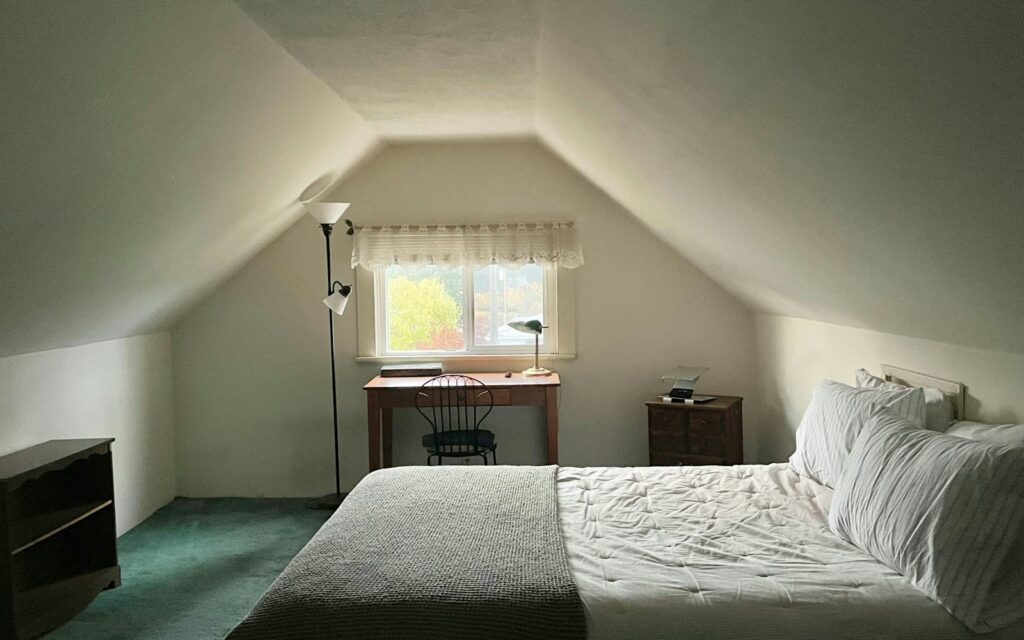 Count the nights the room really hosts, compare bed footprints before comfort, put storage on one wall behind a curtain, keep the window and door clear, leave guests half the closet and one drawer, and pack a single guest bin: a storage room that turns into a guest room in fifteen minutes, with a worked 10 by 11 foot example.
- Dining Room Storage for Holiday Hosting: Measure the Walkway First, Then Fit the Sideboard
 Measure the table with the leaf in, leave 44 inches where people walk and 32 where nobody passes, subtract the sideboard’s depth before you buy, anchor the hutch and give the leaf, extra chairs and holiday linens a home: dining room storage planned for the biggest night of the year, with a worked placement example.
- Winter Car Emergency Kit: 12 Things to Pack and Where Each One Should Ride
 Start from the National Weather Service list, put the heavy gear in one strapped-down trunk bin, keep the blanket, light and charger in the cabin and the scraper in the door, and know the stranded-car basics: twelve ideas for a winter car kit that stays packed until February.
- Smoke and CO Alarms: A One-Hour Audit of Where They Go, How Old They Are and What to Replace
 Put a smoke alarm in every bedroom, outside each sleeping area and on every level, add CO alarms outside sleeping areas, keep them 10 feet from the stove, read the date on the back and replace anything 10 years old: a one-hour alarm audit, with a worked two-story example.
- Winter Home Maintenance Checklist: Do the Safety Jobs First, Then the Water, Then the Savings
 Book the furnace and chimney check, clear 3 feet around every heat source, mark the outdoor vents before snow buries them, work out how many gallons each downspout carries and extend the heavy ones: a winter maintenance checklist sorted by what happens if you skip it.
- Blanket Storage Ideas for the Living Room: 12 Ways to Keep Throws Handy (and Off the Floor)
 Keep one throw per sitter in an open basket, move the extras behind a lid, measure a folded throw before you buy, keep every blanket 3 feet from the fireplace and check that chest lids can’t latch: twelve blanket storage ideas for the living room, with a basket-fit example.