Leftover paint is only useful if you can find the right can and it’s still good when you open it. Most garages fail on both counts: a jumble of half-empty cans with paint-crusted labels, stored on a concrete floor that sweats in summer and freezes in winter. A small, labeled paint shelf in the right spot fixes both problems.
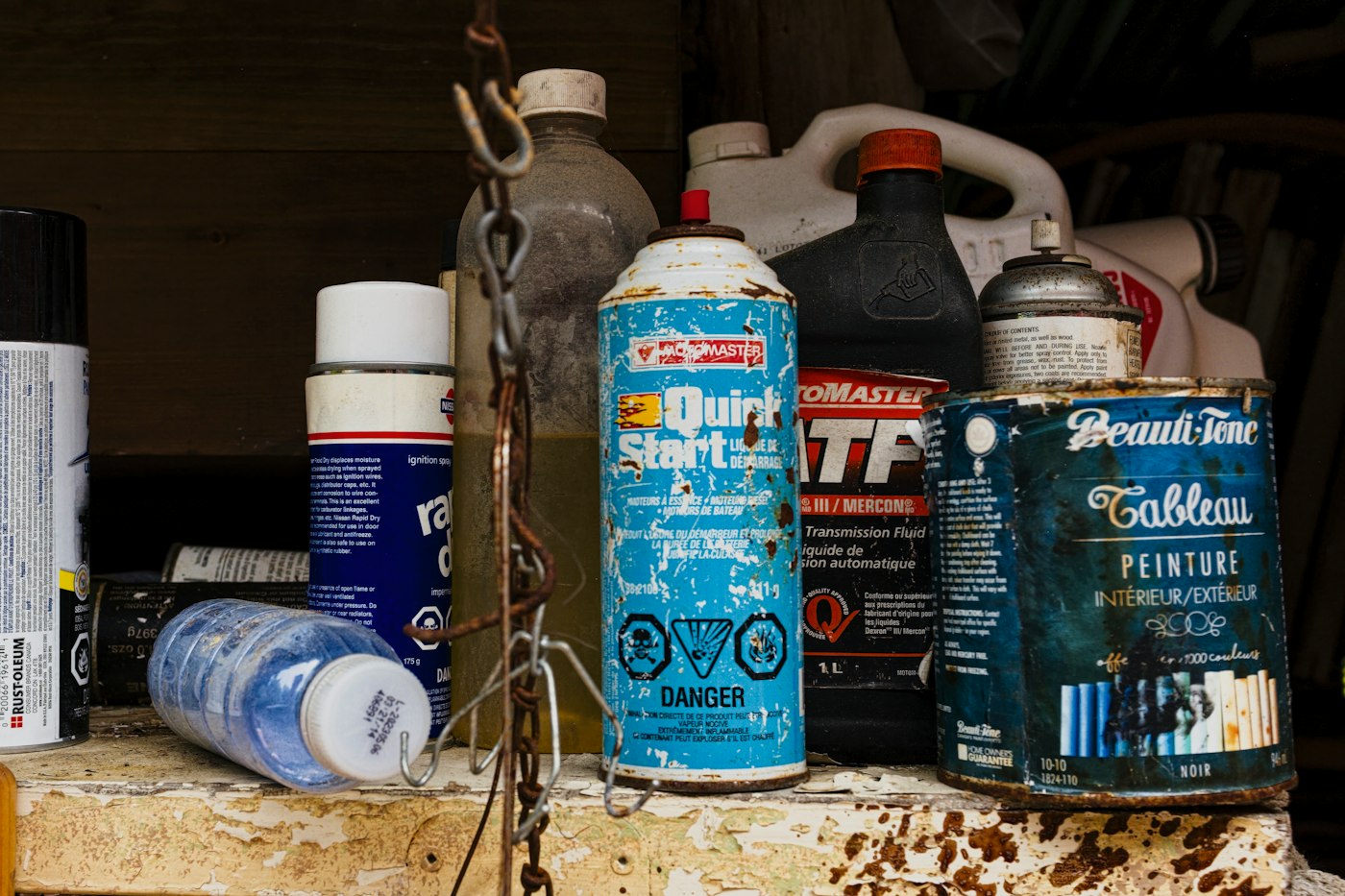
Clean the rim, seal the lid with plastic wrap underneath and tap it shut, and label the can with the brand, color, sheen and room. Store paint somewhere dry and out of sunlight between about 60 and 80°F. If your garage freezes in winter, keep the paint indoors. Before using old paint, check its smell and texture.
1. Seal the can properly
Air is what ruins leftover paint. Benjamin Moore’s storage advice:
- Put the lid back on as soon as you’re done.
- Clean the paint out of the rim of the can and the lid.
- Lay a piece of plastic wrap over the opening before pressing the lid down, for an airtight seal.
- Tap around the edge of the lid with a rubber mallet until it’s firmly closed.
If there’s only a little paint left in a big can, move it to a smaller container. Benjamin Moore recommends a container not much bigger than the amount of paint left, so there’s less air inside. For latex paint, that can be a lined metal can or a glass or plastic container.
2. Label for the next person
The paint-color sticker on the lid is often unreadable after one use. Benjamin Moore suggests labeling the can, and even the back of a light switch plate in the painted room, with:
- Brand
- Color name and number
- Product line or type
- Sheen (flat, eggshell, satin, semi-gloss)
- Where you used it: “Upstairs hallway walls, 2026”
A strip of painter’s tape and a marker on the side of the can works; a printed label from a label maker lasts longer.
3. Choose the right spot
Benjamin Moore recommends storing paint between 60 and 80°F, in a dry place out of direct sunlight, away from food and drink, and out of children’s reach. It specifically warns to consider your climate if you store paint in a garage and make sure it doesn’t freeze.
| Location | Good for paint? |
|---|---|
| Insulated or attached garage that stays above freezing | Yes, on a shelf away from the door and any heat source |
| Detached or unheated garage in a cold-winter climate | Not in winter; paint can freeze |
| Indoor utility closet or dry basement | Often the best option |
| Directly on a concrete floor | No; moisture can rust cans |
| Near a furnace, water heater or in direct sun | No; heat and, for solvent paints, ignition sources |
4. Give paint its own shelf
One shelf, used only for paint and painting supplies, makes everything easier to find.
Shelving that’s sturdy enough for paint is heavy once it’s loaded; anchor tall units to the wall. Our guides to garage shelving and garage wall storage cover depth, load ratings and mounting.
5. Check old paint before you use it
Benjamin Moore says opened paint generally lasts about two years, though temperature swings can shorten that. Before you start a touch-up:
- Smell it. A sour, strong or rotten-egg smell means it has spoiled.
- Stir it. Good paint is smooth after stirring. Chunks or a jelly-like texture mean it’s past its prime.
- Test it on a hidden spot or a scrap of cardboard and let it dry before painting a whole wall.
6. Get rid of what you won’t use
Paint that’s spoiled, or colors from rooms you’ve since repainted, take up shelf space. Disposal rules vary by town. Oil-based paint and solvents are generally treated as household hazardous waste. Some states have paint take-back programs at participating retailers, and some communities allow fully dried latex paint in household trash. Check your city or county’s waste website before tossing any paint.
Paint storage supplies
Affiliate disclosure: As an Amazon Associate I earn from qualifying purchases. These links open Amazon search results for each type of item, not recommendations for a specific model we’ve tested. Check shelf depth and load ratings before ordering.
- Rims cleaned and lids sealed with plastic wrap.
- Small amounts moved to smaller containers.
- Every can labeled with brand, color, sheen and room.
- Cans off the floor, out of sun and away from heat sources.
- Paint moved indoors if the garage freezes.
- Spoiled paint set aside for proper disposal.
Questions
Is paint ruined if it freezes once?
Sometimes it survives a freeze, sometimes not. Let it thaw at room temperature, stir well, and check its texture. If it’s lumpy or stringy after stirring, don’t use it.
Should I store paint cans upside down?
Some painters do it to help seal the lid, but if the lid isn’t tight it can leak. A clean rim, plastic wrap and a well-tapped lid are the more reliable way to keep air out.
How much paint should I keep for touch-ups?
A quart is usually plenty per room. Keeping a small labeled jar or touch-up pen per color takes far less space than half-empty gallon cans.
Sources: Benjamin Moore, Tips for Storing Leftover Paint & Shelf Life. General guidance; check your paint’s label and technical data sheet, and your local rules for disposal. See our editorial policy.
Keep reading
More guides for your space
THE KINDRED JOURNAL
Latest from the journal
- Window Insulation Film: Does It Work? Sort Your Windows First, Then Do the Math
 Shrink film adds about R-1 and stops sash drafts, so it roughly halves heat loss through single-pane glass but barely helps a tight low-e window: sort your windows with the paper test, work out one window’s savings, keep the tape on trim and plan the way out of bedrooms.
- What Holiday Lights Really Cost to Run: LED vs. Incandescent, With the Math for Your Own Display
 Read the watts off each tag, multiply by your hours and your own rate, and the answer is clear: eight incandescent strings cost about $25.70 a season in our worked example and their LED versions about $2.18, big C9 bulbs pay back an LED swap in about three seasons, and working mini lights can wait.
- Ideal Indoor Humidity in Winter: Find Your Number, Check Your Meter, Then Add Only What the Room Needs
 Aim for 30 to 50% and never humidify past 50%, let the windows set the limit on the coldest nights, salt-test your hygrometer before you trust it, seal drafts first because a whole bedroom needs only about 4½ ounces of water, and clean the tank on a schedule: a winter humidity guide with the math worked out.
- Toy Storage Ideas: 13 Ways to Make Room Before the Holiday Toy Wave
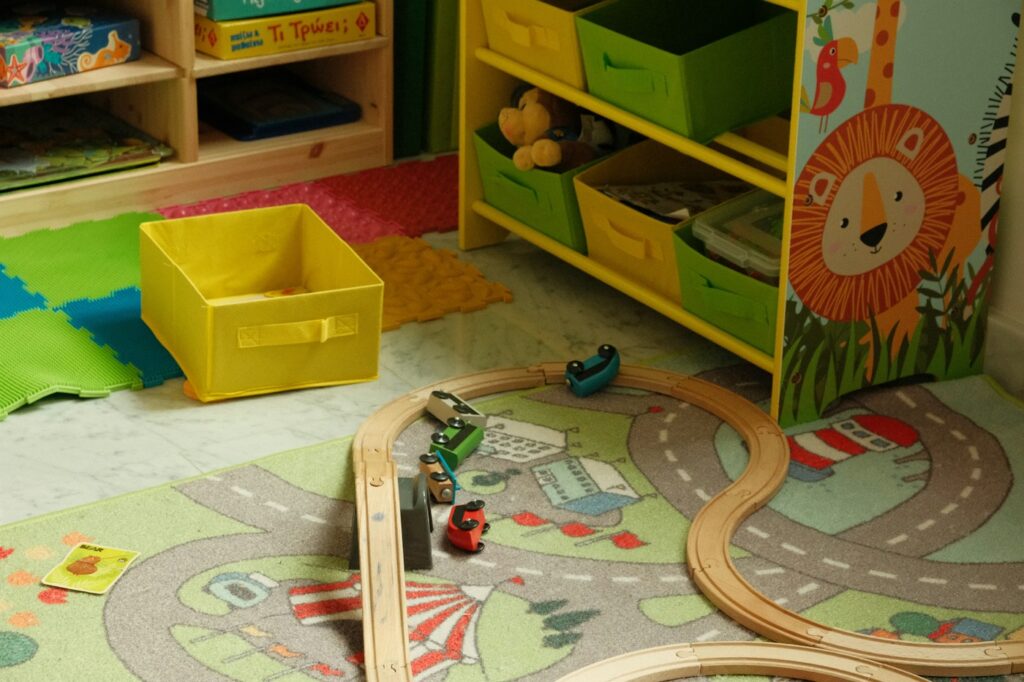 Edit the toys before the gifts arrive, give each kind of play one open bin on an anchored low shelf, keep small parts and spare batteries out of a toddler’s reach, skip latching lids and rotate the extras: thirteen toy storage ideas for the weeks before and after the holidays.
- Best Gift Wrap Organizers: 5 Picks for a Closet Corner, Under the Bed or the Back of a Door
 An upright box that holds up to 32 long rolls, a 41.5-inch under-bed bag for big collections, a water-resistant zip bag, an over-the-door organizer and a slim canvas case for eight rolls: five gift wrap organizers matched to the space you can give them.
- Cord and Cable Storage: 13 Ideas for the Spare Chargers, Cables and Adapters Nobody Can Find
 Match every cable to a device you still own, keep a sensible number of spares by connector type, coil them loosely, label the mystery bricks, hang the extension cords and send old batteries and dead cables to a proper drop-off: thirteen ways to store spare cords so the right one turns up in seconds.
- Window Condensation in Winter: Find Which Side the Water Is On, Then Match Humidity to the Forecast
 Do the wipe test to tell room-side fog from a failed seal, check a hygrometer against the outdoor low, keep humidity at or under 40% above 20°F and 30% below 10°F, run the fans, open the curtains by day and dry wet sills the same morning: a window condensation guide with a worked cold-week example.
- How to Clean a Range Hood Filter Before Holiday Cooking: Know Your Filter Type, Then Put It on the Calendar
 Wash metal mesh and baffle filters in hot soapy water or the dishwasher, replace charcoal filters instead of rinsing them, never run the hood with the filter out, and clean the weekend before Thanksgiving and again before Christmas: a range hood filter guide with a worked holiday cleaning calendar.
- Drying Clothes Indoors in Winter: Where the Rack Goes, How Much Rail You Need and What It Saves
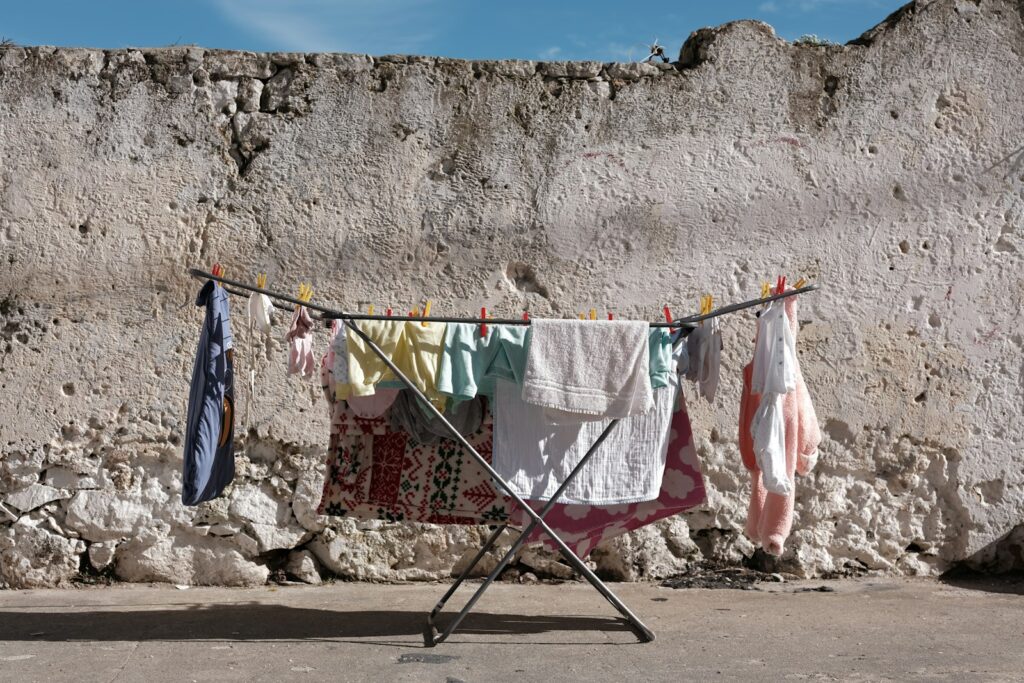 One load gives off about 2 liters of water as it air-dries, so put the rack where that moisture can leave, keep it 3 feet from the space heater, count inches of rail before you buy, space and turn the heavy things, watch humidity and window condensation, and know what the dryer you’re skipping really costs: indoor drying with the math.