The most common freezer mistake happens on Thanksgiving night. Every container of leftovers goes in at once, stacked in a warm tower, onto shelves already full of mystery bags from last spring. Food freezes slowly that way, and nobody can find the turkey soup in January. There’s a number behind the fix: food-preservation experts say a freezer can freeze about 2 to 3 pounds of food per cubic foot of space within 24 hours. Plan around that, give everything a label and a zone, and the freezer goes back to being useful.

Put an appliance thermometer in the freezer and make sure it reads 0°F or below. Pull everything out, use or toss what’s past its best-quality window, then sort what’s left into zones. Freeze new food flat in a single layer, stack or file it upright once it’s solid, and label every package with what it is and the date. Leave enough empty space for the holiday food you know is coming, and keep a simple list on the door so the oldest food gets eaten first.
Step 1: Check the temperature first
USDA and extension guidance agree on one number: keep the freezer at 0°F (-18°C) or lower. The dial setting doesn’t tell you the real temperature, so put an inexpensive appliance thermometer on a middle shelf and read it after the door has been shut for a few hours.
The thermometer earns its spot twice. USDA advises keeping one in the freezer at all times because it tells you the actual temperature after a power outage, which is how you decide what’s safe to keep.
Step 2: Empty it and sort by what the chart says
Take everything out, working one shelf or basket at a time so the rest stays cold, and put it in a cooler while you work. Wipe down the shelves, then sort each item into keep, use this week and toss.
Here’s the part that surprises people: frozen food kept continuously at 0°F stays safe indefinitely. The storage times on the federal chart are for quality only. Past them, food gets drier and duller, not dangerous. That makes the chart a good guide for what to cook soon and what to stop buying in bulk.
| Food | Freezer time |
|---|---|
| Cooked meat or poultry leftovers | 2 to 6 months |
| Soups and stews | 2 to 3 months |
| Casseroles with eggs | 2 to 3 months |
| Cooked pizza | 1 to 2 months |
| Raw whole turkey or chicken | 1 year |
| Raw ground meat | 3 to 4 months |
| Steaks and roasts | 4 to 12 months |
| Bacon | 1 month |
| Hot dogs and lunch meat | 1 to 2 months |
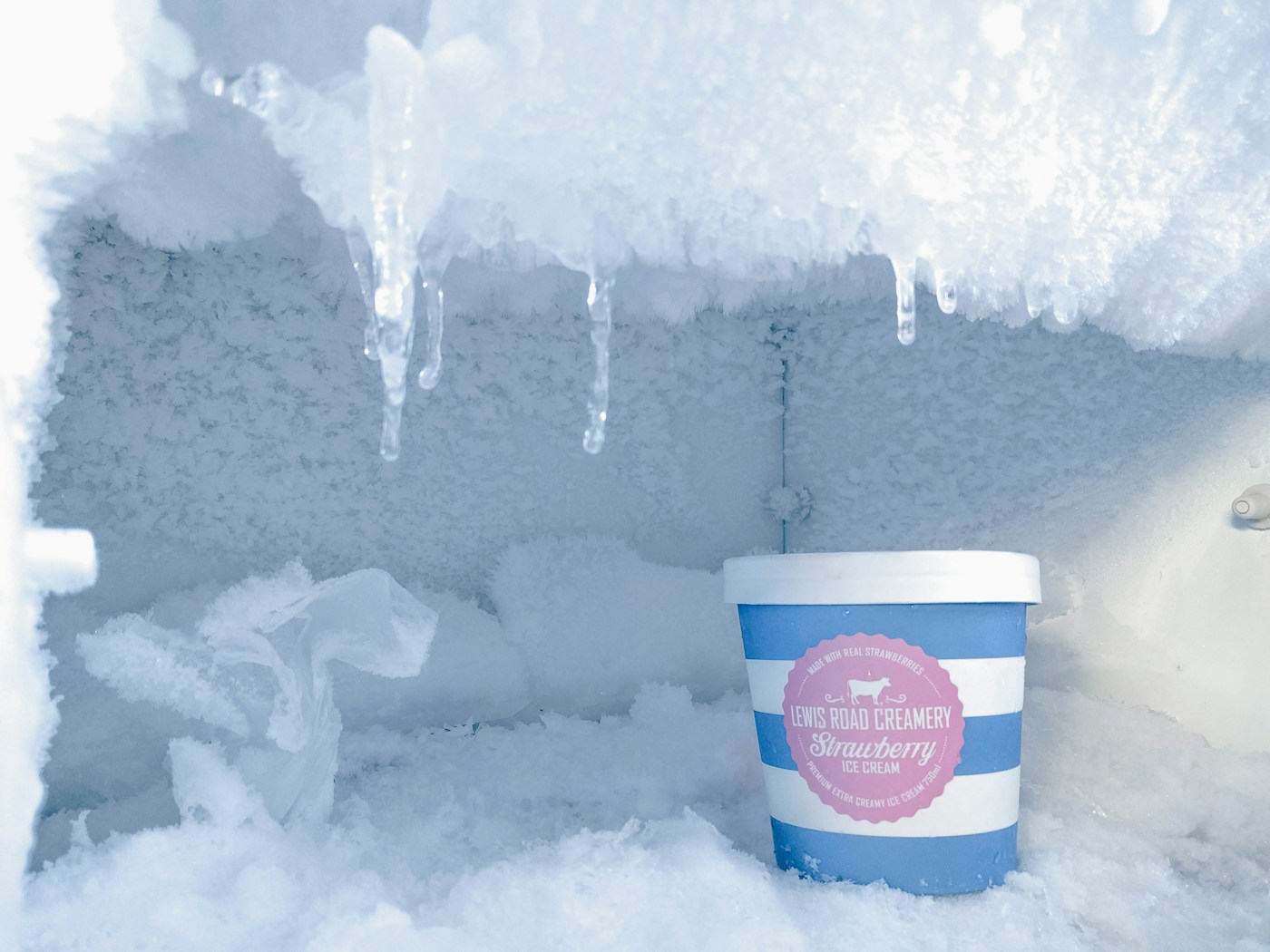
Anything with gray-white, leathery patches has freezer burn. Texas A&M AgriLife Extension says freezer-burned food is safe to eat; it just tastes and feels worse. Trim the patches or put it in a soup, and treat it as a sign that the package wasn’t airtight.
Step 3: Give each shelf a zone
Zones keep the freezer from turning back into a pile. Group by how you cook, not by package shape: raw meat and fish in one zone, cooked meals and leftovers in another, vegetables and fruit, bread and baking, and a small “eat first” bin at the front for anything near the end of its quality window.
Keep raw meat on the bottom or in its own bin, the same rule that applies in the fridge, so a leaky package can’t drip onto ready-to-eat food if the power goes out or you pull it out to thaw. How the zones fit depends on the freezer you have:
| Freezer type | What tends to work |
|---|---|
| Top freezer | One zone per shelf, with a pull-out bin on each so the back is reachable. Small items such as butter or yeast go on the door. |
| Bottom drawer | File flat-frozen bags upright, spines up, with a divider or two. Use the top tray for the “eat first” bin. |
| Side-by-side | Narrow, tall space: slim labeled bins, one zone per shelf, with lighter items up high. |
| Chest freezer | Baskets in layers, the most-used food on top, and a simple map of what’s in each layer taped to the lid. |
Measure the inside of each shelf or drawer (width, depth and height) before buying bins, and leave a little room around them. Measure yours; freezer interiors vary a lot even within one brand.
Step 4: Freeze flat, then file upright
This one change does more for space than any organizer. North Dakota State University Extension recommends laying new packages out in a single layer while they freeze and stacking them only once they’re frozen solid. Soup, chili, stock and shredded turkey frozen flat in a bag come out as thin slabs that can stand on edge like files.
- Shallow beats deep. NDSU notes that food about 2 inches thick should freeze completely in roughly two hours. Big tubs take much longer.
- Leave headspace. The National Center for Home Food Preservation says to leave about 1 inch in bags or rigid containers, and about 1½ inches for liquids, so food can expand.
- Squeeze out the air. Air on the surface is what causes freezer burn. Store-wrapped meat is fine for about a month; for longer, NDSU suggests adding an airtight wrap or bag.
- Portion small. Freeze amounts you’ll eat in one meal so you never have to thaw a big block and refreeze it.
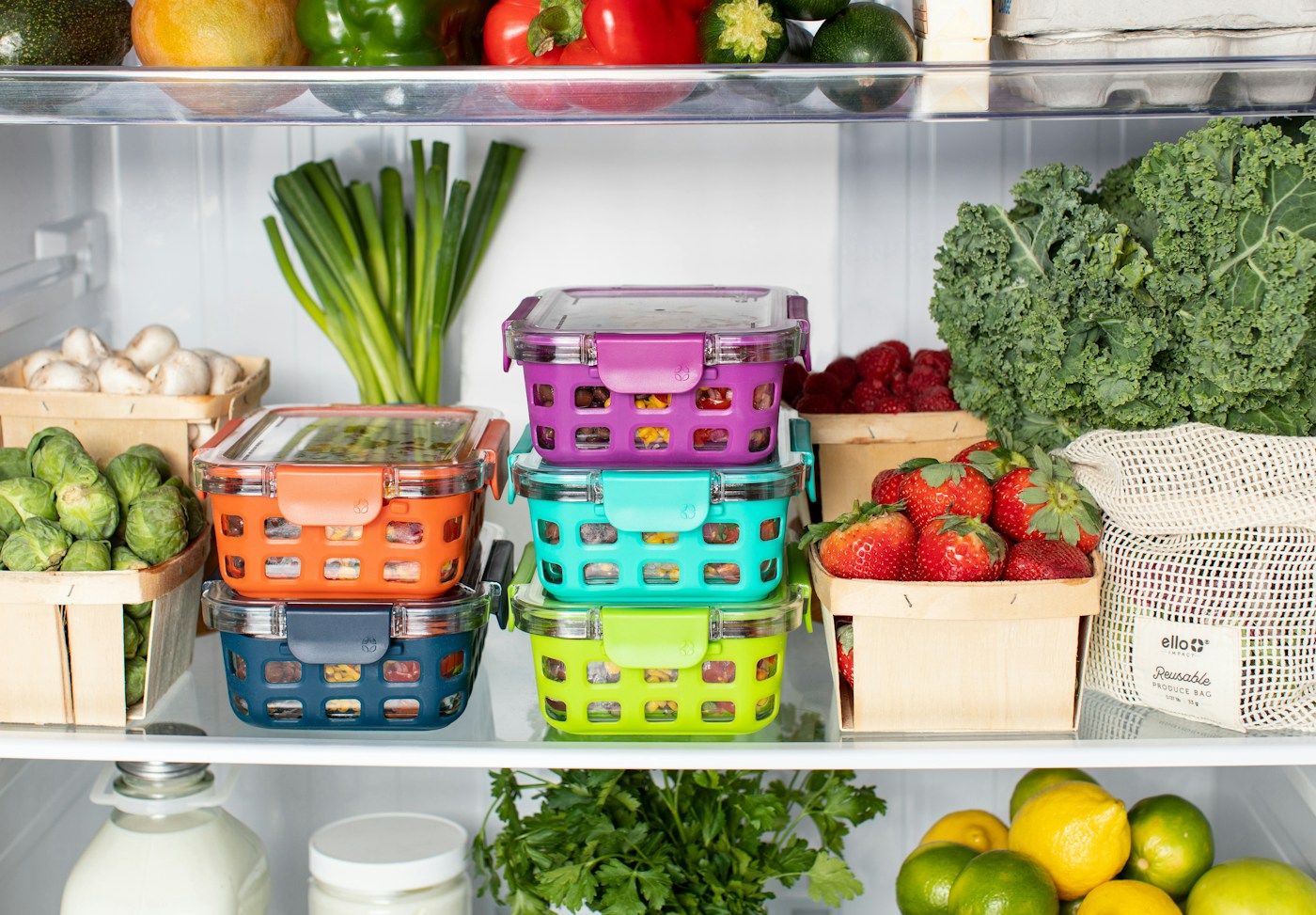
If you’re shopping for containers that go freezer to oven or travel home with guests, our leftover container picks compare six options.
Step 5: Label everything, the same way every time
Food changes color and shape in the freezer, so the NCHFP says to mark each package with the food’s name and the date. Put the label in the same spot on every bag, such as the top right corner, so you can read it when bags are filed upright. A strip of freezer tape and a marker works; so does a label maker if you already have one, though check that the tape is rated for cold.
Add a third detail that helps on a busy night: how many servings, or “cooked” versus “raw.” It saves opening the bag to guess.
Step 6: Leave room for the holidays, with the math
Because a freezer can only freeze about 2 to 3 pounds of food per cubic foot in a day, a big batch of warm food can overwhelm it. Spread the packages against the freezer’s walls or shelves at first, then move them closer together once they’re frozen, as the NCHFP recommends.
Timing matters too. Ohio State University Extension says not to leave leftovers out for more than two hours, to divide large amounts into shallow containers and to slice turkey off the bone so it cools quickly. Leftovers you’ll eat within three to four days can stay in the fridge; the rest should go into the freezer soon after the meal. Our Thanksgiving fridge countdown covers the week before, including the turkey thaw.
Some foods don’t freeze well at all. The NCHFP lists celery, cucumbers, lettuce, mayonnaise, sour cream, fried foods and egg-white meringues and icings. Leave those out of the freezer plan.
Step 7: Keep a list on the door
A freezer you can’t see into needs an inventory. A magnetic whiteboard or a sheet of paper on the door with three columns works: item, date frozen and how many. Cross things off as you use them, and move anything older to the “eat first” bin each time you add something new. NDSU recommends arranging the freezer so the oldest packages get used first, which is the same first-in, first-out rule our pantry rotation guide uses.
The list also helps when the power goes out. USDA says a full freezer holds its temperature for about 48 hours with the door closed, and a half-full one for about 24 hours. Keeping items grouped close together helps them stay cold longer. Knowing what’s inside means you’re not standing there with the door open. When the power comes back, Michigan State University Extension says food that still has ice crystals or reads 40°F or below on the appliance thermometer can be refrozen, though quality may drop; ice cream is the exception.
Affiliate disclosure: As an Amazon Associate I earn from qualifying purchases. The links below are Amazon searches, not specific products we’ve tested or recommend over others.
- Appliance thermometer for the freezer (Amazon search) ↗
- Stackable freezer bins (Amazon search) ↗
- Chest freezer baskets (Amazon search) ↗
- Writable freezer tape or labels (Amazon search) ↗
- Bag holder stand for filling freezer bags (Amazon search) ↗
Measure your shelves or drawers before buying bins, and check that bins and labels are rated for freezer temperatures.
- Appliance thermometer reads 0°F or below.
- Everything out; past-quality items used this week or tossed.
- Zones set: raw meat low, cooked meals, produce, baking, “eat first” bin up front.
- New food frozen flat in a single layer, then filed upright.
- Every package labeled with the food, the date and servings.
- Room left for about 2 to 3 pounds per cubic foot of new food per day.
- Inventory list on the door, oldest food at the front.
Is it bad to keep the freezer packed full?
A full freezer holds its temperature longer during an outage, according to USDA. But a freezer stuffed with warm food freezes it slowly, so add new food gradually, spread out at first, and keep it within what the freezer can handle in a day.
Is food that’s been frozen for a year still safe?
If it stayed at 0°F the whole time, yes: FoodSafety.gov says frozen foods kept continuously at 0°F or below can be kept indefinitely. The quality times in the table above tell you when taste and texture start to slip.
Should I thaw frozen leftovers on the counter?
The fridge is the safer place to thaw; our Thanksgiving fridge countdown walks through USDA’s thawing methods. When you reheat, Ohio State University Extension says to bring leftovers to an internal temperature of 165°F, checked with a food thermometer.
Sources: FoodSafety.gov, Cold Food Storage Charts · USDA FSIS, Keeping Food Safe During an Emergency · National Center for Home Food Preservation, Lots of Leftovers? · NDSU Extension, freezing guidance (PDF) · Texas A&M AgriLife Extension, Freezer Burn (PDF) · Ohio State University Extension, Chow Line: Give Thanks for Great Leftovers · Michigan State University Extension, Food After a Power Outage. General guidance; follow your freezer’s own manual.
Keep reading
More guides for your space
THE KINDRED JOURNAL
Latest from the journal
- Cord and Cable Storage: 13 Ideas for the Spare Chargers, Cables and Adapters Nobody Can Find
 Match every cable to a device you still own, keep a sensible number of spares by connector type, coil them loosely, label the mystery bricks, hang the extension cords and send old batteries and dead cables to a proper drop-off: thirteen ways to store spare cords so the right one turns up in seconds.
- Window Condensation in Winter: Find Which Side the Water Is On, Then Match Humidity to the Forecast
 Do the wipe test to tell room-side fog from a failed seal, check a hygrometer against the outdoor low, keep humidity at or under 40% above 20°F and 30% below 10°F, run the fans, open the curtains by day and dry wet sills the same morning: a window condensation guide with a worked cold-week example.
- How to Clean a Range Hood Filter Before Holiday Cooking: Know Your Filter Type, Then Put It on the Calendar
 Wash metal mesh and baffle filters in hot soapy water or the dishwasher, replace charcoal filters instead of rinsing them, never run the hood with the filter out, and clean the weekend before Thanksgiving and again before Christmas: a range hood filter guide with a worked holiday cleaning calendar.
- Drying Clothes Indoors in Winter: Where the Rack Goes, How Much Rail You Need and What It Saves
 One load gives off about 2 liters of water as it air-dries, so put the rack where that moisture can leave, keep it 3 feet from the space heater, count inches of rail before you buy, space and turn the heavy things, watch humidity and window condensation, and know what the dryer you’re skipping really costs: indoor drying with the math.
- Hat, Glove and Scarf Storage by the Door: One Bin Per Person, Sized to What They Actually Wear
 Keep a daily set plus one dry spare per person, size an open bin for each from a quick measurement, dry wet mittens before they go in, clip pairs together, hang woven scarves and fold knits, skip long scarves on the playground and wash wool before it’s sealed away: a hat and glove station with a worked bin-size example.
- Guest Room That Doubles as Storage: Pick the Bed by Floor Space, Keep the Window Clear
 Count the nights the room really hosts, compare bed footprints before comfort, put storage on one wall behind a curtain, keep the window and door clear, leave guests half the closet and one drawer, and pack a single guest bin: a storage room that turns into a guest room in fifteen minutes, with a worked 10 by 11 foot example.
- Dining Room Storage for Holiday Hosting: Measure the Walkway First, Then Fit the Sideboard
 Measure the table with the leaf in, leave 44 inches where people walk and 32 where nobody passes, subtract the sideboard’s depth before you buy, anchor the hutch and give the leaf, extra chairs and holiday linens a home: dining room storage planned for the biggest night of the year, with a worked placement example.
- Winter Car Emergency Kit: 12 Things to Pack and Where Each One Should Ride
 Start from the National Weather Service list, put the heavy gear in one strapped-down trunk bin, keep the blanket, light and charger in the cabin and the scraper in the door, and know the stranded-car basics: twelve ideas for a winter car kit that stays packed until February.
- Smoke and CO Alarms: A One-Hour Audit of Where They Go, How Old They Are and What to Replace
 Put a smoke alarm in every bedroom, outside each sleeping area and on every level, add CO alarms outside sleeping areas, keep them 10 feet from the stove, read the date on the back and replace anything 10 years old: a one-hour alarm audit, with a worked two-story example.