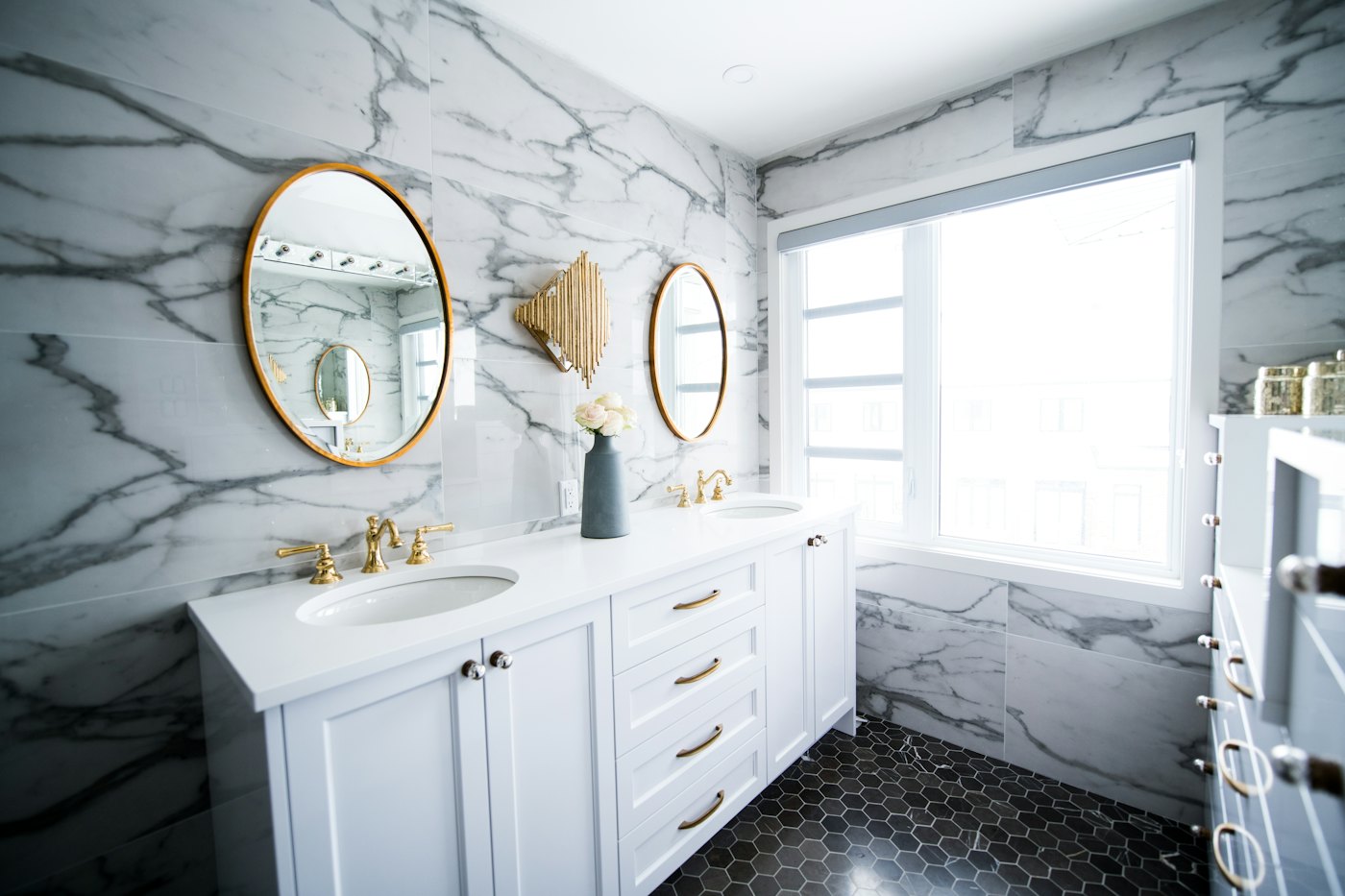
It’s 7:40 a.m. Someone’s toothbrush is on the wrong side of the sink, the last dry towel is on the floor, and nobody can find the good hairbrush. A shared bathroom rarely fails for lack of storage. It fails because nothing belongs to anyone. These ideas give each person a clear spot, keep the shared things in the middle, and work in a single-sink bathroom as well as a double vanity.
Affiliate disclosure: As an Amazon Associate I earn from qualifying purchases. Shopping links in this post open Amazon search results for a type of item, not a specific product we’ve tested.
Split the space
1. Give everyone a color
Pick one color per person and use it for towels, toothbrush, cup, and bin. Kids learn it in a day, guests can be handed “the gray towel,” and a stray towel on the floor has an obvious owner. If you’d rather keep towels matching, use colored clips or tags on the hooks instead.
Try it if you have kids or roommates who share towels by accident.
2. Personal on the edges, shared in the middle
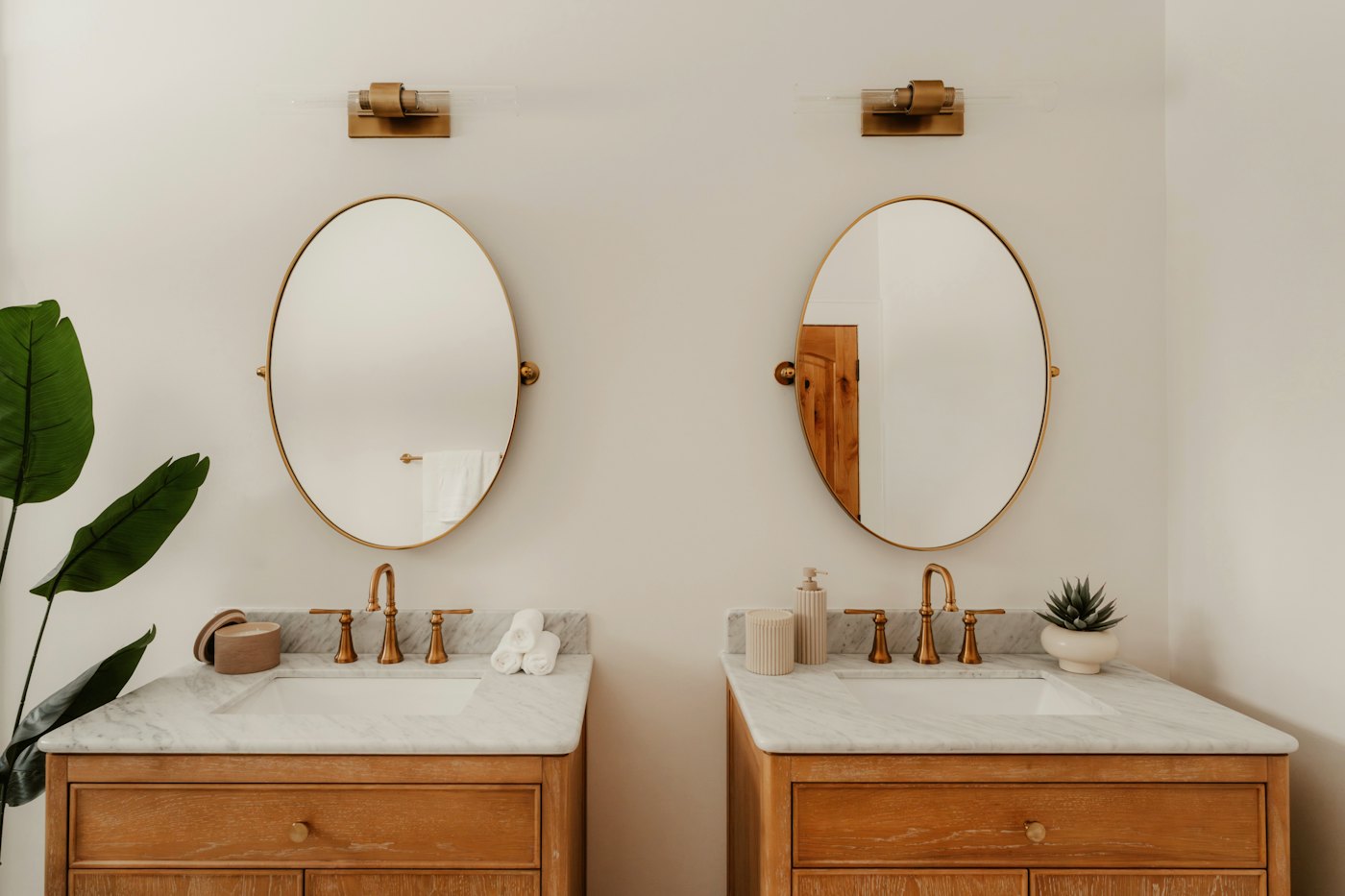
On a single vanity, give each person one end of the counter and keep only truly shared items, like hand soap and a tissue box, near the faucet. On a double vanity, mirror the layout so each sink has the same setup. The middle stays clear enough to wipe down in seconds.
Skip it if your counter is so small that the edges are right next to the sink; move personal things off the counter entirely (see idea 4).
3. Assign medicine cabinet shelves by height
Tallest person gets the top shelf, shortest gets the bottom, and shared basics go at eye level for most of you. Keep anything kids shouldn’t handle out of their reach, ideally outside the bathroom. Our medicine cabinet guide covers what shouldn’t live in a humid bathroom at all.
Try it if people keep pushing each other’s things to the back.
4. One caddy per person that leaves with them
A handled caddy with each person’s daily items can live in their bedroom and come to the bathroom only when they do. It is the single most useful idea for roommates, teenagers, and anyone with a small vanity. Pick a caddy with drainage holes so wet items dry, and keep it under about 10 inches wide so it fits on a crowded counter.
Try it if the counter is the battleground. Skip it if people won’t carry it back; then use a bin in the vanity instead.
5. Label the drawers, even if it feels fussy
A drawer labeled with a name is much harder to raid than one that just says “hair stuff.” Removable labels or a strip of painter’s tape and a marker are enough to start. Inside, shallow trays sized to the drawer stop items sliding into a neighbor’s section; our bathroom drawer organizer guide matches tray types to drawer depth.
Try it if you have a multi-drawer vanity and more than two people.

Towels and the shower
6. One hook per person, at their height
Hooks take far less wall width than towel bars, so you can fit three or four where a single bar used to go. The tradeoff is drying time: a bunched towel on a hook dries more slowly than one spread on a bar, so space hooks several inches apart and keep the room ventilated. Mount kids’ hooks low enough that they actually use them. More options are in our small bathroom towel storage guide.
Skip it if your bathroom has no fan or window; damp towels on hooks can stay musty.
7. Hooks on the back of the door for robes
An over-the-door hook rail adds hanging space with no drilling. Before buying, check that the door closes with the hook bar on top, and that the door isn’t hollow-core and flimsy if you plan to hang heavy, wet robes. Over-the-door hook racks on Amazon ↗
Try it if you rent. Our no-drilling bathroom plan has more ideas like this.
8. One shower shelf per person
A caddy or tension-pole unit with separate shelves lets each person keep their own shampoo without a pileup on the tub edge. Put shared items, like body wash everyone uses, on the shelf most people can reach. Our shower storage guide explains which caddy types suit which walls.
Skip it if the shower is tiny; a single shared shelf plus personal items carried in a shower tote (idea 4) may work better.
Keep the shared stuff under control
9. Only one open bottle of each shared thing
Three half-used shampoos take up a shelf. Keep one open bottle of each shared product in the bathroom and store backups elsewhere, such as a hall or linen closet. When the bottle runs out, the replacement is one trip away and nobody stockpiles.
Try it if your under-sink cabinet is full of near-duplicates.
10. Split the under-sink cabinet into bins, not shelves
Give each person one labeled bin under the sink and keep a shared bin for cleaning supplies. Leave the pipes, shutoff valves, and any drain trap clear so you can reach them in a leak. Our under-sink organizer comparison covers formats that fit around plumbing.
11. Give hot tools their own heat-safe spot
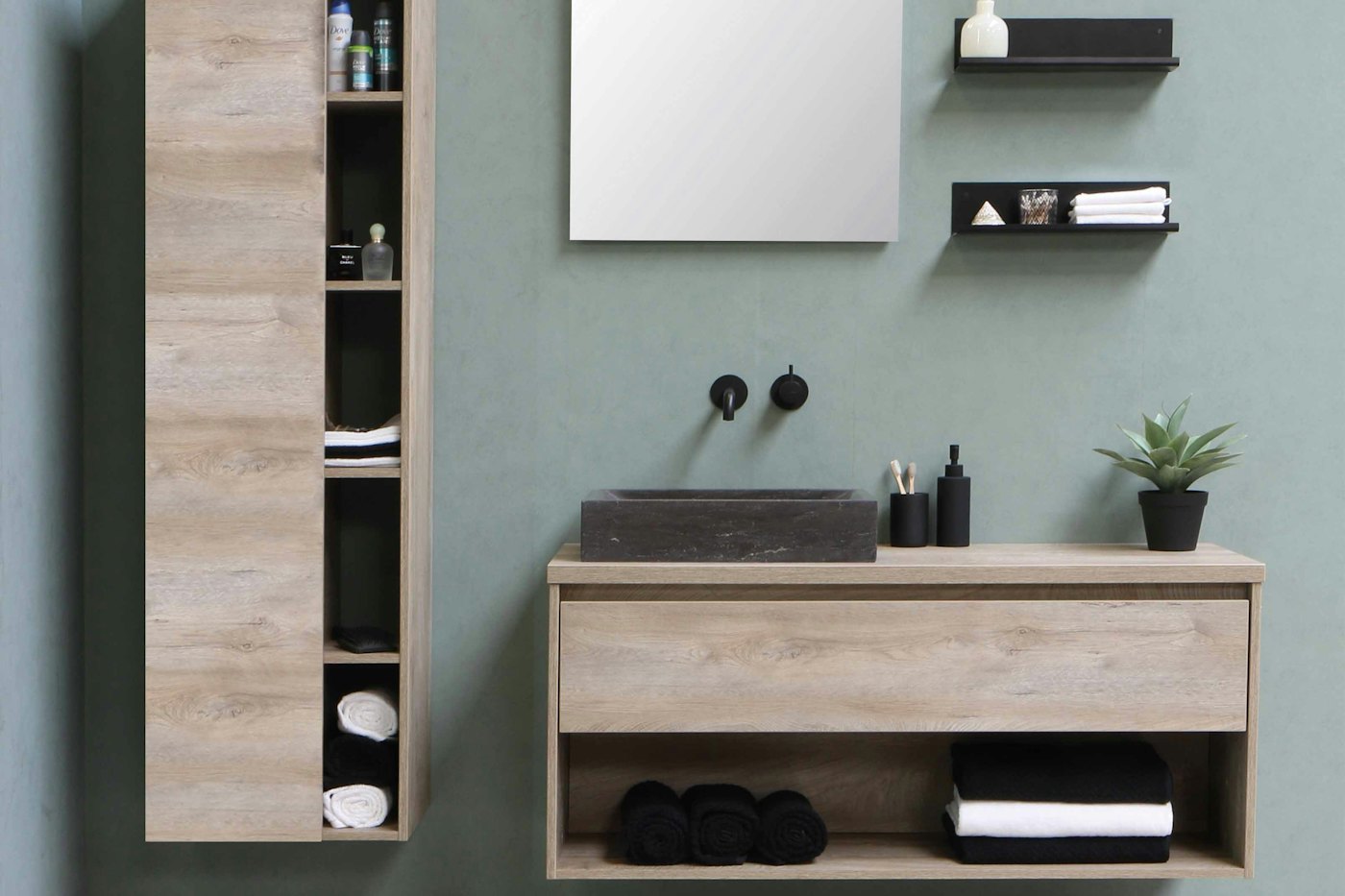
Two people with hair dryers and flat irons can turn a counter into a tangle. A heat-resistant holder mounted inside a cabinet door or on the wall keeps tools apart and off the counter. Let tools cool fully before putting them away, keep them and their cords clear of the sink, and plug into a GFCI-protected outlet. Unplug after each use. Heat-resistant hair tool holders on Amazon ↗
Skip it if only one person uses hot tools; a single holder in their own drawer is simpler.
Shopping ideas for a shared bathroom
These open Amazon search results. Check sizes against your counter, drawers, and door before buying.
Related: Best shower caddies matched to your shower

Keep reading
More guides for your space
THE KINDRED JOURNAL
Latest from the journal
- What Holiday Lights Really Cost to Run: LED vs. Incandescent, With the Math for Your Own Display
 Read the watts off each tag, multiply by your hours and your own rate, and the answer is clear: eight incandescent strings cost about $25.70 a season in our worked example and their LED versions about $2.18, big C9 bulbs pay back an LED swap in about three seasons, and working mini lights can wait.
- Ideal Indoor Humidity in Winter: Find Your Number, Check Your Meter, Then Add Only What the Room Needs
 Aim for 30 to 50% and never humidify past 50%, let the windows set the limit on the coldest nights, salt-test your hygrometer before you trust it, seal drafts first because a whole bedroom needs only about 4½ ounces of water, and clean the tank on a schedule: a winter humidity guide with the math worked out.
- Toy Storage Ideas: 13 Ways to Make Room Before the Holiday Toy Wave
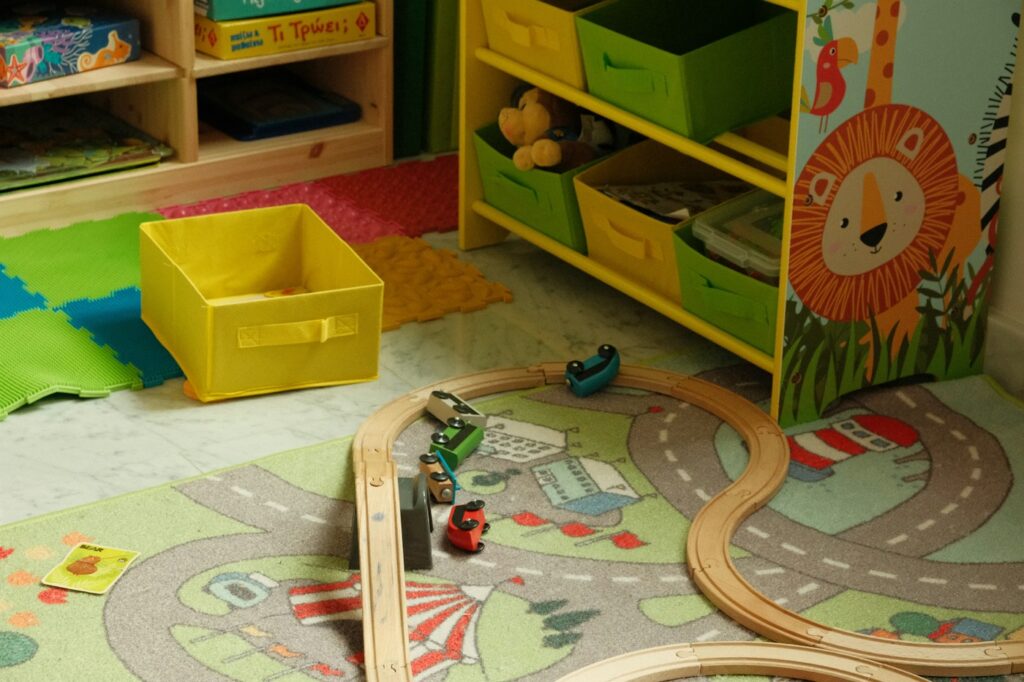 Edit the toys before the gifts arrive, give each kind of play one open bin on an anchored low shelf, keep small parts and spare batteries out of a toddler’s reach, skip latching lids and rotate the extras: thirteen toy storage ideas for the weeks before and after the holidays.
- Best Gift Wrap Organizers: 5 Picks for a Closet Corner, Under the Bed or the Back of a Door
 An upright box that holds up to 32 long rolls, a 41.5-inch under-bed bag for big collections, a water-resistant zip bag, an over-the-door organizer and a slim canvas case for eight rolls: five gift wrap organizers matched to the space you can give them.
- Cord and Cable Storage: 13 Ideas for the Spare Chargers, Cables and Adapters Nobody Can Find
 Match every cable to a device you still own, keep a sensible number of spares by connector type, coil them loosely, label the mystery bricks, hang the extension cords and send old batteries and dead cables to a proper drop-off: thirteen ways to store spare cords so the right one turns up in seconds.
- Window Condensation in Winter: Find Which Side the Water Is On, Then Match Humidity to the Forecast
 Do the wipe test to tell room-side fog from a failed seal, check a hygrometer against the outdoor low, keep humidity at or under 40% above 20°F and 30% below 10°F, run the fans, open the curtains by day and dry wet sills the same morning: a window condensation guide with a worked cold-week example.
- How to Clean a Range Hood Filter Before Holiday Cooking: Know Your Filter Type, Then Put It on the Calendar
 Wash metal mesh and baffle filters in hot soapy water or the dishwasher, replace charcoal filters instead of rinsing them, never run the hood with the filter out, and clean the weekend before Thanksgiving and again before Christmas: a range hood filter guide with a worked holiday cleaning calendar.
- Drying Clothes Indoors in Winter: Where the Rack Goes, How Much Rail You Need and What It Saves
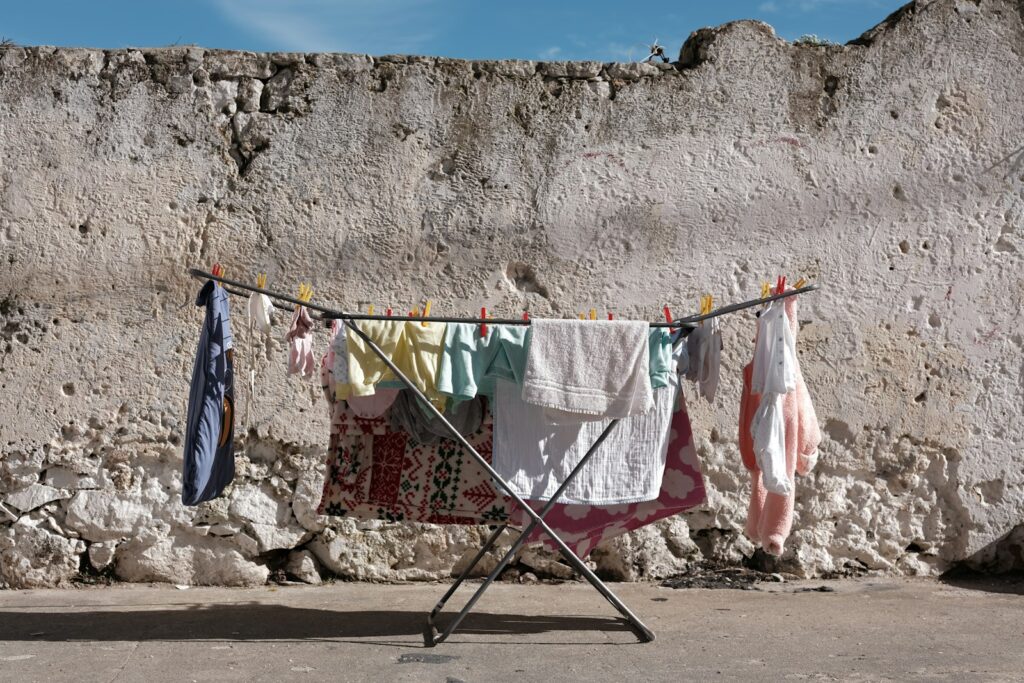 One load gives off about 2 liters of water as it air-dries, so put the rack where that moisture can leave, keep it 3 feet from the space heater, count inches of rail before you buy, space and turn the heavy things, watch humidity and window condensation, and know what the dryer you’re skipping really costs: indoor drying with the math.
- Hat, Glove and Scarf Storage by the Door: One Bin Per Person, Sized to What They Actually Wear
 Keep a daily set plus one dry spare per person, size an open bin for each from a quick measurement, dry wet mittens before they go in, clip pairs together, hang woven scarves and fold knits, skip long scarves on the playground and wash wool before it’s sealed away: a hat and glove station with a worked bin-size example.