Towels are the bulkiest thing most small bathrooms have to hold, and they need two kinds of storage at once: room for wet towels to dry, and a dry, dust-free spot for clean spares. When there’s only one bar and a crowded cabinet, towels end up over the shower door, on the floor, or stacked on the toilet tank. The fix starts with counting, not buying.
Keep two bath towels per person in rotation plus a few guest spares, and move extras out of the bathroom. Give every towel in use its own bar, ring, or hook with space around it to dry. Store clean spares rolled on an over-toilet shelf, in the vanity, or in a nearby closet. Mount anything that holds wet towels into studs or with anchors rated for the load, and never treat a towel bar as a grab bar.
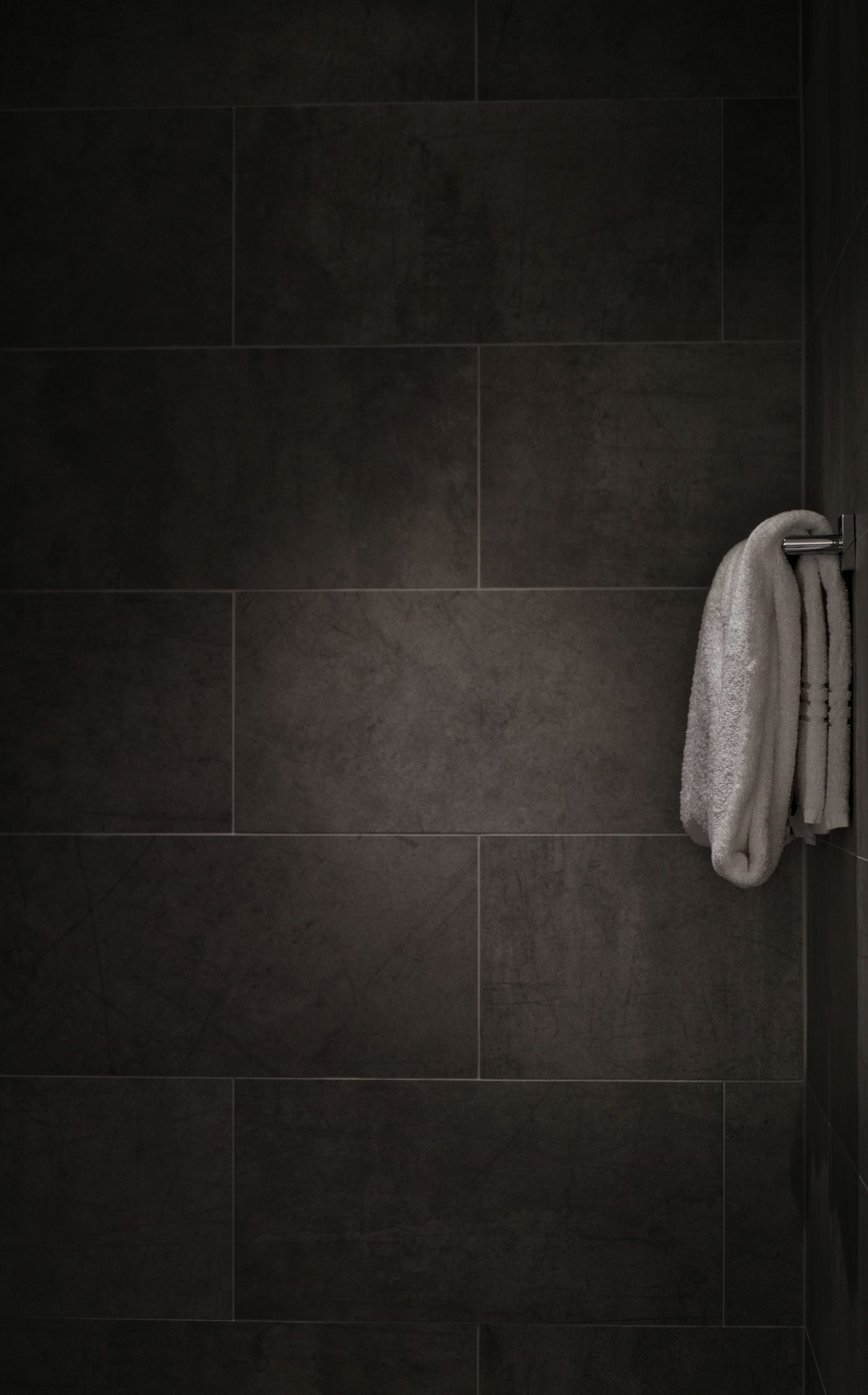
1. Count the towels you actually use
Pull every towel out of the bathroom, linen closet, and laundry and sort them into four piles: bath towels, hand towels, washcloths, and specialty (beach, gym, and guest sets). Then work out what your household needs in rotation:
- Bath towels: two per person is a common starting point, one in use and one clean, plus one in the wash if you do laundry less than weekly.
- Hand towels: one in use per sink, plus one or two spares.
- Washcloths: however many your household uses between laundry days.
- Guest towels: one set per guest you typically host at once.
Anything beyond that, such as thin, frayed, or stained towels, can become cleaning rags or pet towels stored in the garage or laundry area, or go to a textile recycling drop-off or animal shelter that accepts them. Beach towels rarely need to live in the bathroom at all.
2. Give in-use towels room to dry
A wet towel dries fastest when it’s spread out with air on both sides. Bunched on a single hook or folded double on a crowded bar, it stays damp longer and can start to smell. Plan one drying spot per person:
- Bars spread a towel widest and dry it best. A bath towel folded in thirds lengthwise fits on many standard bars; measure the towel folded and the bar’s usable length between brackets.
- Hooks fit narrow walls and the back of a door, but a towel bunches on them. Use one hook per towel and leave a few inches between hooks.
- Rings suit hand towels next to the sink.
- Over-door bars or hooks add drying space without drilling, as long as the door still closes.
Run the exhaust fan during and for a while after showers, if you have one, and leave the shower curtain or door open so the room can dry out. Towels dry better in a room that isn’t still full of steam.
3. Store clean spares where they stay dry
Clean towels pick up humidity and dust when they’re stored open right beside the shower. Better spots, roughly in order:
- A nearby linen or hall closet, if you have one.
- Inside the vanity, on a shelf or in a bin kept away from the pipes.
- An over-toilet cabinet with doors, or open shelves high on the wall away from the shower.
- A basket or ladder shelf in a dry corner.
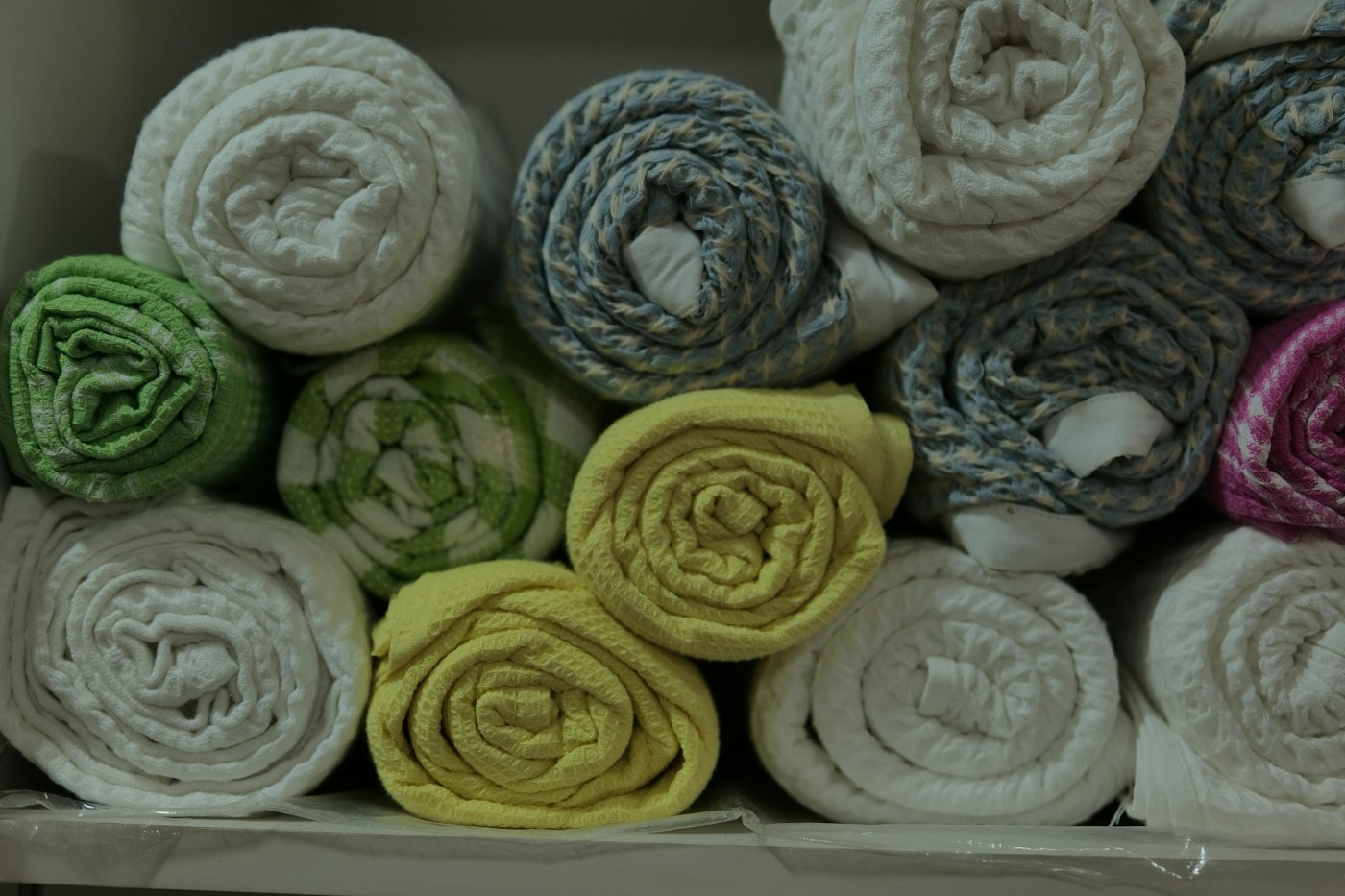
Rolling bath towels tends to take less shelf width than folding and makes it easy to grab one without toppling a stack. Folding in thirds and then in half or thirds again works better in deep cabinets where you want flat, stackable piles. Pick one method per shelf so the shelf stays tidy.
4. Seven towel storage spots compared
| Format | Best for | Check first |
|---|---|---|
| Wall towel bar | Drying one or two bath towels | Usable length between brackets, stud location or anchor rating, door and shower swing |
| Towel hooks or a hook rail | Narrow walls, kids, robes | Spacing between hooks; one towel per hook |
| Over-door bar or hooks | Renters, extra drying space | Door thickness, gap at the top of the door, that the door still latches |
| Over-toilet shelving or cabinet | Clean spares | Width beside the toilet, tank height, room to lift the tank lid, anti-tip strap |
| Wall shelf with a bar below | Spares above, a drying towel below | Shelf depth so it doesn’t crowd the walkway; wall mounting |
| Leaning ladder | Drying and display in a dry corner | Floor footprint and stability; secure it if it can slide or tip |
| Vanity bins | Hand towels and washcloths | Clearance around the pipes and any leaks |
Clean spares, rolled
Bars and hooks for drying
Vanity bins, washcloths
Worked example: two people, one small bathroom
Say two adults share a bathroom with a 24-inch towel bar beside the tub, an over-toilet space about 24 inches wide, and a small vanity. After the count, they keep four bath towels, three hand towels, and eight washcloths, and one guest set goes to the hall closet.
Drying: one bath towel folded in thirds lengthwise is often around 18 inches wide, which fits the 24-inch bar for one person. The second person needs a spot, so add a hook or a second bar on the back of the door. That’s two drying spots for two people.
Spares: the two clean bath towels, rolled, might each be around 6 to 8 inches across, so they fit side by side on a shelf about 16 inches wide, leaving room for a small basket of washcloths. A two-shelf over-toilet unit holds both, with the hand-towel spares on the second shelf.
Daily: a towel ring by the sink holds the hand towel in use. Everything has a place, and nothing sits on the tank lid. Measure your own towels folded and rolled; thickness varies a lot.
5. Fit and safety
- A towel bar is not a grab bar. It isn’t designed to hold a person’s weight. If anyone in the household needs support getting in and out of the tub, install a grab bar made and rated for that purpose, mounted as its instructions require.
- Mount bars and shelves into studs, or use wall anchors rated for the load, because wet towels are heavier than dry ones. Follow the hardware instructions for your wall type.
- Before drilling into tile or a wall behind a sink or toilet, check for pipes and wiring and use the right bit for tile. If you rent, check your lease first.
- Keep the walkway clear. Shelves above the toilet shouldn’t stop you from lifting the tank lid or bump your head when you stand up.
- Freestanding over-toilet units and ladders can tip. Keep heavy items low, the top light, and use the anti-tip strap if one is included.
- Heated towel racks are electrical fixtures. Follow the manufacturer’s installation instructions and local codes, and use a qualified electrician for hardwired models. Comparing plug-in racks and bucket warmers? See our towel warmer comparison.
- Keep towels away from space heaters, and don’t store damp towels in closed bins where mildew can grow.
6. What to buy, in order
- Extra drying spots first. Hooks or a hook rail, or an over-door towel bar if you can’t drill, so every in-use towel has its own place to dry.
- Shelving for clean spares. An over-toilet cabinet or a wall shelf with a bar underneath, sized to your measurements.
- A basket for the small stuff. A small towel basket for washcloths and hand towels, sized to the shelf or vanity it sits on.
- New towels last. Buy them only if you’re replacing worn ones anyway. Towels that are all the same size roll and stack more evenly.
Compare small bathroom towel storage
Affiliate disclosure: As an Amazon Associate I earn from qualifying purchases. These links open Amazon search results for the formats in this guide, not recommendations for a specific model. Check dimensions, mounting hardware, and weight limits before buying.
Questions
Is it better to roll or fold towels in a small bathroom?
Rolled towels usually take less width on an open shelf and are easy to grab one at a time. Folded towels stack flatter in deep cabinets. Try both on your shelf and keep whichever fits more without toppling.
How many towels does one person need?
Many households manage with two bath towels per person in rotation, plus hand towels and washcloths to last between laundry days. Add more only if you do laundry less often or host guests frequently.
Why do my towels smell musty?
Usually because they don’t dry fully between uses. Spread each towel on its own bar or hook, run the exhaust fan, and wash towels regularly. Don’t fold or store a towel until it’s completely dry.
Keep reading
More guides for your space
THE KINDRED JOURNAL
Latest from the journal
- Toy Storage Ideas: 13 Ways to Make Room Before the Holiday Toy Wave
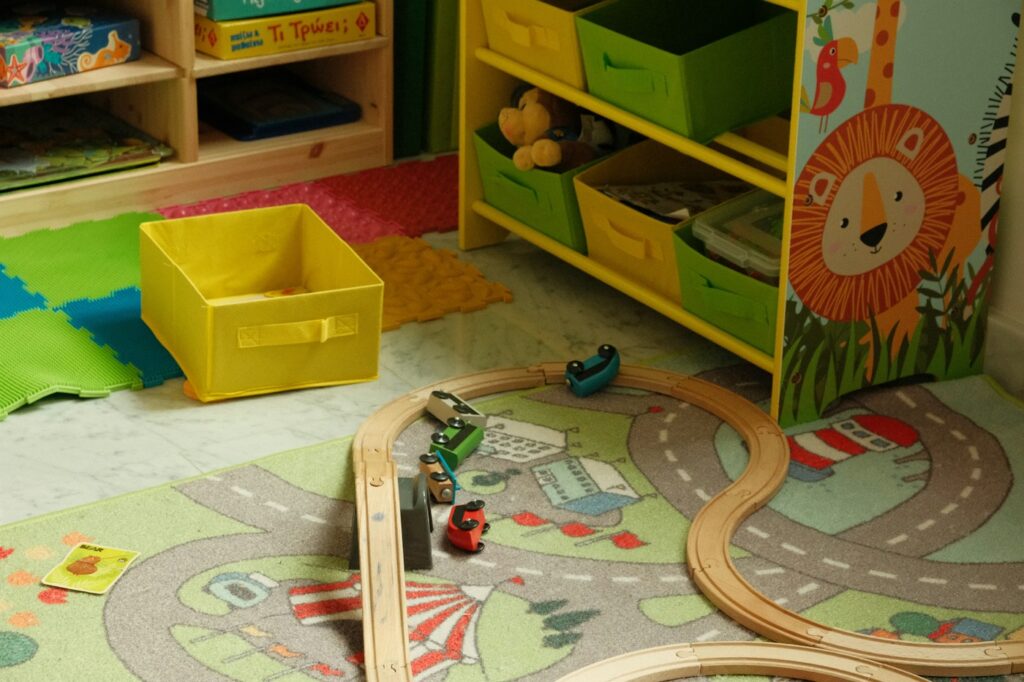 Edit the toys before the gifts arrive, give each kind of play one open bin on an anchored low shelf, keep small parts and spare batteries out of a toddler’s reach, skip latching lids and rotate the extras: thirteen toy storage ideas for the weeks before and after the holidays.
- Best Gift Wrap Organizers: 5 Picks for a Closet Corner, Under the Bed or the Back of a Door
 An upright box that holds up to 32 long rolls, a 41.5-inch under-bed bag for big collections, a water-resistant zip bag, an over-the-door organizer and a slim canvas case for eight rolls: five gift wrap organizers matched to the space you can give them.
- Cord and Cable Storage: 13 Ideas for the Spare Chargers, Cables and Adapters Nobody Can Find
 Match every cable to a device you still own, keep a sensible number of spares by connector type, coil them loosely, label the mystery bricks, hang the extension cords and send old batteries and dead cables to a proper drop-off: thirteen ways to store spare cords so the right one turns up in seconds.
- Window Condensation in Winter: Find Which Side the Water Is On, Then Match Humidity to the Forecast
 Do the wipe test to tell room-side fog from a failed seal, check a hygrometer against the outdoor low, keep humidity at or under 40% above 20°F and 30% below 10°F, run the fans, open the curtains by day and dry wet sills the same morning: a window condensation guide with a worked cold-week example.
- How to Clean a Range Hood Filter Before Holiday Cooking: Know Your Filter Type, Then Put It on the Calendar
 Wash metal mesh and baffle filters in hot soapy water or the dishwasher, replace charcoal filters instead of rinsing them, never run the hood with the filter out, and clean the weekend before Thanksgiving and again before Christmas: a range hood filter guide with a worked holiday cleaning calendar.
- Drying Clothes Indoors in Winter: Where the Rack Goes, How Much Rail You Need and What It Saves
 One load gives off about 2 liters of water as it air-dries, so put the rack where that moisture can leave, keep it 3 feet from the space heater, count inches of rail before you buy, space and turn the heavy things, watch humidity and window condensation, and know what the dryer you’re skipping really costs: indoor drying with the math.
- Hat, Glove and Scarf Storage by the Door: One Bin Per Person, Sized to What They Actually Wear
 Keep a daily set plus one dry spare per person, size an open bin for each from a quick measurement, dry wet mittens before they go in, clip pairs together, hang woven scarves and fold knits, skip long scarves on the playground and wash wool before it’s sealed away: a hat and glove station with a worked bin-size example.
- Guest Room That Doubles as Storage: Pick the Bed by Floor Space, Keep the Window Clear
 Count the nights the room really hosts, compare bed footprints before comfort, put storage on one wall behind a curtain, keep the window and door clear, leave guests half the closet and one drawer, and pack a single guest bin: a storage room that turns into a guest room in fifteen minutes, with a worked 10 by 11 foot example.
- Dining Room Storage for Holiday Hosting: Measure the Walkway First, Then Fit the Sideboard
 Measure the table with the leaf in, leave 44 inches where people walk and 32 where nobody passes, subtract the sideboard’s depth before you buy, anchor the hutch and give the leaf, extra chairs and holiday linens a home: dining room storage planned for the biggest night of the year, with a worked placement example.