Quick answer: if you can screw something into the wall, a plug-in rack like the Amba Radiant Square warms a full bath sheet and dries it between showers. If you rent or can’t drill, a freestanding rack or a bucket warmer does the job from the floor. The specs that matter more than the finish are watts (which set the running cost), whether there’s a timer, and whether the unit carries a safety listing. Here are five towel warmers matched to the bathroom you have, plus the outlet check to do first.
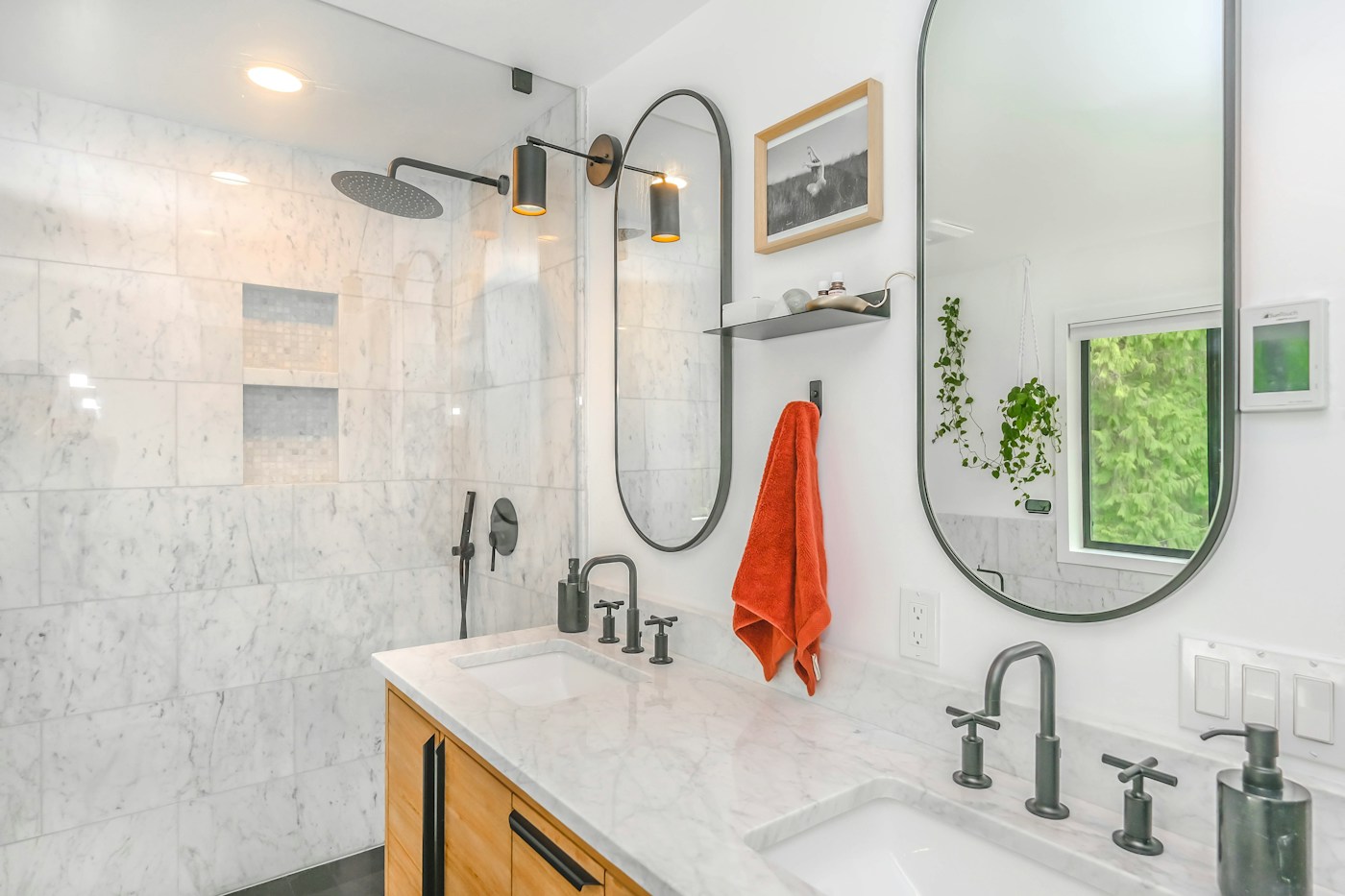
For a full-size wall rack, look at the Amba Radiant Square (10 bars, 150 W, UL listed). For a small bathroom or a powder room, the WarmlyYours Palma is a 4-bar plug-in rack listed at just 60 W. For renters, the Amba Solo stands on the floor with the same 10-bar, 150 W spec as the Radiant. For a warm towel on demand rather than all day, a bucket warmer with a timer: the Zadro Large lists 15 to 60 minute settings, and the Keenray 20L lists an ETL certification and a 60-minute cycle. Whatever you choose, plug it into a GFCI-protected outlet.
Affiliate disclosure: As an Amazon Associate I earn from qualifying purchases. We matched the Amba Radiant Square to an Amazon listing ID; the other buttons are clearly labeled Amazon searches for each brand and model, so check the model number and finish on the live listing before you order.
Rack or bucket? Decide this first
The two styles do different jobs. A heated rack stays on for hours, warms the towel gently and, more usefully, dries it between uses. That matters in a small bathroom without a window, where towels tend to stay damp and smell musty. A bucket warmer sits on the floor or counter, heats a rolled towel or robe fast inside a lidded tub, then shuts off. It’s closer to a treat than a drying tool: you load it before the shower, and you put the towel somewhere else to dry after.
Racks need a wall (or a floor-standing frame) within cord reach of an outlet. Buckets need floor space, usually a footprint of about 12 to 15 inches across, plus room to open the lid. Measure the spot you have in mind before you look at finishes.
The five at a glance
| Pick | Style | Listed size | Listed power | Controls |
|---|---|---|---|---|
| Amba Radiant Square RSWP | Wall rack, plug-in, 10 bars | 23⅝ × 31½ × 4¾ in | 150 W, 115 V | On/off switch; timer optional |
| WarmlyYours Palma plug-in | Wall rack, plug-in, 4 bars | 17.71 × 19.68 × 4.33 in | 60 W, 120 V | On/off switch; outlet timer sold separately |
| Amba Solo SAFS-24 | Freestanding rack, 10 bars | 23⅝ × 36½ × 11⅞ in | 150 W, 115 V | On/off switch; timer optional |
| Zadro Large Bucket | Bucket, 19 L | 21 in tall, 12 in diameter | 120 V; watts not listed | 15/30/45/60-min timer, auto-off |
| Keenray 20L Bucket | Bucket, 20 L | 20.5 × 14.5 × 14.5 in | Watts not listed | One button, up to 60 min, auto-off |
Amba Radiant Square Plug-In Towel Warmer (RSWP)
Listed: 10 square bars in a 5-5 layout · 23⅝ in W × 31½ in H × 4¾ in projection · 304 stainless steel · plug-in, 115 V, 150 W · maximum operating temperature 149°F · on/off switch with pilot light; programmable timer available as an add-on · heats up in 15 to 20 minutes (dry element) · UL listed (US and Canada) · concealed wall mounting, hardware included · 2-year limited warranty · not approved for commercial use · RSWP-B brushed, RSWP-P polished (Build.com)
This is the size most people picture when they think of a heated towel rack: tall enough for a bath sheet folded over two bars, with ten bars split into two groups so a hand towel can sit below a bath towel. Plug-in means no electrician for the wiring, but you still need a wall that can take screws and an outlet within reach of the cord. A 4¾-inch projection keeps it fairly flat against the wall, which matters beside a door swing.
Amba uses a “dry” element rather than a fluid-filled one, and lists a 15 to 20 minute warm-up. With no built-in timer, it runs until you switch it off, so budget for the add-on timer or a plug-in outlet timer if you’d rather not leave it on all day.
Big enough for a family’s towels, UL listed, low profile and simple: one switch, no app.
Renters who can’t drill, and anyone without an outlet close to the wall space. The listed 149°F maximum is warm enough to be uncomfortable to hold, so think twice in a bathroom small children use unsupervised.
Build.com listing with dimensions, wattage and certification
WarmlyYours Palma Plug-In Towel Warmer
Listed: SKU TWS2-PLM04PP · 4 square bars · 17.71 in W × 19.68 in H × 4.33 in D · 304 stainless steel, polished finish · plug-in, 120 V, 60 W (0.5 A), 205 BTU/hr · 71-inch white cord, standard NEMA 5-15 plug · IP55 rating · on/off switch; WarmlyYours suggests a separately sold outlet timer · “TempSmart” surface temperature limit (the sell sheet gives both 149°F and a 149–167°F range) · cULus listed · 5-year limited warranty (WarmlyYours sell sheet)
The Palma is the one to look at when wall space is tight: under 18 inches wide and under 20 inches tall, it fits beside a vanity or above a toilet where a full-size rack won’t. Four bars hold a bath towel folded in thirds or a couple of hand towels, which suits a powder room or a guest bath that gets light use.
Its listed draw of 60 W is the lowest here, less than half the Amba racks, so it’s the cheapest to leave on for a few hours a day. The 71-inch cord gives you some flexibility in where it hangs relative to the outlet. The longest warranty in this group, five years, is a plus.
Small footprint, lowest listed wattage, safety listing and a long warranty.
Households that need to dry several full-size bath towels at once. Four bars is one towel’s worth. The sell sheet’s two surface temperature figures don’t quite agree, so check the manual if that matters to you.
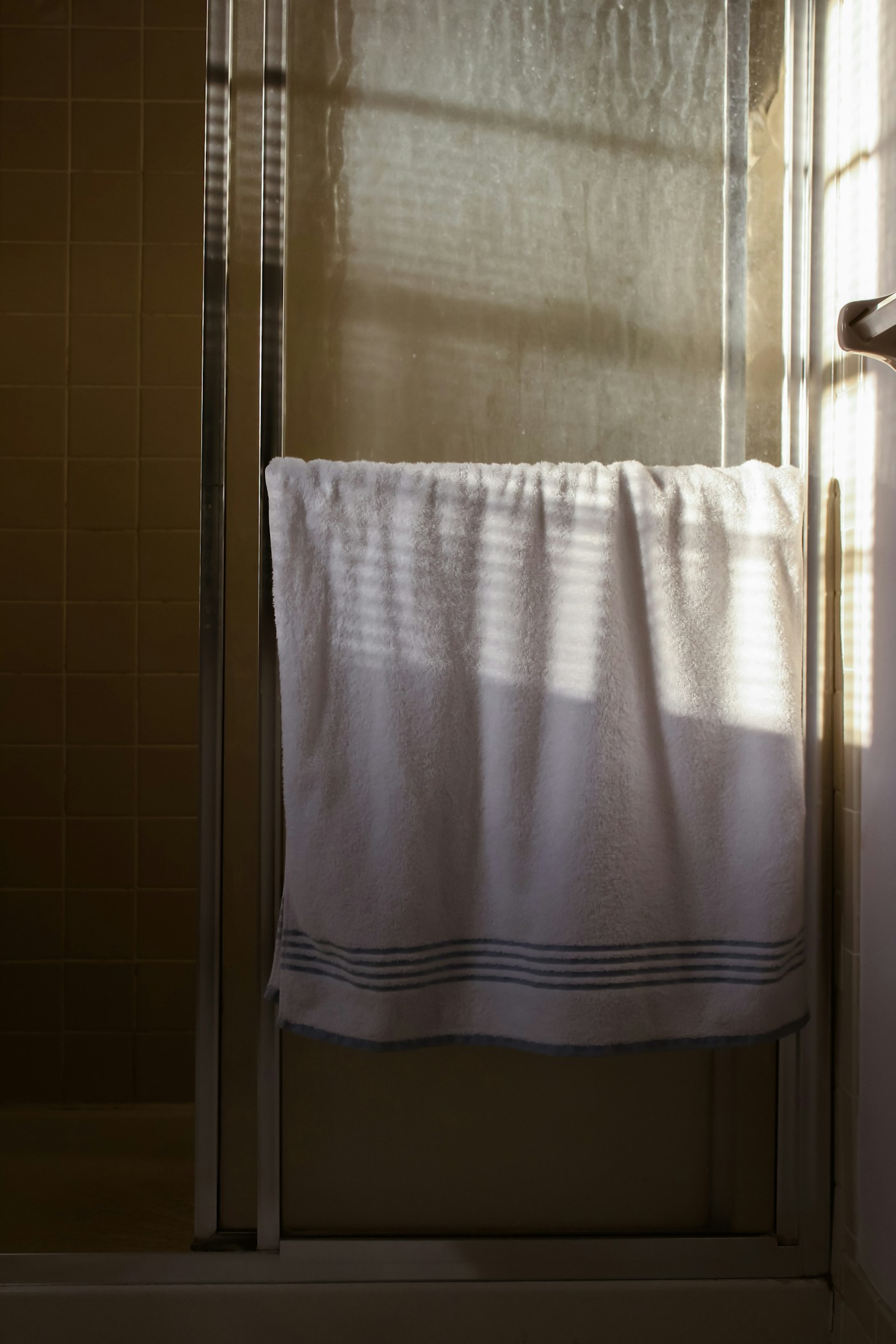
Amba Solo Freestanding Towel Warmer (SAFS-24)
Listed: 10 bars in a 5-5 layout · 23⅝ in W × 36½ in H × 11⅞ in D · 10 lb · 304 stainless steel · plug-in, 115 V, 150 W (1.35 A, 512 BTU/hr) · maximum operating temperature 149°F · on/off switch with pilot light; programmable timer available as an add-on · UL listed (US and Canada) · 2-year limited warranty · not approved for commercial use · a wider SAFS-33 version is also sold (Build.com)
The Solo has the same ten bars and 150 W rating as the Radiant, but it stands on its own frame instead of mounting to the wall. That makes it the natural pick for a rental, or for a bathroom where the only free wall is tile you’d rather not drill. It can also move: beside the tub in winter, into a laundry room for drying delicates, or to a guest bath when the house is full.
The trade is floor space. At almost 12 inches deep it takes up a real footprint, so measure the path from the door to the tub or shower before you order and leave room to walk past it.
Full-size rack, no installation into the wall, UL listed, easy to relocate.
Small bathrooms with no spare floor. A freestanding unit also has a cord running along the floor to the outlet, so place it where nobody will trip on it or catch it with a foot coming out of the shower.
Build.com listing with dimensions, wattage and certification
Zadro Large Bucket Towel Warmer
Listed: models TWB01 (white) and TWB2C (gray) · 19-liter tub, fits two 40 × 70 in bath towels · 21 in H × 12 in diameter · 8.5 lb · 120 V AC; wattage not listed · 83-inch cord with built-in cord storage at the base · timer settings of 15, 30, 45 or 60 minutes · shuts off automatically when the timer ends · LED indicators · polarized plug · 1-year limited warranty (Kohl’s listing)
A bucket warmer is the low-commitment version: no mounting, no wall, nothing running all day. You roll a towel or robe into the tub, close the lid and pick a time. The Zadro’s four timer steps are the useful detail here. Fifteen minutes is enough for a hand towel, sixty for a bathrobe, and the unit turns itself off either way.
Its 12-inch-wide round footprint is narrower than many buckets, which helps in a tight corner. The 83-inch cord is long, and the base has a spot to wind up the slack so it isn’t coiled across the floor.
Fixed timer steps with auto-off, compact footprint, a long cord with storage.
Anyone who wants towels dried, not just warmed. The listing doesn’t give wattage or a safety certification, so look for the certification mark on the unit or the box when it arrives.
Keenray 20L Bucket Towel Warmer
Listed: 20-liter capacity · fits up to two 40 × 70 in towels, plus robes or blankets · 20.5 in H × 14.5 in W × 14.5 in D · single-button control, up to 60 minutes of heating · auto shut-off · described as heating up in about 1 minute and reaching high temperature in about 6 minutes · three layers of protection (temperature sensor, switch and fuse) · ETL certified · bucket and lid separate for cleaning; wattage, voltage and warranty not listed (Walmart listing)
The Keenray is a slightly bigger tub than the Zadro, listed at 20 liters and wide enough for a throw blanket on a cold night. Its listing names an ETL certification and spells out three overheating protections, which is more safety detail than most bucket listings give. Control is a single button rather than a dial, so it’s simple to use, though you don’t get the Zadro’s choice of shorter cycles.
Roomy tub for big towels and blankets, a stated safety certification, and a lid that comes off for cleaning.
Small bathrooms: at 14.5 inches square it’s the widest footprint here. Anyone who wants to compare running costs closely, since the listing doesn’t give watts.
What it costs to run: do the math with your own rate
Running cost is watts × hours ÷ 1,000 × your price per kilowatt-hour. A worked example for a 150 W rack left on four hours a day:
- 150 W × 4 hours = 600 watt-hours, or 0.6 kWh a day.
- 0.6 kWh × 30 days = 18 kWh a month.
- At an example rate of 17 cents per kWh, that’s about $3.06 a month. At 30 cents, about $5.40.
The same four hours on the 60 W Palma comes to 7.2 kWh a month, well under half. Your real rate is on your bill; our guide to reading your electric bill shows how to find the all-in number. Bucket warmers that run for a 30 to 60 minute cycle use far fewer hours, but since the two buckets here don’t list watts, you’d need to read the label on the unit to do the same math.
Safety and fit: check these before you buy
- Use a GFCI-protected outlet. The Consumer Product Safety Commission recommends ground fault circuit interrupters in bathrooms, and says to test each one monthly: plug in a lamp, press TEST (the light should go out), then RESET. If yours doesn’t trip, have it replaced before you add a heated appliance.
- Skip the extension cord. CPSC notes that extension cords aren’t as safe as permanent wiring, and that a cord used every day is a sign you need an outlet closer to the appliance. Don’t run any cord under a bath mat or rug.
- Keep it away from the water. Place a bucket warmer well away from the tub, shower and sink, on a dry floor. CPSC warns that even a switched-off plugged-in appliance can be a shock hazard if it falls into water.
- Check the plug fit. A plug that wobbles in the outlet can overheat, according to CPSC. A loose outlet is a job for an electrician.
- Look for a listing mark such as UL, ETL or cULus on the unit, and follow the manufacturer’s manual on what can go in a bucket warmer and how long it can run.
- Hardwired racks (not covered here) are wired into a circuit and normally need a licensed electrician. Plug-in models avoid that.
How we chose
This is a research-based comparison from listed specifications, not hands-on testing. We looked for towel warmers from established brands sold at major US retailers, covered the three styles people actually choose between (wall rack, freestanding rack and bucket), and recorded only what the manufacturer or retailer pages state. Where a page left something out, such as wattage on both bucket warmers, we say so rather than guess. Specs were checked on November 7, 2026, from the pages linked under each product. We didn’t include prices or ratings because they change often, especially around Black Friday. See our editorial policy.
- Rack or bucket: do you want towels dried, or just warmed?
- Measure the wall (width and height) or the floor footprint, plus door swing.
- Find the outlet: is it GFCI-protected, and will the cord reach without an extension?
- Check watts so you can estimate running cost at your rate.
- Timer: built-in, add-on, or a separate outlet timer?
- Look for UL, ETL or cULus on the listing or the box.
- Renting? Choose freestanding or a bucket, not a wall mount.
Questions
Do towel warmers actually dry towels?
Heated racks do: they’re on long enough to dry a towel between uses, which helps in a bathroom without a window. Bucket warmers heat a towel for a short cycle and are meant for warming, not drying.
Can I leave a heated towel rack on all day?
Follow the manufacturer’s manual. Many plug-in racks are designed to run for long periods, but a timer cuts the running cost; the math above shows how.
Do I need an electrician?
Not for plug-in racks or buckets, as long as you have a working GFCI outlet within cord reach. Hardwired racks typically need a licensed electrician.
Short on places to hang or store towels in the first place? Our guide to small bathroom towel storage counts what you need and finds a spot for each. Getting a bathroom ready for holiday visitors? See our guest bathroom ideas.
Sources: U.S. Consumer Product Safety Commission, What Is a GFCI? (fact sheet) · CPSC, Home Electrical Safety Checklist. Product specs from the manufacturer and retailer pages linked above. Running-cost figures are worked examples, not estimates for your home.
Keep reading
More guides for your space
THE KINDRED JOURNAL
Latest from the journal
- Dining Room Storage for Holiday Hosting: Measure the Walkway First, Then Fit the Sideboard
 Measure the table with the leaf in, leave 44 inches where people walk and 32 where nobody passes, subtract the sideboard’s depth before you buy, anchor the hutch and give the leaf, extra chairs and holiday linens a home: dining room storage planned for the biggest night of the year, with a worked placement example.
- Winter Car Emergency Kit: 12 Things to Pack and Where Each One Should Ride
 Start from the National Weather Service list, put the heavy gear in one strapped-down trunk bin, keep the blanket, light and charger in the cabin and the scraper in the door, and know the stranded-car basics: twelve ideas for a winter car kit that stays packed until February.
- Smoke and CO Alarms: A One-Hour Audit of Where They Go, How Old They Are and What to Replace
 Put a smoke alarm in every bedroom, outside each sleeping area and on every level, add CO alarms outside sleeping areas, keep them 10 feet from the stove, read the date on the back and replace anything 10 years old: a one-hour alarm audit, with a worked two-story example.
- Winter Home Maintenance Checklist: Do the Safety Jobs First, Then the Water, Then the Savings
 Book the furnace and chimney check, clear 3 feet around every heat source, mark the outdoor vents before snow buries them, work out how many gallons each downspout carries and extend the heavy ones: a winter maintenance checklist sorted by what happens if you skip it.
- Blanket Storage Ideas for the Living Room: 12 Ways to Keep Throws Handy (and Off the Floor)
 Keep one throw per sitter in an open basket, move the extras behind a lid, measure a folded throw before you buy, keep every blanket 3 feet from the fireplace and check that chest lids can’t latch: twelve blanket storage ideas for the living room, with a basket-fit example.
- Holiday Stain Removal: What to Do About Wine, Gravy, Wax and Cranberry Before Anything Hits the Dryer
 Blot from the back, give wine and cranberry cool water, rub dish soap into gravy, freeze and iron out candle wax, soak eggnog in an enzyme presoak and check every spot before the dryer: a holiday stain guide sorted by stain family, with a worked morning-after tablecloth example.
- Christmas Tree Safety: Where to Put It, How to Water It and When It Has to Go
 Pick a tree whose needles stay put, cut 2 inches off the trunk, water it every day, keep it 3 feet from the fireplace, heater and vents, use listed lights and get it out of the house once it’s dry: Christmas tree safety, with a placement example for a small living room.
- Charging Station Ideas: 13 Ways to Give Every Family Phone, Tablet and Earbud One Spot
 Put it where devices already land, count the ones that charge every night, swap the brick pile for one listed multiport charger and keep it open, flat and off the couch: thirteen ideas for a family charging station that ends the 7 a.m. cable hunt.
- Freezer Organization: How to Clear Room Before the Holidays and Still Find Everything in February
 Check the temperature, clear out what’s past its best, freeze flat then file upright, label everything and leave room for the 2 to 3 pounds per cubic foot your freezer can handle in a day: a freezer reset for holiday cooking, with a worked leftovers example.