Quick answer: most of an electric bill comes down to three numbers. How many kilowatt-hours you used, how many days the bill covers, and what you paid in total. With those three, you can work out the rate you really pay, compare one month with another fairly, and price out any appliance in the house. Everything else on the bill explains how the total was built. Here’s how to read it line by line, before the winter bills arrive.

Find the kWh used and the days billed. Divide kWh by days to get daily use, which is what you compare month to month. Divide the total bill by kWh to get your all-in rate. Then look at the split between supply (the electricity itself) and delivery (getting it to you), the fixed monthly charge, and any riders. The parts you can usually change are how much you use, when you use it, and in some states, who supplies it.
Step 1: Find the four numbers that matter
Bills look different from utility to utility, but almost every residential bill has these somewhere, often in a “usage summary” or “meter information” box:
- Billing period and days billed. The start and end dates of the cycle. Cycles vary in length, so a 33-day bill isn’t directly comparable to a 28-day one.
- Meter readings. A previous and a current reading. As South Carolina’s state energy office explains, your usage is the previous reading subtracted from the current one.
- kWh used. A kilowatt-hour is 1,000 watts used for one hour. Oklahoma State University Extension’s example: ten 100-watt bulbs running for an hour use 1 kWh.
- Total amount due. Make sure you’re looking at this period’s charges, not a balance that includes a past-due amount.
For a sense of scale, the U.S. Energy Information Administration reports an average of about 899 kWh a month per residential customer in 2022, with big swings by state, from Hawaii at the low end to Louisiana at the high end. Your home could be well above or below that.
Step 2: Check the meter reading type
Look for a note next to the reading saying whether it was actual or estimated. If the utility couldn’t read the meter, it may estimate, and the next actual reading corrects it, which can make one bill unusually low and the next unusually high. If you see an estimate, take a photo of your meter’s display with the date, compare it with the bill, and call the utility if they’re far apart.
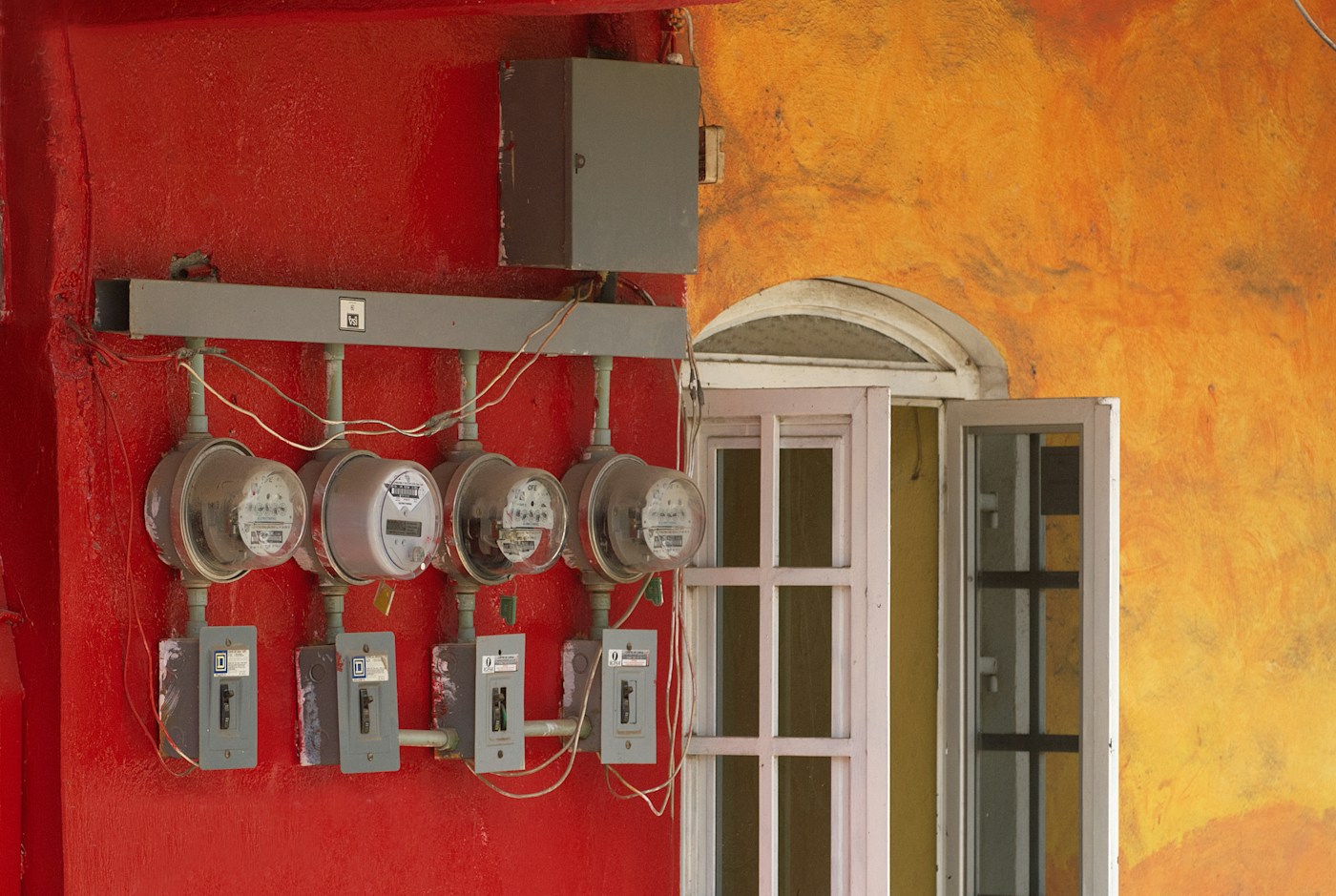
In an apartment or duplex? Check that the meter number printed on the bill matches the meter labeled for your unit. Mixed-up meters are uncommon, but they happen, and you’d be paying for a neighbor’s usage.
Step 3: Split supply from delivery
Massachusetts’ energy office describes the electric bill as having two parts. Supply (sometimes called generation) is the electricity you used. Delivery covers moving it to your home: transmission lines, local distribution and related charges. Both are usually priced per kWh, so both grow when you use more.
In states with retail electric choice, you may be able to buy supply from a competitive supplier while the utility still delivers it and sends the bill. Pennsylvania calls the utility’s default supply price the “Price to Compare.” The state’s utility commission notes that offers below it are often short-term contracts of three to six months and warns that if you miss the end date, you can roll onto a month-to-month variable rate. If you shop, put the contract end date on your calendar.
Step 4: Read the fixed charges and the fine print
| Line on the bill | What it usually means | Changes with use? |
|---|---|---|
| Customer, account or basic facilities charge | A fixed monthly amount for being connected | No |
| Energy or supply charge | kWh used times the supply rate | Yes |
| Delivery, distribution, transmission | Cost of moving power to you, often per kWh | Mostly |
| Riders and adjustments | Extra charges, some temporary, such as fuel cost or program surcharges | Often per kWh |
| Demand charge (kW) | Your highest power draw in the period; more common on business accounts and some residential plans | Yes, by peak |
| Taxes and fees | State and local taxes, franchise fees | Usually a percentage |
Two rate structures are worth spotting on your plan name. Tiered rates change the price per kWh after a set amount of use; some utilities charge more for higher tiers, some less. Time-of-use plans charge more during on-peak hours, often late afternoon and evening, and less at other times. If your bill shows on-peak and off-peak kWh, shifting the dishwasher and dryer to off-peak hours can lower the total without using less.
Step 5: Work out your real rate (worked example)
Here’s a made-up bill with round numbers. Your rates will be different, so swap in your own.
| Line | Calculation | Amount |
|---|---|---|
| Supply | 900 kWh × 11.0¢ | $99.00 |
| Delivery | 900 kWh × 8.5¢ | $76.50 |
| Customer charge | Fixed | $12.00 |
| Taxes and fees | 5% of $187.50 | $9.38 |
| Total | 30 days billed | $196.88 |
- Daily use: 900 kWh ÷ 30 days = 30 kWh a day. This is the number to compare with last month and the same month last year.
- All-in rate: $196.88 ÷ 900 kWh = about 21.9¢ per kWh. Good for comparing whole bills.
- Rate per extra kWh: leave out the fixed $12 charge. ($99.00 + $76.50) × 1.05 ÷ 900 = about 20.5¢. This is the number to use when pricing an appliance, because the fixed charge doesn’t go away if you use less.
Now price something: a 1,500-watt space heater running one hour uses 1.5 kWh, so at 20.5¢ it costs about 31¢ an hour, or roughly $9 a month at one hour a day. Our space heater vs. central heat guide uses the same math to show when a heater saves money.
Step 6: Act on what you found
- Use the history chart. Many bills or online accounts show 12 or 13 months of usage. A sudden step up that stays up often points to one new or failing appliance.
- Ask about rate plans. Time-of-use or other optional plans can help if you can shift laundry and dishwashing. Ask for a comparison based on your own usage history before switching.
- Cut what runs all the time. Standby loads show up in every hour of every day; see phantom power, or measure devices with an energy monitoring plug.
- Watch supplier contract dates if you’re in a retail choice state.
- Days billed noted.
- Meter reading marked actual, not estimated.
- Meter number matches yours.
- Daily kWh compared with last year’s same month.
- All-in rate and per-extra-kWh rate worked out.
- Supplier contract end date on the calendar (choice states only).
Tools that help
Affiliate disclosure: As an Amazon Associate I earn from qualifying purchases. These are Amazon searches for each type of item, not recommendations for a specific model.
Questions
Why did my bill go up when I used the same amount?
Rates, riders or taxes may have changed, or the billing period was longer. Divide kWh by days billed and compare the rate lines with last month’s bill.
What’s the difference between kW and kWh?
kW is how fast power is being used at a moment; kWh is the total energy used over time. A 1,000-watt (1 kW) appliance running for one hour uses 1 kWh.
Can I lower the delivery charge?
Delivery rates are set through your utility’s regulated rates, so you can’t negotiate them, but per-kWh delivery charges drop when you use less.
Sources: Mass.gov, Understanding your electric bill · South Carolina Energy Office, Understanding Your Utility Bill · Oklahoma State University Extension, Understanding Electric Utility Billing · U.S. EIA, How much electricity does an American home use? · Pennsylvania PUC. The worked example uses made-up rates; check your own bill and utility tariff.

Keep reading
More guides for your home
THE KINDRED JOURNAL
Latest from the journal
- What Holiday Lights Really Cost to Run: LED vs. Incandescent, With the Math for Your Own Display
 Read the watts off each tag, multiply by your hours and your own rate, and the answer is clear: eight incandescent strings cost about $25.70 a season in our worked example and their LED versions about $2.18, big C9 bulbs pay back an LED swap in about three seasons, and working mini lights can wait.
- Ideal Indoor Humidity in Winter: Find Your Number, Check Your Meter, Then Add Only What the Room Needs
 Aim for 30 to 50% and never humidify past 50%, let the windows set the limit on the coldest nights, salt-test your hygrometer before you trust it, seal drafts first because a whole bedroom needs only about 4½ ounces of water, and clean the tank on a schedule: a winter humidity guide with the math worked out.
- Toy Storage Ideas: 13 Ways to Make Room Before the Holiday Toy Wave
 Edit the toys before the gifts arrive, give each kind of play one open bin on an anchored low shelf, keep small parts and spare batteries out of a toddler’s reach, skip latching lids and rotate the extras: thirteen toy storage ideas for the weeks before and after the holidays.
- Best Gift Wrap Organizers: 5 Picks for a Closet Corner, Under the Bed or the Back of a Door
 An upright box that holds up to 32 long rolls, a 41.5-inch under-bed bag for big collections, a water-resistant zip bag, an over-the-door organizer and a slim canvas case for eight rolls: five gift wrap organizers matched to the space you can give them.
- Cord and Cable Storage: 13 Ideas for the Spare Chargers, Cables and Adapters Nobody Can Find
 Match every cable to a device you still own, keep a sensible number of spares by connector type, coil them loosely, label the mystery bricks, hang the extension cords and send old batteries and dead cables to a proper drop-off: thirteen ways to store spare cords so the right one turns up in seconds.
- Window Condensation in Winter: Find Which Side the Water Is On, Then Match Humidity to the Forecast
 Do the wipe test to tell room-side fog from a failed seal, check a hygrometer against the outdoor low, keep humidity at or under 40% above 20°F and 30% below 10°F, run the fans, open the curtains by day and dry wet sills the same morning: a window condensation guide with a worked cold-week example.
- How to Clean a Range Hood Filter Before Holiday Cooking: Know Your Filter Type, Then Put It on the Calendar
 Wash metal mesh and baffle filters in hot soapy water or the dishwasher, replace charcoal filters instead of rinsing them, never run the hood with the filter out, and clean the weekend before Thanksgiving and again before Christmas: a range hood filter guide with a worked holiday cleaning calendar.
- Drying Clothes Indoors in Winter: Where the Rack Goes, How Much Rail You Need and What It Saves
 One load gives off about 2 liters of water as it air-dries, so put the rack where that moisture can leave, keep it 3 feet from the space heater, count inches of rail before you buy, space and turn the heavy things, watch humidity and window condensation, and know what the dryer you’re skipping really costs: indoor drying with the math.
- Hat, Glove and Scarf Storage by the Door: One Bin Per Person, Sized to What They Actually Wear
 Keep a daily set plus one dry spare per person, size an open bin for each from a quick measurement, dry wet mittens before they go in, clip pairs together, hang woven scarves and fold knits, skip long scarves on the playground and wash wool before it’s sealed away: a hat and glove station with a worked bin-size example.