When an ice storm takes the power out, the supplies most homes already own are scattered: the good flashlight is in the car, the batteries are in a junk drawer, the bottled water went to a soccer game in October, and nobody is sure whether the radio still works. A winter storm kit is less about buying special gear than about deciding where each thing lives, so you can find it in the dark with cold hands. This guide splits the kit into three spots in the house, works out how much water and food your household really needs, and sets up a twice-a-year check so the kit is still good when the next storm warning comes.
Store at least one gallon of water per person per day for several days, plus several days of food you can eat without cooking. Don’t try to fit it all in one bin: keep a light grab-and-go bin in a closet near the exit, the heavy water and food on a cool, dark “stay-put” shelf, and a flashlight in every bedroom and the kitchen. Make sure everyone in the house knows where the bin is. Check the kit every spring and fall, swap any water you bottled yourself every six months, and never run a generator or grill indoors or in the garage.
Why one big bin doesn’t work
Ready.gov, the federal preparedness site, suggests packing the basic kit into one or two easy-to-carry containers, such as plastic bins or a duffel bag, and keeping it in a designated spot that everyone in the family knows. That advice is aimed at a kit you may need to leave with in a hurry. A winter storm is usually the opposite problem: you stay put, sometimes for days, while the roads are bad and the power is out.
Water is what breaks the one-bin idea. The same Ready.gov guidance calls for one gallon per person per day for several days, for drinking and sanitation, and a gallon of water weighs a little over 8 pounds. A family’s supply quickly becomes too heavy to carry and too bulky to live in a hall closet. So split the kit by job.
1. The grab-and-go bin: light, sealed, near the exit
This is the one container you’d take if you had to leave for a relative’s house or a warming center. Keep it to what one adult can carry. Ready.gov’s basic list covers most of it: a battery-powered or hand-crank radio (ideally a NOAA Weather Radio with a tone alert), a flashlight, a first aid kit, extra batteries, a whistle, a dust mask, a manual can opener, local maps, moist towelettes, garbage bags and plastic ties, a wrench or pliers for turning off utilities, and a phone charger with a backup battery. Pack small items in airtight plastic bags inside the bin, as Ready.gov suggests, so a leaking battery or a split pack of wipes doesn’t ruin everything else.
Add the personal layer: a few days of prescription medicines (ask your pharmacist about keeping an extra supply), glasses, copies of insurance and ID papers in a waterproof pouch, some cash, and a change of warm clothes and sturdy shoes for each person. Ready.gov also lists a sleeping bag or warm blanket per person; if those won’t fit, store them right beside the bin.
Try it if you have a coat closet or hall closet on the main floor. Skip it if the only free space is the attic or a crawlspace; a kit you need a ladder and a flashlight to reach is a kit you won’t use.
2. The stay-put shelf: water and food where it stays cool and dark
Ready.gov says to keep store-bought water sealed in its original container in a cool, dark place, to keep canned food in a cool, dry place and to store boxed food in tightly closed plastic or metal containers. In most homes that points to a low shelf in a basement that stays dry, a pantry or the back of an interior closet. Keep the heavy cases on the bottom shelf, not overhead.
Two places to avoid for water: a spot that floods (if your basement has ever had water on the floor, use a pantry instead) and an unheated garage or porch that freezes, where bottles can split and leave you short just when you need them. If your pipes are what fails, this shelf is your water supply, so read our frozen pipe prevention steps before the first hard freeze.
For food, pick things your household already eats and that need no cooking: canned fish, beans and fruit, peanut butter, crackers, cereal, shelf-stable milk, granola bars. Our pantry shelf life guide has USDA storage times for canned and dry goods, so you can rotate the stay-put shelf into regular meals instead of throwing food out.
Try it if you have a dry basement or a pantry with a sturdy bottom shelf. Skip it if your only spare space is an unheated garage that drops below freezing; keep the water indoors and use the garage only for things cold can’t hurt.
3. The lights-out spots: a flashlight wherever someone will be
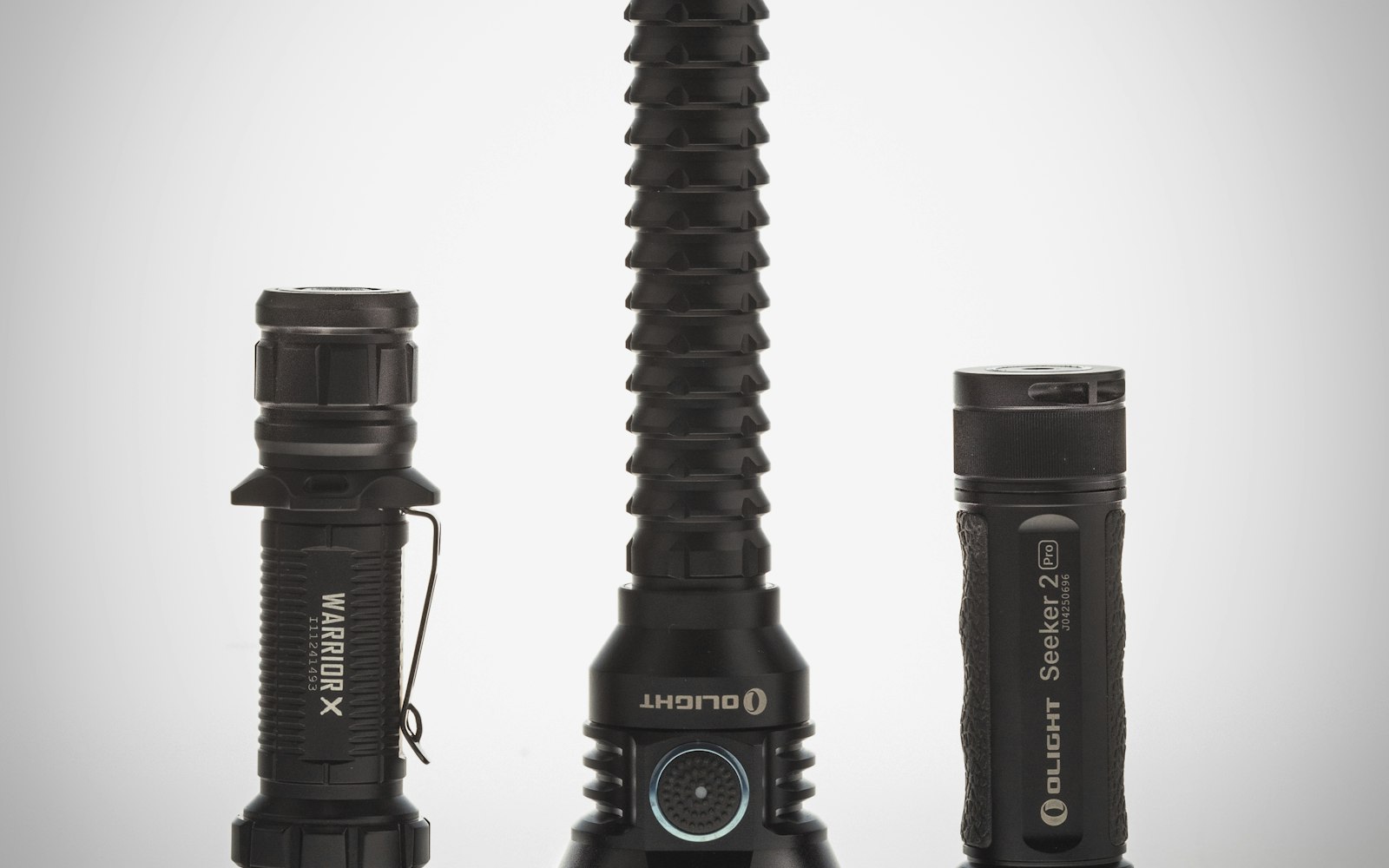
When the power cuts out at night, nobody walks to the hall closet first. Put a flashlight (or a headlamp, which leaves both hands free) in each bedroom nightstand and one in a kitchen drawer, each with batteries already in it. This is the layer people forget, and it’s the one you need in the first five minutes. Use flashlights rather than candles for light; the U.S. Fire Administration’s power-outage advice is exactly that.
Work out your own amounts
Ready.gov’s water rule is a floor, not a ceiling. It notes that a normally active person needs about three-quarters of a gallon of fluid a day, and that children, nursing mothers and people who are sick may need more. Pets need their own water and food on top of the household’s. The number of days is your call: Ready.gov says “several days,” and if you live where crews take a long time to restore power, plan toward the high end.
| Supply | Rule we used | Math | Total |
|---|---|---|---|
| Water | 1 gallon per person per day (Ready.gov) | 1 × 4 people × 5 days | 20 gallons |
| Weight of that water | About 8.34 lb per gallon | 20 × 8.34 | About 167 lb |
| Water beside the grab bin | One day’s supply | 1 × 4 × 1 | 4 gallons (about 33 lb) |
| Water on the stay-put shelf | The rest | 20 − 4 | 16 gallons |
| No-cook meals | 3 meals per person per day | 3 × 4 × 5 | 60 meals |
| Flashlight batteries | Lights in use, plus one full spare set | 5 lights × 3 AAA = 15, plus a spare set of 15 | 30 AAA |
The weight row is the reason for splitting the kit. Twenty gallons is about 167 pounds, roughly what a grown adult weighs, so it belongs on a sturdy bottom shelf, and only a single day’s supply (about 33 pounds) needs to sit next to the grab bin. The battery row is an example: open each flashlight’s battery door, add up what they actually take, and buy one complete spare set in those sizes. Your water and meal numbers change with your household, so redo the first and fifth rows with your own head count and days.
Before the storm hits
4. Fill the freezer gaps with water
FoodSafety.gov says a refrigerator keeps food safe for up to 4 hours without power if you keep the door shut, while a full freezer holds for up to 48 hours and a half-full one for about 24. A fuller freezer buys you a day. If yours has empty space, fill it with containers of water a few days before a forecast storm; they keep the freezer colder and can go into a cooler later. FoodSafety.gov also recommends an appliance thermometer in both the fridge and the freezer, so you can tell afterward whether food stayed at 40°F and 0°F or below. Our freezer organization guide covers clearing space without wasting food.
Try it if your freezer is half empty most of the time. Skip it if it’s already packed; a full freezer is doing the job on its own.
5. Charge everything the night before
When a winter storm warning is posted, top off phones, the backup battery and any rechargeable lights, and fill the car’s tank if you can do it safely. Ready.gov lists a cell phone with chargers and a backup battery in the basic kit. If your chargers are scattered around the house, our charging station ideas show how to give them one spot, which turns this step into a two-minute job.
6. Fill a few extra containers for washing
The gallon-a-day rule includes sanitation, but flushing and washing use water faster than people expect. If you have clean, food-grade containers, fill a few extra for washing before the storm arrives. Ready.gov says to wash containers with dish soap and sanitize them before filling them with tap water, using a rinse of one teaspoon of unscented household bleach per quart of water, and to replace water you bottled yourself every six months.
Heat and power safety: the rules that don’t bend
7. Generators and grills stay outside
The CDC says never to use a generator, grill, or other gasoline-, propane- or charcoal-burning device inside your home, garage or carport, or near doors, windows or vents, because they produce carbon monoxide, which kills more than 500 Americans each year. It says to keep generators outside at least 20 feet from doors, windows and vents, and not to heat your home with a gas oven. If your CO alarms are hardwired without a battery backup, they go dark with the power; our smoke and CO alarm audit walks through where alarms go and how to read the date on the back.
8. Keep the car kit separate
It’s tempting to borrow from the car kit when the power goes out, and then the car kit isn’t there when you need it on the road. Keep the two apart. Our winter car emergency kit covers what rides in the trunk and what rides in the cabin.
Keep it ready
9. Check it twice a year, on the same days
Ready.gov says to replace expired items and to re-think your needs every year as your family changes. Tie the check to dates you already remember. The clock changes in spring and fall work well: test the radio and flashlights, swap any water you bottled yourself (every six months, per Ready.gov), move food that’s near its date into the kitchen and replace it, update medicines and documents, and check that kids’ spare clothes still fit.
A simple example: if you fill your own jugs on November 1, write May 1 on the label as the swap date. Six months later, empty the jugs, wash and sanitize them, and refill. Store-bought water stays sealed in its original packaging; look for any date printed on it at each check.
Affiliate disclosure: As an Amazon Associate I earn from qualifying purchases. The links below are Amazon searches, not specific products we’ve tested or recommend over others.
- NOAA weather radio with hand crank (Amazon search) ↗
- Battery-powered LED headlamps (Amazon search) ↗
- Food-grade water storage containers (Amazon search) ↗
- Clear latching tote for the grab bin (Amazon search) ↗
- Waterproof document pouch (Amazon search) ↗
- Fridge and freezer appliance thermometers (Amazon search) ↗
For water you bottle yourself, use containers sold as food-grade, and check that a CO alarm is battery-powered or has a battery backup.
- Water: 1 gallon per person per day for several days, plus extra for pets.
- One day’s water next to the grab bin; the rest on a cool, dark stay-put shelf.
- Several days of no-cook food your household already eats.
- Grab bin with radio, flashlight, batteries, first aid kit, can opener, whistle, wrench, charger and backup battery.
- Medicines, glasses, document copies, cash and a warm change of clothes per person.
- A flashlight with batteries in every bedroom and the kitchen.
- Everyone in the house knows where the grab bin is.
- Appliance thermometers in the fridge and freezer.
- Generator plan: outside only, at least 20 feet from doors, windows and vents.
- Spring and fall check; home-bottled water swapped every six months.
Can I keep the emergency kit in the garage?
The grab bin can live there if the garage is attached and you can reach it without going outside, but water is a poor fit for an unheated garage that freezes, and Ready.gov’s advice is to keep water and canned food somewhere cool, dark and dry. For most homes a main-floor closet for the bin and a pantry or dry basement shelf for the water work better.
How long does stored water last?
Ready.gov says to keep store-bought water sealed in its original container in a cool, dark place, and to replace water you bottled yourself every six months. Checking both at the same twice-a-year review keeps it simple.
What should I do with food in the fridge if the power stays out?
Keep the doors closed. FoodSafety.gov says refrigerated perishables such as meat, poultry, fish, eggs and leftovers should be thrown out after 4 hours without power, and that a cooler with ice or frozen gel packs can keep food at 40°F or below. Never taste food to decide whether it’s safe.
Sources: Ready.gov, Build a Kit · Ready.gov, Water · CDC, Avoiding Carbon Monoxide Poisoning · FoodSafety.gov, Avoid Foodborne Illness During Temporary Power Outages · U.S. Fire Administration, Use Flashlights, Not Candles in a Power Outage. General guidance; follow your local emergency officials during a storm.
Keep reading
More guides for your space
THE KINDRED JOURNAL
Latest from the journal
- Winter Storm Emergency Kit: What to Pack and Where Each Part Should Live in the House
 Store a gallon of water per person per day for several days, split the kit into a light grab-and-go bin by the exit, a cool stay-put shelf for the heavy water and food, and a flashlight in every bedroom, keep generators 20 feet out, and check it all every spring and fall: a winter storm kit with a worked family-of-four example.
- Window Insulation Film: Does It Work? Sort Your Windows First, Then Do the Math
 Shrink film adds about R-1 and stops sash drafts, so it roughly halves heat loss through single-pane glass but barely helps a tight low-e window: sort your windows with the paper test, work out one window’s savings, keep the tape on trim and plan the way out of bedrooms.
- What Holiday Lights Really Cost to Run: LED vs. Incandescent, With the Math for Your Own Display
 Read the watts off each tag, multiply by your hours and your own rate, and the answer is clear: eight incandescent strings cost about $25.70 a season in our worked example and their LED versions about $2.18, big C9 bulbs pay back an LED swap in about three seasons, and working mini lights can wait.
- Ideal Indoor Humidity in Winter: Find Your Number, Check Your Meter, Then Add Only What the Room Needs
 Aim for 30 to 50% and never humidify past 50%, let the windows set the limit on the coldest nights, salt-test your hygrometer before you trust it, seal drafts first because a whole bedroom needs only about 4½ ounces of water, and clean the tank on a schedule: a winter humidity guide with the math worked out.
- Toy Storage Ideas: 13 Ways to Make Room Before the Holiday Toy Wave
 Edit the toys before the gifts arrive, give each kind of play one open bin on an anchored low shelf, keep small parts and spare batteries out of a toddler’s reach, skip latching lids and rotate the extras: thirteen toy storage ideas for the weeks before and after the holidays.
- Best Gift Wrap Organizers: 5 Picks for a Closet Corner, Under the Bed or the Back of a Door
 An upright box that holds up to 32 long rolls, a 41.5-inch under-bed bag for big collections, a water-resistant zip bag, an over-the-door organizer and a slim canvas case for eight rolls: five gift wrap organizers matched to the space you can give them.
- Cord and Cable Storage: 13 Ideas for the Spare Chargers, Cables and Adapters Nobody Can Find
 Match every cable to a device you still own, keep a sensible number of spares by connector type, coil them loosely, label the mystery bricks, hang the extension cords and send old batteries and dead cables to a proper drop-off: thirteen ways to store spare cords so the right one turns up in seconds.
- Window Condensation in Winter: Find Which Side the Water Is On, Then Match Humidity to the Forecast
 Do the wipe test to tell room-side fog from a failed seal, check a hygrometer against the outdoor low, keep humidity at or under 40% above 20°F and 30% below 10°F, run the fans, open the curtains by day and dry wet sills the same morning: a window condensation guide with a worked cold-week example.
- How to Clean a Range Hood Filter Before Holiday Cooking: Know Your Filter Type, Then Put It on the Calendar
 Wash metal mesh and baffle filters in hot soapy water or the dishwasher, replace charcoal filters instead of rinsing them, never run the hood with the filter out, and clean the weekend before Thanksgiving and again before Christmas: a range hood filter guide with a worked holiday cleaning calendar.